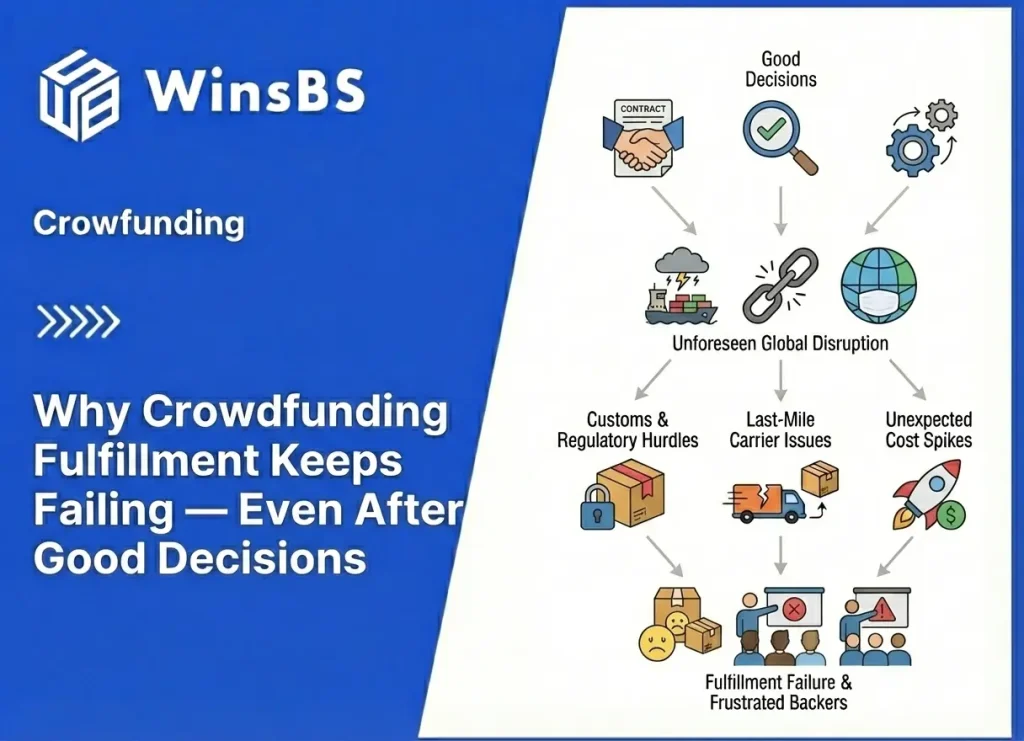
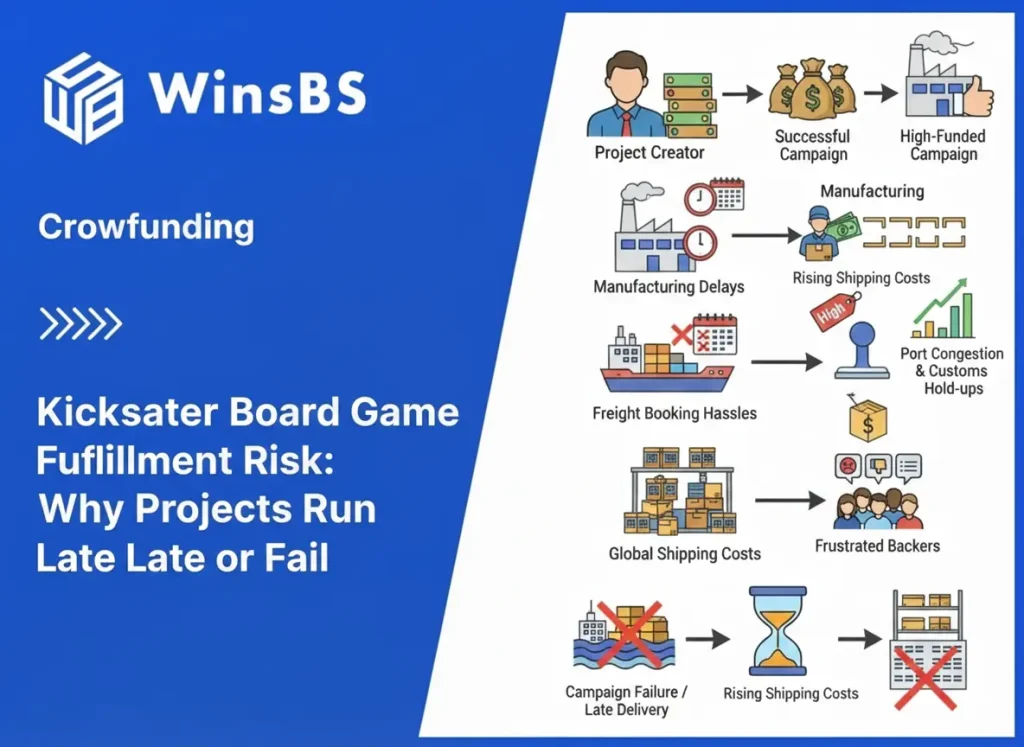
Kickstarter Board Game Fulfillment Risk: Why Projects Run Late or Fail
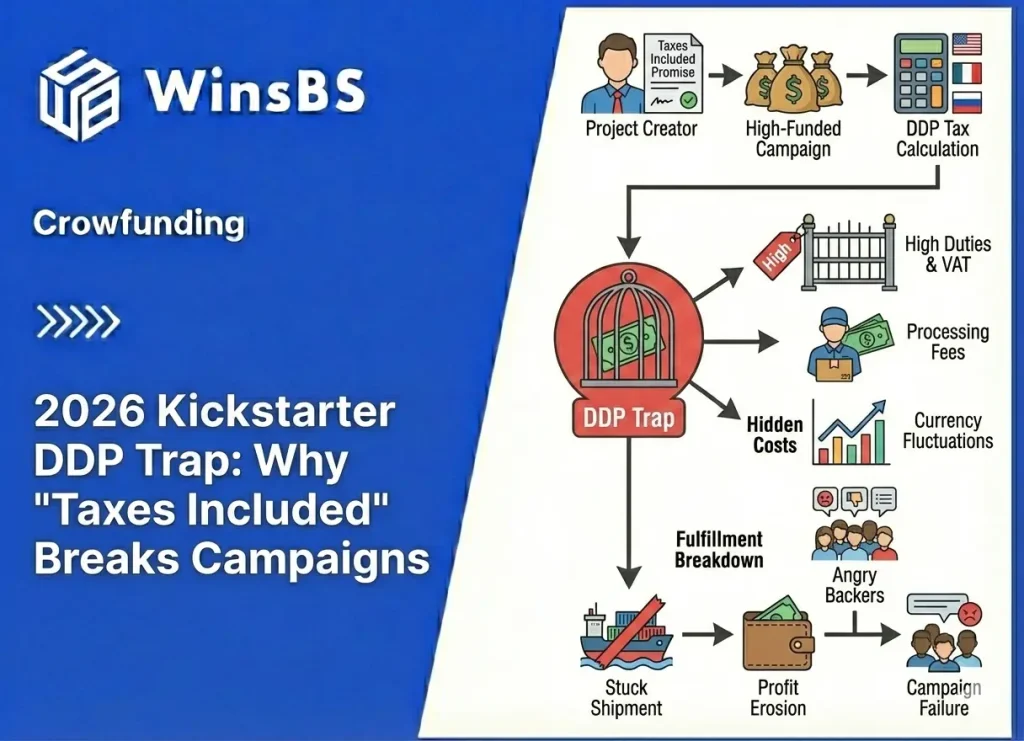
Kickstarter Board Game Fulfillment Risk Why Projects Run Late, Ship Damaged, or Arrive Missing Pieces — Even After “Solid Planning” WinsBS Fulfillment – Maxwell Anderson Updated January 2026 Table of Contents TL;DR 1. Why Board Game Fulfillment Gets Misjudged in Kickstarter Campaigns 2. The 5 Most Common Board Game Kickstarter Failure Modes 3. Real-World Cases Show Chain Reactions, Not Single Mistakes 4. DDP: When It Helps — and When It Amplifies Risk 5. Practical Fixes That Reduce Tabletop Fulfillment Risk 6. A Pre-Commitment Risk Checklist Common Questions Creators Ask After Funding Succeeds TL;DR Board games are not “just a box” in fulfillment terms. They are a tightly coupled system of components where a single missing token, warped board, or broken miniature can turn a shipped reward into a failed promise. Independent research on Kickstarter reward delivery suggests that roughly 9% of funded projects never deliver rewards, with an estimated range of 5–14%, a finding summarized both in Ethan Mollick’s analysis of Kickstarter outcomes and in Kickstarter’s own fulfillment education materials . Within tabletop specifically, a BoardGameGeek community data analysis shows an average delay of about 3.5 months. Delivered Duty Paid (DDP) shipping can improve the backer experience by avoiding surprise import charges, but without spare-parts buffers and stable wave planning, heavy parcels and replacement shipments can turn DDP into a cost amplifier rather than a safeguard. 1. Why Board Game Fulfillment Gets Misjudged in Kickstarter Campaigns In many Kickstarter board game campaigns, fulfillment risk is evaluated through familiarity. Creators have playtested prototypes, visited factories, and held finished samples. Compared to regulated categories like food or electronics, tabletop products feel straightforward. The misjudgment comes from treating fulfillment as a shipping problem rather than a completeness obligation. Fulfillment success is not defined by whether cartons move, but by whether each backer receives a fully correct set of components. One missing die or one incorrect insert is enough to invalidate the reward. When post-campaign iteration continues after delivery promises are locked, small variances accumulate. Those variances do not remain isolated. They surface as support tickets, replacement requests, and wave delays that compound over time. 2. The 5 Most Common Board Game Kickstarter Failure Modes 1. Invisible component drift. Stretch goals, add-ons, and late design tweaks change what “complete” means. Kitting rules built on earlier assumptions quietly break, even when manufacturing quality itself is acceptable. 2. Predictable damage in dense parcels. Miniatures snap, boards warp, and corners crush during international handling. Without packaging tested under real transit conditions and regional spares, damage rates exceed what campaign budgets expect. 3. Multi-wave shipping that resets responsibility. Wave 1 success does not guarantee Wave 2 stability. Addresses expire, add-ons shift, and replacement demand drains inventory, introducing new error surfaces with each wave. 4. Replacement workflows that compound. Every replacement is a second fulfillment cycle: picking, packing, postage, tracking, and communication. Without a buffer, replacements become a parallel campaign. 5. Post-commitment reward redefinition. Late localization, material substitutions, or tier rebundling mean the same pledge name can represent different physical realities. Operationally, the SKU is not fixed at the campaign page, but when component allocation finally stops changing. 3. Real-World Cases Show Chain Reactions, Not Single Mistakes Mythic Games and the Darkest Dungeon Board Game In early 2026, it was publicly confirmed that Mythic Games had been liquidated and was no longer able to manufacture or deliver several crowdfunding projects, including the Darkest Dungeon board game. Whatever the upstream causes, the downstream lesson is clear: once cash flow, production capacity, and delivery obligations fall out of alignment, fulfillment planning turns into triage rather than execution. Reporting from BoardGameWire and coverage by Eurogamer document how undelivered rewards ultimately forced rights holders to release files for DIY use. At the other end of the spectrum, delay without collapse is also well documented. Community-driven analysis on BoardGameGeek, which includes shared data and methodology, suggests that tabletop campaigns commonly ship months later than planned. This does not predict the fate of any single project, but it reinforces a practical planning principle: “on-time” should be treated as an optimistic scenario, not a default assumption. 4. DDP: When It Helps — and When It Amplifies Risk Delivered Duty Paid shipping is often chosen to improve the backer experience, particularly for EU and UK destinations where unexpected import charges can generate frustration. In stable retail-style operations, DDP can work well. Risk increases when DDP is combined with heavy parcels, unresolved component variance, and multi-wave fulfillment. In those conditions, damage or missing components trigger replacement shipments, and each replacement behaves like a second import event with its own cost stack. DDP tends to remain manageable when the bill of materials is frozen early, kitting rules are validated through pilot runs, packaging is tested under real handling conditions, spare parts are pre-positioned in-region, and wave logic is locked before commitments are made. The issue is not DDP itself, but applying it while the reward definition is still moving. 5. Practical Fixes That Reduce Tabletop Fulfillment Risk Measure completeness, not just shipment. The meaningful KPI is the percentage of backers receiving fully correct rewards, not the number of labels printed. Run pilot kitting before scaling. Pilot batches expose ambiguous instructions and easy-to-miss components before exceptions propagate across thousands of orders. Plan spare parts explicitly. Successful tabletop publishers routinely hold replacement inventory and define clear triggers for when and how replacements are issued. This prevents later waves from being cannibalized. Lock data and wave boundaries. Address validation, pledge manager exports, and wave definitions should be treated as controlled processes, not ad-hoc adjustments. Freeze iteration before commitments lock. This same structural rule appears in other crowdfunding categories: when commitment precedes stability, responsibility and cost concentrate rapidly rather than dissipate. 6. A Pre-Commitment Risk Checklist Before promising delivery dates or “taxes included” shipping, creators should be able to answer yes to all of the following: Are components, inserts, and localization fully frozen? Has packaging been tested for international handling? Do regional spare parts exist with a defined replacement workflow? Are wave