Free 1 Month of Warehousing for New Clients Start with lower storage cost from day one.

FREE QUOTE

Shipping & Logistics

Logistics flow diagram beside WinsBS logo and title, illustrating supplier, international freight, customs, 3PL warehouse, irreversible import costs, and final delivery, highlighting 3PL order fulfillment and landed cost execution.
Ecommerce, Order Fulfillment, Shipping & Logistics

Landed Cost Execution: Where U.S. Import Costs Become Irreversible

Landed Cost Execution: Duty, Freight, Fees, and Fulfillment Costs A U.S. Import Framework That Shows When Costs Become Irreversible and What You Can Still Control By Maxwell Anderson · Updated 2025 DEC In U.S. import fulfillment, landed cost problems rarely start with a math mistake. They start when execution decisions are delayed until execution has already removed the option to redesign the path. Most cost overruns, missed delivery windows, and margin collapses are not caused by incomplete cost categories. They are caused by incomplete execution conditions: product definition gaps, responsibility gaps, and coordination gaps between nodes. Landed cost is not a static number. It is an execution path where adjustment room shrinks step by step as real actions happen. Cost control is the ability to make the right decision before each irreversible milestone. LANDED COST EXECUTION NODES (U.S. IMPORT FULFILLMENT) In the U.S. market, landed cost does not “appear” at the quote stage. It becomes locked in progressively as execution advances. This framework does not restate a logistics flowchart. It answers three operational questions at every node: Which costs are already irreversible at this node Which variables can still be corrected or redesigned How real constraints differ by product category at the same node EXECUTION NODE OVERVIEW (COST LOCK-IN VIEW) Node Core Action Costs Largely Locked Variables Still Adjustable Common Risk Pattern Node 0: Product Definition Define product, declaration name, category attributes None All Incorrect definition propagates downstream Node 1: Quote Confirmation Select execution path and responsibility boundaries Some freight assumptions Duty pathway, exception rules False certainty at the quote stage Node 2: Cargo Ready Freeze specifications and documentation Duty pathway Freight execution method Spec and compliance mismatch Node 3: Main Transport Sailing/flight execution, schedule reality Main transport cost Time-driven fees ETA drift converts into cost exposure Node 4: U.S. Customs Clearance Entry filing, inspection risk, release All duty Limited fee levers Inspection multiplies time and cost Node 5: 3PL Receiving Inbound warehouse execution starts Fulfillment structure Operational efficiency Warehouse deviations create additive fees Node 6: First Orders Shipped Order-level cost validation Full landed cost None Margin is realized too late to fix This table is an execution reference. It helps operators identify which node they are in right now, and which variables are still realistically controllable. NODE 0 — PRODUCT DEFINITION COMPLETED (PRE-QUOTE) Engineering definition: “Product definition completed” means the product is defined in a stable, auditable way that is usable for U.S. customs, transportation, warehouse receiving, WMS configuration, and order fulfillment. This is not marketing language. It is execution language. Key execution actions: Freeze three definitions: commercial product name, customs declaration name, and category attributes (battery, high value, oversized, regulated). Freeze the final selling configuration: single unit, bundle, kit, or multi-SKU set. Define the declared value logic and split rules (unit vs set, bundle components, replacements, inserts). Confirm whether the product contains regulated elements that affect routing (battery compliance, electronics labeling, restricted materials). Required outputs: A product definition sheet that can be used consistently for quoting and for customs entry. A specification sheet (dimensions, weight, materials, functional description, intended use). A category-attribute confirmation record (battery status, value band, oversize flag, compliance pathway assumptions). U.S. reality constraints: Product definition controls customs classification behavior and compliance gating. If definition is wrong here, later correction tends to trigger rework, holds, inspection exposure, or re-processing costs. The cheaper the correction seems at Node 0, the more expensive it becomes after Node 2. Category differences: Crowdfunding products often freeze definition later than typical DTC products, because reward structure and bundles finalize late. Battery-powered and electronic products do not have the same flexibility: the compliance pathway is effectively chosen here. High-value goods increase the consequence of every downstream mistake, including insurance, claims, and discrepancy handling. Oversized products magnify freight and warehouse handling exposure. Time-sensitive or seasonal SKUs convert every delay into revenue loss, not just expense. Node check: Can you produce a single definition that both your broker and your warehouse can use without rewriting it? Are product name, declaration name, and category attributes aligned? Is the selling configuration frozen, including bundles and inserts? NODE 1 — QUOTE & ROUTING CONFIRMATION (TRANSPORT + CUSTOMS) Engineering definition: This node does not determine “the price.” It determines the execution path, responsibility boundaries, and which assumptions will become the importer’s liability when reality changes. Key execution actions: Confirm trade terms and responsibility logic (who owns duty, who owns clearance outcomes, who owns exceptions). Confirm Importer of Record structure and who controls broker relationship. Break costs into auditable components: duty, freight, fees, and fulfillment charges, not a single bundled number. Document execution assumptions explicitly: port pair, routing, service level, timing window, free time assumptions, cargo parameters assumptions. Document exception triggers: re-routing, port change, inspection, holds, detention/demurrage, documentation repair, warehouse non-standard work. Define decision authority and spend authority for exceptions (who can approve, what thresholds trigger escalation). Required outputs: An itemized cost sheet that can be audited and compared later against invoices and warehouse charges. A responsibility matrix: who is responsible, who pays, who controls, and who bears exception cost. A written assumption and trigger file that removes “default handling” from the execution path. U.S. reality constraints: Assumptions that are not written become importer exposure. When execution deviates, added charges will be treated as “normal adjustments” unless the trigger and authority were defined upfront. Category differences: Crowdfunding needs a re-quote mechanism for bundle changes. Battery and regulated goods require the compliance pathway assumptions to be written, not implied. High-value goods require insurance responsibility and claims documentation standards to be defined at this node. Oversized goods require a re-rating trigger for dimension/weight changes. Time-sensitive goods require pre-authorization for mode switching or partial air uplift. Node check: Do you have an auditable split of duty, freight, fees, and fulfillment charges? Do you have a responsibility matrix that closes the “not my problem” gap? Are exceptions defined with decision authority, not just described as possibilities? NODE 2 — CARGO READY (SPEC + DOCUMENTATION FREEZE) Engineering definition: Cargo ready means assumptions meet

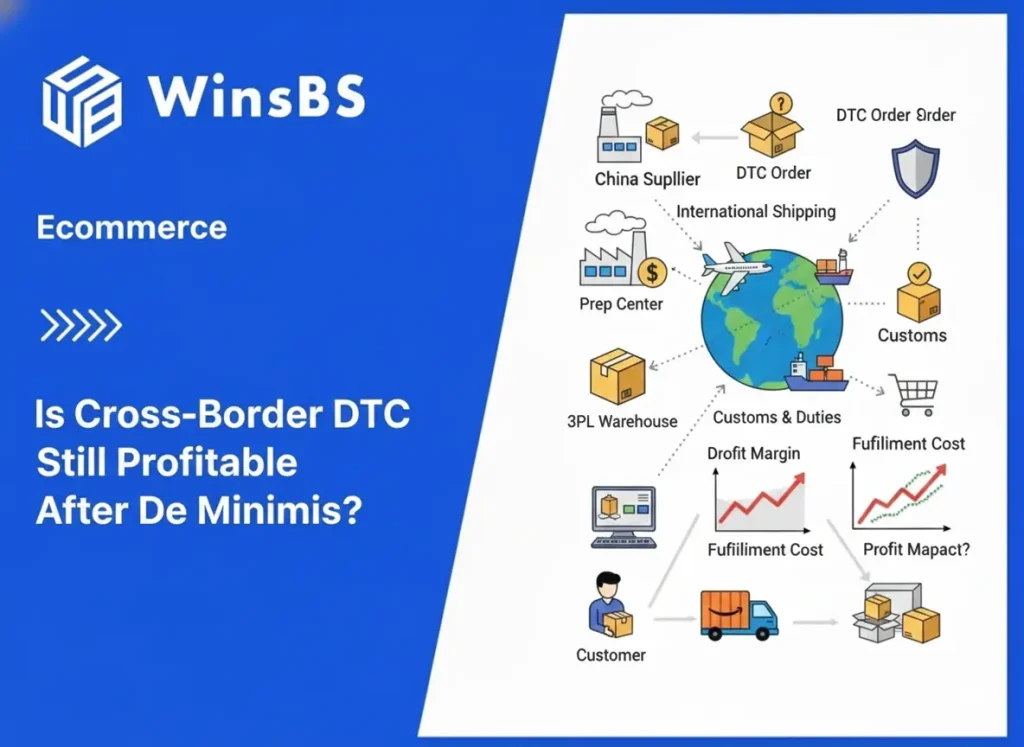
Cross-border eCommerce flowchart showing China suppliers, international freight, 3PL warehouse, inventory management, and order fulfillment leading to the customer, displayed beside the WinsBS logo and blog title, symbolizing 3PL fulfillment and cross-border order fulfillment services.
Ecommerce, Order Fulfillment, Shipping & Logistics

Best 3PLs for Shipping from China (2025) | Full Provider Guide

Best 3PLs for Shipping from China in 2025 Provider Landscapes Backed by the Vertical Fulfillment Performance Model (VFPM-2025) By Michael · Updated 2025 DEC On This Page Executive Summary VFPM Overview Shopify / DTC Amazon FBA Prep Crowdfunding Electronics / Battery Apparel & Fashion Beauty & Personal Care Heavy / Bulky Supplements / Food B2B / Omnichannel Section 321 / IOSS Final Recommendations Methodology EXECUTIVE SUMMARY The search for the “best 3PL in China” is misleading. WinsBS Research’s VFPM-2025 dataset shows that 25–48% of SLA variance and 30–55% of cost-per-order variance comes from vertical differences—not warehouse size, automation level, or geographic footprint. A 3PL that excels in fashion accuracy performs poorly in batteries; a 3PL optimized for crowdfunding waves fails under everyday Shopify volatility. This means that any universal ranking is inherently flawed. Instead, brands need a vertical-specific Provider Landscape. This report introduces 10 vertical landscapes—each with: a vertical profile grounded in VFPM-2025 cost, risk, and volatility models, a curated 6–12 provider evaluation pool (with external links), a Capabilities Matrix (SLA, SKU entropy, compliance readiness, volatility handling), a Why Included justification for every provider, and a vertical-specific RFP checklist. The goal is simple: give decision-makers an actionable, research-backed map of which 3PLs fit which products, channels, and compliance regimes when shipping directly from China. For brands planning China→US/EU expansions, WinsBS offers a free VFPM-aligned assessment: Get Started for Free. VFPM-2025 MODEL OVERVIEW The Vertical Fulfillment Performance Model (VFPM-2025) is WinsBS Research’s analytical framework for understanding why fulfillment performance differs dramatically across product categories—even inside the same warehouse. VFPM-2025 decomposes fulfillment into five structural components: Cost Structure — fixed vs. variable handling, packaging intensity, DIM exposure. SLA Stability — P50/P80/P95 transit distributions and last-mile variance. Labor Intensity — touchpoints, QC minutes, returns friction. Compliance & Risk — battery/DG rules, VAT/IOSS/321 requirements, regulator exposure. Volatility Handling — promo spikes, seasonality, crowdfunding waves. These metrics are normalized using VFPM’s trimmed mean and IQR median methodology to prevent outliers from dominating any vertical. The full methodology is documented in the VFPM-2025 Benchmark Report. This article applies VFPM-2025 to the specific context of shipping from China, where additional factors like customs clearance, long-haul reliability, and tax structuring materially change a 3PL’s suitability for each vertical. SEGMENT 1 — SHOPIFY / DTC BRANDS SHIPPING FROM CHINA Vertical Profile Shopify / DTC brands shipping 1,000–20,000 orders per month from China operate within a mid-volatility, mid-labor cost structure. VFPM-2025 shows that these brands experience predictable order waves around promotions, but relatively stable SKU entropy compared with apparel or beauty. What distinguishes this vertical is the emphasis on: carrier diversification for multi-region lanes, Shopify-native visibility for branded tracking events, tax orchestration (321 / IOSS / DDP) handled upstream, and the ability to maintain 6–12 day CN→US / CN→EU consistency. Provider Landscape (Evaluation Pool) The following 3PLs form the recommended evaluation pool for Shopify / DTC brands shipping directly from China. Providers may appear in multiple verticals when their operating model supports several product classes. NextSmartShip — Website Capabilities: China-based global fulfillment, strong Shopify integrations, branded tracking, EU/UK duty workflows. Best For: 2k–20k orders/month mid-complexity DTC catalogs. Limitations: Not ideal for Class 9 battery products. Why Included: Stable CN→US 6–10 day performance, high SKU accuracy, and strong presence in VFPM DTC lanes. SendFromChina (SFC) — Website Capabilities: Mature China 3PL with marketplace and DTC flows, broad carrier network, multi-region fulfillment. Best For: blended Amazon + Shopify international sellers. Limitations: System UI less modern than Shopify-native 3PLs. Why Included: Long-standing performance in CN→US/EU cross-border lanes and strong operational redundancy. EcommOps — Website Capabilities: DTC-focused China 3PL offering cost modeling, carton optimization, and Shopify-native workflows. Best For: brands needing analytics-driven routing and packaging efficiency. Limitations: Less ideal for very large catalogs (2,000+ SKUs). Why Included: Strong VFPM alignment for cost transparency and SKU stability in mid-volume DTC. ShipBob — Website Capabilities: Global network with CN inventory intake, strong tech stack, fast U.S./EU regional delivery. Best For: brands wanting CN production + U.S./EU distributed nodes. Limitations: Higher pricing for low-AOV DTC brands. Why Included: Shopify-native support and scalable multi-node routing useful for China-origin expansion. FF Logistics — Website Capabilities: China-based fulfillment for beauty/lifestyle DTC, strong QC workflows. Best For: design-led DTC brands needing packaging consistency. Limitations: Limited support for heavy/oversized items. Why Included: High repeatability in QC-heavy verticals, consistent with VFPM labor-intensity models. ShipSmartly.io — Website Capabilities: Shopify automation, CN-origin duty-optimized routing, branded tracking flows. Best For: 1k–8k orders/month stores needing rapid setup. Limitations: Less suitable for large multi-region B2B shipments. Why Included: Lightweight but fast implementation ideal for newer Shopify brands. SHIPHYPE Fulfillment — Website Capabilities: U.S./Canada-based hubs fed by CN production, strong returns handling. Best For: brands selling heavily in North America. Limitations: Higher storage than CN-based facilities. Why Included: Provides hybrid CN→US workflows aligned with VFPM multi-node strategies. Salesupply — Website Capabilities: multi-region EU/U.S. network with CN integration, strong CX focus. Best For: brands scaling into EU markets. Limitations: Not a China warehouse operator—relies on inbound flows. Why Included: Strong EU footprint helps brands mix CN origin with regional warehousing. WAPI — Website Capabilities: distributed EU/UK fulfillment with CN routing and marketplace tools. Best For: multi-marketplace sellers (Amazon + Shopify + eBay). Limitations: Not ideal for custom packaging workflows. Why Included: High fit for brands prioritizing Europe expansion from CN production. J&T Express (Cross-Border Unit) — Website Capabilities: CN-origin parcel network, fast lanes into Southeast Asia and U.S. consolidators. Best For: cost-sensitive high-volume DTC brands. Limitations: Not a full 3PL; limited pick/pack depth. Why Included: Strong for brands prioritizing speed and cost over customization. Capabilities Matrix (DTC Segment) The following matrix summarizes qualitative capabilities relevant to Shopify / DTC brands: SLA Stability: High — NextSmartShip, SFC, ShipBob SKU Complexity Fit: Strong — NextSmartShip, EcommOps Compliance Readiness (IOSS / 321): High — ShipSmartly.io, NextSmartShip Cost Structure Transparency: High — EcommOps, SFC Volatility Handling: Strong — SFC, ShipBob RFP Questions for Shopify / DTC Fulfillment from China Provide P50 / P80 / P95 transit distributions for U.S., EU, UK, AU. Show

CNY 2026 shutdown graphic with WinsBS logo and title beside supply chain icons including factory closure, key February dates, ships, airplanes, and inventory, symbolizing order fulfillment planning and 3PL logistics preparation.
Ecommerce, Order Fulfillment, Shipping & Logistics

Chinese New Year Shutdown 2026: Key Dates & Supply Chain Prep

Chinese New Year Shutdown 2026: Key Dates, Global Timelines & Supply Chain Risk How US, UK, EU, AU & CA Brands Should Plan Around Factory Closures and Logistics Capacity Drops By Maxwell Anderson · Updated 2025 Chinese New Year Shutdown 2026 — Key Dates You Must Plan Around Chinese New Year (CNY) in 2026 falls on February 17. For most manufacturers and logistics providers in mainland China, the disruption window is much wider than the public holiday itself. CNY 2026: February 17, 2026 Typical Final Production Window Before Shutdown: February 7–10, 2026 Initial Restart Window After CNY: February 24–26, 2026 (often only 20–40% capacity) More “Normal” Capacity: Early to mid March 2026 In practice, many factories wind down output in the 7–10 days before CNY, and only begin to ramp back up roughly 7+ days after the holiday. If you rely on China for production, your true planning window spans several weeks before and after February 17 — not just the holiday week itself. TL;DR FOR BUSY OPERATORS Chinese New Year shutdowns in 2026 will not only pause production in China for roughly two weeks — they will also squeeze logistics capacity before, during, and after the holiday. Most brands underestimate two things: how early freight capacity tightens, and how long it takes factory and logistics networks to return to something close to normal. If you sell into the US, UK, EU, Australia, or Canada, you should treat CNY as a multi-week disruption window, and build market-specific timelines for purchase orders, production, and shipping. This guide walks through what actually shuts down during CNY, how it impacts different markets, and how to build a destination-based, mode-based plan that protects Q1 revenue. WHY CNY 2026 MATTERS MORE THAN MOST BRANDS EXPECT Chinese New Year happens every year, but 2026 is not “just another holiday.” The timing and broader trading context make it especially sensitive for cross-border brands. First, CNY 2026 is later in the calendar than in 2025. That pushes the shutdown period deeper into February, closer to several demand events in key markets: Valentine’s Day, US tax refund season, and early spring launches for apparel, beauty, and consumer electronics. Second, the disruption is not limited to a single week of public holiday. Capacity starts to tighten weeks in advance as workers travel home, factory schedules freeze, carriers adjust sailings and flights, and trucking capacity thins out. Third, the recovery is slow. Even once factories officially reopen, labor does not return all at once, and logistics networks work through a backlog of cargo that built up before and during the holiday. The result is a practical disruption window that often spans four to six weeks. Brands that plan only around the public holiday dates typically find themselves short on inventory, stuck with delayed shipments, or paying much higher rates for last-minute air freight. WHAT ACTUALLY SHUTS DOWN DURING CNY 2026 (FACTORIES + LOGISTICS) Most discussions about Chinese New Year focus on “factory shutdowns.” In reality, what matters to your business is the combined effect of two different but overlapping slowdowns: production and logistics capacity. PRODUCTION: A GRADUAL STEP-DOWN, NOT A SINGLE CUT-OFF Factories in China rarely go from full speed to zero overnight. Instead, output tapers off over the two to three weeks leading into CNY, then ramps back up gradually over the following two to three weeks. Roughly three to four weeks before CNY, many factories begin to close their pre-holiday production schedule. New orders may still be accepted, but most will be booked for after the holiday. In the two weeks before CNY, certain workers — especially those who travel long distances — start leaving early. Some factories consolidate lines or reduce shifts. Output may drop meaningfully, even though the factory is technically operating. In the final three to five days before CNY, most assembly lines shut down. Remaining staff focus on wrapping up open orders and securing equipment. During the public holiday period, production stops almost entirely. After the holiday, workers return in waves. In the first week back, many factories operate at a fraction of normal output. It can take one to three weeks for staffing and quality processes to stabilize. Electronics and complex assemblies tend to slow down earlier and restart more cautiously. Apparel and soft goods may run closer to the holiday date and restart faster. LOGISTICS: THE REAL BOTTLENECK OF CNY DELAYS For many brands, logistics is the real problem. Even if a factory completes your order, you still need trucks, warehouse handling, and space in a container or on a flight. In the two to three weeks before CNY, exporters race to ship goods before shutdown, pushing trucking, warehouse operations, and terminal capacity into peak strain. During the CNY holiday week, logistics operates in a minimal mode. Some flights and sailings depart, but inland movement is extremely constrained due to driver shortages and terminal closures. After the holiday, a second congestion wave emerges as factories restart and release accumulated orders into the logistics network. This is why CNY-related delays often extend well into March. GLOBAL IMPACT: WHY DIFFERENT MARKETS REQUIRE DIFFERENT TIMELINES Even though the CNY date is fixed, its impact varies dramatically based on distance, customs, demand timing, and your fulfillment model. Two brands using the same supplier may need very different plans depending on: Transit time Customs clearance variability Market demand timing Local vs cross-border fulfillment Effective CNY planning begins with the market and works backward — not from the factory calendar alone. CNY 2026 REVERSE PLANNING TIMELINES BY DESTINATION MARKET To plan correctly, start with when you need inventory in each market, then subtract transit time, customs, and pre-CNY congestion. Destination Typical Ocean Transit Recommended PO Placement Recommended Ship-Out Window Safe Arrival Window Notes United States (West Coast) 30–35 days Early–Mid December 2025 Late Dec–Mid Jan Before Early Feb LA/LB congestion likely before CNY. United States (East Coast) 35–45 days Late Nov–Early Dec Mid Dec–Early Jan Before Late Jan Longer transit requires earlier planning. United Kingdom 35–50 days Late

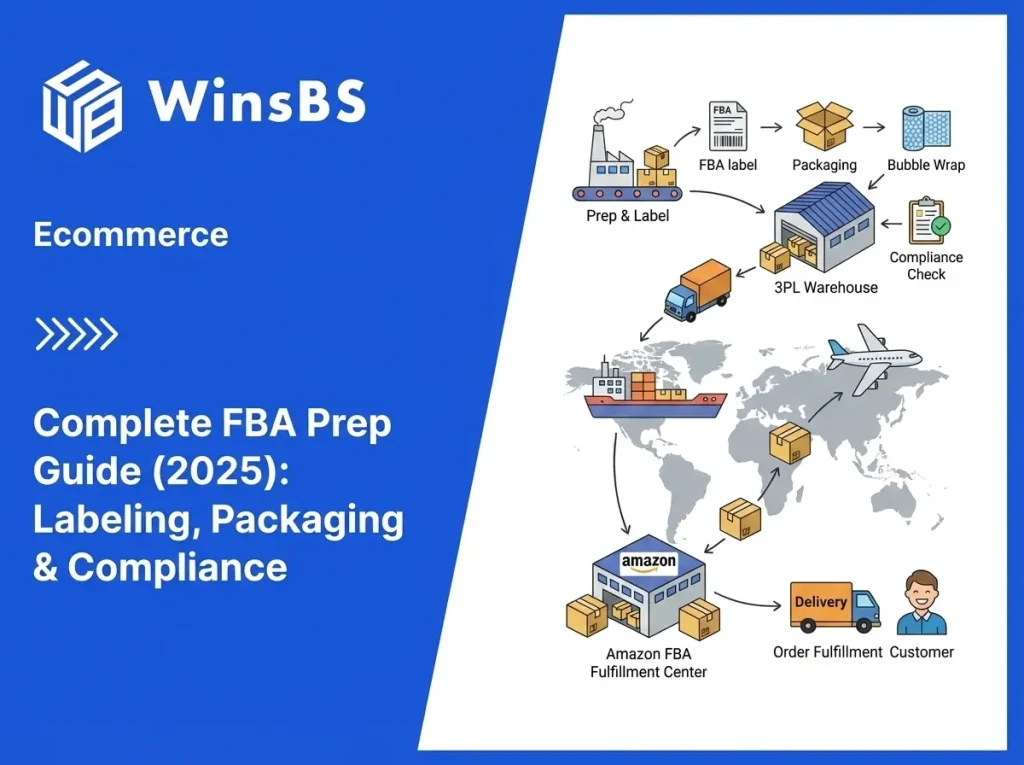
Amazon FBA workflow graphic with WinsBS branding and title, showing supplier to prep center to international logistics to Amazon FBA warehouse, symbolizing 3PL order fulfillment, cross-border logistics, and storage fee processes.
Ecommerce, Order Fulfillment, Shipping & Logistics

How Amazon FBA Works: Prep, Inbound Routing & Storage Fees

How Amazon FBA Works (2025–2026) What Sellers Must Know About Prep, Inbound Routing & Storage Costs Author: Maxwell Anderson, Editor-in-Chief, WinsBS Research Last updated: 2025 Focus: Amazon FBA workflow, prep requirements, inbound routing rules, storage fees, and cost/risk control for cross-border e-commerce sellers shipping into the United States. TL;DR Amazon FBA in 2025–2026 is no longer just “send cartons to a warehouse.” It is a tightly enforced system covering prep rules (labeling, packaging, carton and pallet standards), inbound routing (SPD, LTL, FTL with routing plans and appointments), and storage fees (monthly storage plus Aged Inventory Surcharge, AIS ). Amazon is ending its own FBA Prep services by early 2026 , has increased placement and inbound defect fees , and now charges extra for inventory that sits too long. If you still treat FBA as “ship as much as possible and let Amazon figure it out,” your margin will erode quickly. The brands that win treat FBA as a disciplined flow : prep outside Amazon, route in smaller, compliant batches, and keep only 30–45 days of stock in FCs while using a U.S. 3PL buffer like WinsBS for bulk storage and kitting. That is how you protect Prime speed without letting storage and inbound costs quietly consume your profit. WHAT AMAZON FBA IS & HOW THE SYSTEM WORKS IN 2025–2026 Amazon FBA was designed to solve a simple problem for sellers: “If I send inventory to Amazon, they will store it and ship it for me.” In 2025–2026, that simple story is still true at a high level—but the details have become much stricter and more expensive. At its core, Fulfillment by Amazon (FBA) means: You create FBA shipments in Seller Central or via API. You prepare, label, and pack units, cartons, and pallets according to Amazon’s rules. You route inventory into one or more fulfillment centers (FCs) using small parcel delivery (SPD), LTL, or FTL. Amazon receives and stows your units, then ships customer orders and handles basic customer service and returns. In exchange, you pay: Fulfillment fees per order (pick, pack, outbound shipping to the customer). Monthly storage fees based on cubic feet and time of year. Aged Inventory Surcharge (AIS) when inventory sits beyond specific age tiers. Placement and inbound-related fees when Amazon redistributes units across FCs or shipments arrive with defects. For cross-border brands, FBA is both a growth engine and a risk amplifier . Prime eligibility and FBA Buy Box preference can lift conversion, but a single failure in prep, routing, or capacity planning can create: 7–15 day restock delays. Unexpected AIS and storage bills. Inbound defect charges and shipment rejections. Lost Best Seller Rank (BSR) and slower recovery after stockouts. To understand how Amazon FBA really works now, it helps to view it as a three-part system : Stage What Happens Key Risks Where Sellers Lose Margin 1. Prep Units are labeled, bagged, bundled, and cartonized according to FBA rules. Mislabeling, mixed-SKU cartons, fragile items under-protected. Rejections, rework, inbound defect fees, delayed check-in. 2. Inbound Routing Shipments are routed to FCs via SPD/LTL/FTL with routing plans and appointments. Wrong box size, weight or pallet standards, missed appointments. Extra carrier fees, detention at cross-dock, inbound defect penalties. 3. Storage & Flow Units are stowed; orders ship; aging inventory triggers AIS tiers. Overstocking, slow-moving ASINs, poor forecasting. High storage and AIS, restock limits, forced removals. If you manage these three stages deliberately, FBA behaves like a predictable engine. If you treat them as background details, FBA becomes an expensive black box sitting between your factory and your buyers. FBA PREP REQUIREMENTS (2025–2026 UPDATE) FBA prep used to be simpler. In 2025–2026, Amazon has tightened every rule around packaging, labeling, carton specs, pallet specs, and shipment accuracy —and Amazon is ending its internal FBA Prep services by early 2026 . That means: All prep must be done correctly before inventory reaches the FC. Amazon will not fix your issues. They will reject, charge, or delay the shipment. 1. Unit-Level Prep Requirements Every individual sellable unit must meet the following standards: FNSKU barcode must be scannable and not covered by other barcodes. Suffocation-warning polybags required for loose items or small textiles. Bubble wrap required for fragile units. Items with sharp edges must be securely protected . Expiration-dated goods must have MM-DD-YYYY printed and visible. Amazon grades prep accuracy heavily. Repeated issues increase your defect rate and lead to inbound defect fees . 2. Carton Requirements (2025 Update) Amazon increased its carton dimension limits in 2025: Maximum length: 36″ (up from 25″) Maximum side lengths: 25″ × 25″ Maximum carton weight: 50 lbs unless marked as “Team Lift” or “Mechanical Lift” Cartons violating these limits are frequently: Refused at the FC. Returned at your expense. Subject to inbound defect fees . 3. Pallet Requirements (2025–2026) Standard pallet size: 40″ × 48″ Maximum pallet height: 72″ including pallet Maximum pallet weight: 1,500 lbs Pallets must meet GMA Grade B+ or better Mixed-SKU pallets require proper labeling and must follow Amazon’s mixed-carton rules Non-compliant pallets face: Appointment cancellation Rejection at dock Re-delivery fees Delay penalties 4. Labeling Requirements All cartons and pallets require properly placed labels: FBA carton labels (2 per carton, opposing sides) Pallet labels (4 sides) SPD/LTL/FTL carrier labels Fragile indicators when necessary Improper placement or low print quality leads to scan failures and lost shipments. 5. Documentation Requirements Amazon increasingly checks: Carton content accuracy SKU-level quantities ASN matching Routing plan consistency Mismatches trigger manual review and receiving delays. HOW TO PREP YOUR INVENTORY FOR FBA — STEP BY STEP The workflow below represents what high-performing cross-border brands follow in 2025–2026. It reduces inbound defects, prevents rejections, and keeps replenishment cycles predictable. Step 1 — FNSKU Assignment & Packaging Decisions Before production finishes, confirm: Whether each SKU uses manufacturer barcode or FNSKU Required protective materials Whether variations need bundling Packaging thickness to survive U.S. carrier handling Step 2 — Factory-Level Labeling (If Possible) The cheapest and most accurate place to apply FNSKU is the factory. If the factory cannot

3PL fulfillment workflow illustration beside WinsBS logo and title “What Is a 3PL? 2025 U.S. Fulfillment Guide”, symbolizing U.S. eCommerce fulfillment and 3PL order fulfillment services.
Ecommerce, Order Fulfillment, Shipping & Logistics

What Is a 3PL in 2026?

What Is a 3PL in 2026? What people usually mean when they ask it, and how to tell whether handing fulfillment to a partner would actually help your business Maxwell Anderson MARKETING MANAGER | WINSBS April 2026 In Brief If your team is spending too much time fixing stock issues, chasing late outbound, or sorting out returns, this is usually the kind of partner you start looking at. At that point, nobody really cares what the acronym means. You are trying to work out whether handing this work over would actually make the week run better. Why this matters now This is not a small niche question anymore. The U.S. Census Bureau reported that total U.S. retail e-commerce sales in 2025 reached $1.2337 trillion and accounted for 16.4% of total retail sales. Once online sales sit at that scale, order handling, returns, stock accuracy, and delivery consistency stop being back-room details. They start shaping how the whole operation feels day to day. The situation most teams are actually in By the time someone on the team asks “what is a 3PL,” things usually are already getting messy. Orders are growing, inventory numbers are harder to trust, customer promises feel a little less safe, and warehouse work is landing on people who were not supposed to spend their week on warehouse work. Table of Contents Why This Question Comes Up What You Are Actually Handing Over What Changes for the Team What Problem You Are Really Solving When Teams Usually Reach This Point What to Check Before You Sign What Bad Fit Looks Like Frequently Asked Questions Keep Reading Usually This Question Comes Up When the Team Is Feeling Drag Very few people search “what is a 3PL” because they suddenly want to learn logistics vocabulary. Usually it comes up after one too many days where the same stock issue, packing delay, or return question keeps bouncing back to the same two or three people. Orders are climbing. Stock numbers take longer to trust. Returns are piling up on somebody’s desk. Support is asking operations for answers more often than anyone likes. So the real question is not what the acronym means. It is whether your own team should still be carrying all of this. What usually shows up before this search happens The order count is no longer the hard part. The hard part is keeping inventory, shipping, and returns aligned. Warehouse work is taking time away from sales, product, or customer support. The team can still ship orders, but it cannot do it cleanly at the speed growth now requires. The business needs fulfillment to feel more stable, not just more active. What You Are Actually Handing Over When You Bring in a 3PL In plain English, a 3PL is the outside team you bring in when you do not want your own people receiving cartons, checking stock, packing orders, sorting returns, and chasing warehouse mistakes as part of a normal Tuesday. If that still sounds too broad, picture the handoff more literally. You are handing over the shelf, the packing table, the outbound queue, the return pile, and a lot of the daily back-and-forth that sits around them. That is why a 3PL is more than extra warehouse space. If all you needed was somewhere to put cartons, the business would not be asking this question. What makes a 3PL useful is that there is a working operation behind the space: receiving discipline, stock control, order routing, returns handling, and enough reporting that you can still understand what is going on once volume rises. What Actually Changes for the Team Once This Work Moves Out The biggest change is not abstract. It is that fewer people on your side are spending their week dealing with receiving delays, stock questions, pick mistakes, late outbound, and returns cleanup. A good 3PL does not just change where inventory sits. It changes who wakes up worrying about the daily mess around that inventory. The team gets time back If founders, operators, or support people keep getting dragged into warehouse questions, that usually is the first sign the current setup is costing more than it looks. A good 3PL gives some of that time back. The quiet waste gets easier to see A lot of brands look at a 3PL quote and only see new fees. What they miss is the cost of continuing to do this badly in-house: slower shipping, more mistakes, delayed returns, stock that nobody fully trusts, and senior time going into the wrong place. Customers feel fewer surprises Customers do not care whether your warehouse situation is understandable from the inside. They care whether orders ship on time, whether stock was real when they paid for it, and whether returns are handled cleanly. When a 3PL helps, it usually shows up first as fewer unpleasant surprises. The operation becomes easier to run One of the clearest signs a team needs help is when inventory, shipping, and returns seem to mean different things depending on who you ask. A good 3PL helps turn that into something people can actually manage without guessing. Before You Hire One, Make Sure You Are Solving the Right Problem This is where a lot of bad decisions start. Teams mix several logistics jobs together, sign with the wrong partner, and then spend the next three months wondering why the original headache is still there. So before you say “we need a 3PL,” stop for a minute and ask what is actually going wrong. Is it freight movement? Warehouse execution? Carrier performance? Amazon rules? Or a messy mix of all of them? The quickest way to stop mixing these roles up If you are talking to… They mainly help with… Use them when… Freight forwarder Moving goods from origin to destination Your main problem is inbound freight, routing, customs paperwork, or getting cargo into market 3PL Receiving, storage, pick and pack, outbound orders, returns Your main problem is day-to-day order execution once inventory is already

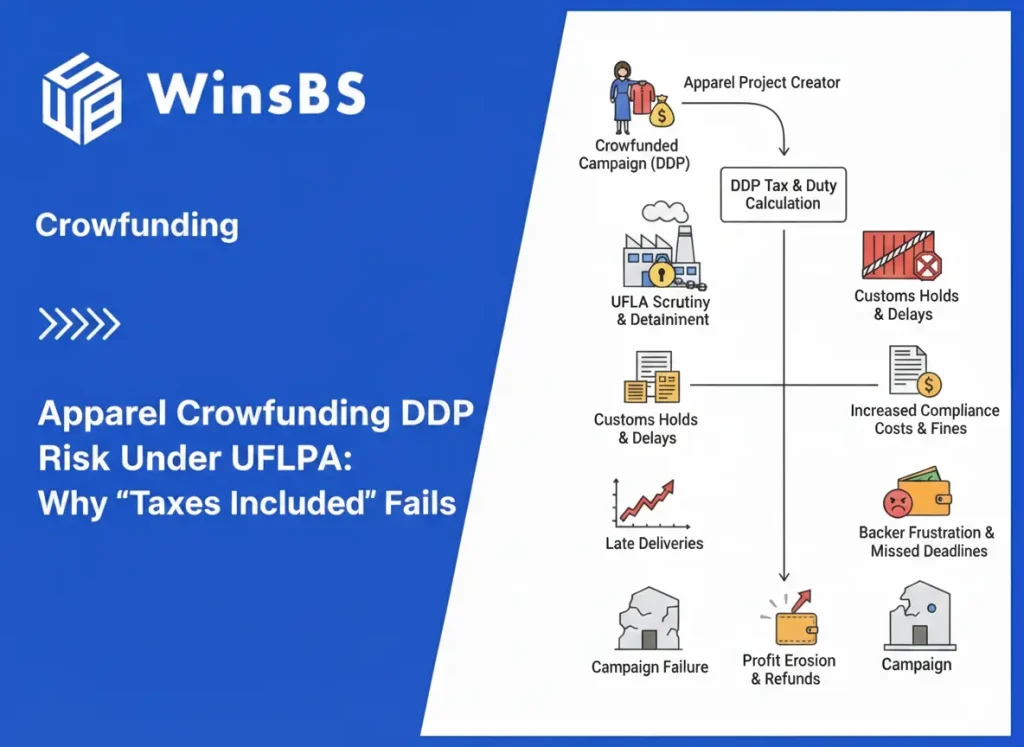
WinsBS Ecommerce banner with the title "UFLPA 2025 Checklist for Amazon & Shopify Sellers" and compliance-themed icons showing diligence, supply chain transparency, and UFLPA guidelines for cross-border eCommerce sellers.
Ecommerce, Order Fulfillment, Shipping & Logistics, Winsbs

UFLPA 2025 Checklist for Amazon & Shopify Sellers

UFLPA 2025 Compliance Checklist for Amazon & Shopify Sellers How to Keep U.S. Imports Admissible and Out of CBP Detention By Maxwell Anderson · WinsBS Research · Updated November 2025 TL;DR The Uyghur Forced Labor Prevention Act (UFLPA) has moved from a “China cotton issue” to a broad supply-chain enforcement regime. As of January 15, 2025, the DHS UFLPA Entity List includes 144 entities, and CBP has detained more than 6,000 shipments worth billions of dollars, including many small-parcel e-commerce imports. De minimis (under $800) shipments are no longer a safe loophole. Amazon FBA and Shopify brands importing into the U.S. must be able to prove, with clear and convincing evidence, that their goods are free of Xinjiang (XUAR) links and free of any entities on the UFLPA list. This guide gives you a practical, 4-phase checklist to build a defensible UFLPA compliance program, prepare a complete CBP rebuttal package, and keep your products out of detention. QUICK ACTION GUIDE — WHAT TO DO THIS QUARTER If you are an Amazon or Shopify seller already shipping to the U.S., use this quick sequence as your “UFLPA action plan.” Step 1 – Name an owner: Assign a single UFLPA compliance owner (often the import compliance manager or head of operations). Step 2 – Issue a zero-tolerance policy: Publish an internal forced-labor and UFLPA policy, and push it to all suppliers. Step 3 – Map high-risk SKUs: Identify products in textiles, solar, electronics, EV batteries, metals, PVC, aluminum, and red dates as priority. Step 4 – Trace back to raw materials: For each high-risk SKU, build a documented chain from raw material to finished good. Step 5 – Screen against the UFLPA Entity List: Verify that no factory, trader, or upstream processor is on the DHS list (144 entities as of Jan 2025). Step 6 – Build your CBP rebuttal package template: Prepare a standard document pack with invoices, production records, utility bills, payroll, and audit reports. Step 7 – Align Amazon FBA / Shopify SFN flows: Ensure your 3PL and FBA/SFN routing are traceable and consistent with your documentation. Step 8 – Run a tabletop detention drill: Simulate a CBP detention and rehearse a 30-day rebuttal response. If you need help benchmarking your current risk or tracing a specific SKU, you can work with the WinsBS U.S. fulfillment & import compliance team or request a free diagnostic below. INTRODUCTION — WHY UFLPA NOW DEFINES E-COMMERCE IMPORT RISK The Uyghur Forced Labor Prevention Act (UFLPA) has been in force since June 2022. It flips the burden of proof: any goods wholly or partly mined, produced, or manufactured in China’s Xinjiang Uyghur Autonomous Region (XUAR), or involving entities on the UFLPA Entity List, are presumed to be made with forced labor and therefore inadmissible into the United States. As of the January 15, 2025 Federal Register update, the UFLPA Entity List maintained by the U.S. Department of Homeland Security (DHS) has expanded to 144 entities, including parent companies, subsidiaries, and affiliates. Throughout 2024–2025, U.S. Customs and Border Protection (CBP) has detained more than 6,000 shipments under UFLPA, targeting not only bulk consignments but also e-commerce small parcels and de minimis shipments flowing to Amazon FBA and direct-to-consumer brands. For Amazon and Shopify sellers, UFLPA is no longer an abstract policy issue. If you are the Importer of Record (IOR), CBP will expect you to demonstrate that your supply chain is free from forced labor and free from any UFLPA-listed entities. Even if Amazon, Shopify, or a 3PL handles your logistics, you remain responsible for admissibility. This guide is written for U.S.-bound brands using Amazon FBA, Shopify, and third-party logistics (3PL) networks. It translates the UFLPA framework into a practical 4-phase checklist, with tables, risk matrices, and documentation examples that you can immediately align with your operations. UFLPA IN 2025 — WHAT CHANGED AND WHY IT MATTERS Before you build a checklist, you need a clear snapshot of the 2025 enforcement landscape. 1.1 UFLPA Entity List — 144 Entities and Growing Scrutiny As of November 2025, following the DHS announcement on January 14, 2025 and the Federal Register notice on January 15, 2025, the UFLPA Entity List includes 144 entities. These cover a wide network of Chinese companies and affiliates involved in: Textiles and apparel (including cotton and yarn originating in XUAR) Polysilicon and solar supply chains Metals such as copper, aluminum, lithium-related materials, and steel inputs Chemicals including caustic soda used in textile and industrial processing Agricultural products such as red dates and other specialty crops Any direct or indirect sourcing from entities on this list places your shipment under the UFLPA rebuttable presumption, meaning your goods are presumed inadmissible unless you can overturn that presumption. 1.2 High-Risk Sectors for E-Commerce Brands CBP and DHS have signaled particular concern around the following sectors, which are common in Amazon and Shopify catalogs: Apparel & textiles: T-shirts, hoodies, activewear, socks, underwear, fashion accessories. Electronics & components: consumer electronics, PCBs, power banks, chargers, smart devices. EV and battery products: e-bikes, scooters, power tools, lithium-ion modules. Solar-related and metals: lighting, small solar kits, components with copper, aluminum, or steel. Plastic & PVC products: flooring, accessories, industrial components. Food & agricultural: red dates, snacks, and specialty ingredients. 1.3 The FLETF 4-Dimensional Risk Lens The Forced Labor Enforcement Task Force (FLETF) focuses on four dimensions of risk: Geographic risk: direct or indirect links to XUAR or other high-risk locations. Entity risk: relationships with companies on the UFLPA Entity List or their affiliates. Commodity risk: categories like cotton, polysilicon, lithium, aluminum, PVC, and seafood. Supply-chain risk: opacity, intermediaries, and missing documentation across tiers. Your compliance program should mirror this lens: not just “China vs. non-China,” but a structured evaluation across geography, entities, commodities, and supply-chain transparency. PHASE 1 — BUILD AN INTERNAL UFLPA COMPLIANCE PROGRAM UFLPA compliance starts inside your organization. CBP will look for a credible, documented program, not just a one-off supplier questionnaire. 2.1 Policy, Governance, and Training At a minimum, Amazon and Shopify brands should implement

Flowchart illustrating the FBA inbound process beside WinsBS Ecommerce title, showing steps for preventing Amazon rejections through proper prep, documentation accuracy, and carrier compliance, symbolizing FBA inbound and 3PL fulfillment services.
Ecommerce, Order Fulfillment, Shipping & Logistics, Winsbs

Optimize FBA Inbound: Cut Amazon Rejections by 60%

Optimize FBA Inbound & Cut Rejection Rate by 60% A 2025 Compliance Playbook for U.S. E-commerce Sellers & Crowdfunding Creators Maxwell Anderson — Research Editor-in-Chief, WinsBS Research & Content Marketing Manager, WinsBS Updated December 2025 · Portland, Oregon TL;DR In 2025, Amazon tightened its FBA inbound enforcement around carton tolerance, pallet height, barcode placement, and shipment consolidation. For most small and mid-sized brands, inbound failures are no longer caused by sloppy labeling alone—they are triggered by mismatched carton specs, incorrect warehouse routing, missing ASNs, and non-compliant mixed-SKU pallets. Across 120+ U.S. SMB sellers and 30+ crowdfunding campaigns, WinsBS Research observed baseline inbound rejection rates of 12–18%, with optimized 3PL-driven workflows reducing that to 4–7%. This guide outlines a practical, data-backed framework to optimize your FBA inbound process, cut rejection risk by 60%+, and protect Q4 launches, crowdfunding pledge deliveries, and long-term sell-through. INTRODUCTION For U.S. e-commerce sellers and crowdfunding creators, FBA inbound is where profit margins and customer trust are earned—or quietly destroyed. When inbound runs smoothly, inventory activates in one to three days, campaigns transition from “funded” to “fulfilled,” and teams can focus on product, marketing, and community. When inbound fails, everything backs up: cash flow, reviews, ad performance, and even investor confidence. A single rejected shipment can erase months of careful planning. It does not just generate fees. It delays restocks, pushes critical launch dates past key retail weeks, and forces teams into expensive workarounds— last-minute air freight, emergency relabeling, or short-term 3PL contracts at unfavorable rates. The 2025 enforcement cycle made this risk more visible. Amazon tightened its expectations around: Carton conformity – consistent dimensions, weight range, and overhang tolerance Pallet standards – 40" × 48" GMA-style pallets, max 72" height, four-way entry Barcode rules – scannable FNSKU on flat surfaces, PDF417 pallet labels in North America Shipment consolidation – reduced tolerance for partial splits and inconsistent routing These changes are reasonable from Amazon’s perspective. They reduce manual labor and keep high-volume fulfillment centers efficient. But for small sellers and crowdfunding teams—often running lean, without a dedicated logistics manager—the learning curve is steep and the penalty for missteps is high. This article presents a practical, data-driven FBA inbound optimization framework built from WinsBS Research’s audit logs of 38,000+ FBA cartons shipped into ONT8, TEB3, SBD1, and GYR2. It is written for U.S. founders, operators, and campaign owners who want to: reduce FBA inbound rejection rates by 60% or more protect limited working capital from avoidable fines and delay fees deliver crowdfunding rewards on time, without overloading support teams use a 3PL partner not just as storage, but as an inbound risk filter If FBA feels like a “black box” that periodically returns your cartons with vague defect notes, this guide is designed to give you language, metrics, and checklists that your internal team and your 3PL for FBA prep can act on immediately. For a broader overview of how WinsBS supports omnichannel fulfillment beyond Amazon FBA, see WinsBS U.S. fulfillment network and 3PL services . 2025 FBA INBOUND ENFORCEMENT SNAPSHOT Amazon’s 2025 inbound policy updates were not a surprise to large brands with in-house supply chain teams. For SMBs and crowdfunding projects, however, the impact felt sudden. Many founders first “learned” the new rules from a rejection notice, not from documentation. At a high level, the 2025 changes emphasized four enforcement pillars: Carton tolerance: stricter expectations around consistent carton dimensions, weight ranges, and overhang. Custom packaging that looks great in a campaign video often violates these rules. Pallet standards: 40" × 48" GMA pallets with max 72" height and four-way fork access became the enforced norm, not a suggestion. Edge protection and stable stacking moved from “best practice” to “prerequisite for smooth receiving.” Barcode placement and format: FNSKU labels must be on flat, scannable surfaces and cannot sit on corners or curves. U.S. pallets increasingly require PDF417 labels. Labeling over existing barcodes without full coverage triggers mis-scan risk. Shipment consolidation and routing: Amazon pushed for “optimized splits”—shipments with consistent carton groupings per SKU, flowing to specific fulfillment centers. Partial or inconsistent splits became harder to justify, especially for standard-size catalog items. Official guidance is available across Amazon’s help pages, including inbound requirements and packaging standards. Sellers should review current documentation via Amazon Seller Central and resources like the FBA Packaging and Prep Requirements and FBA Receiving Guidelines . The enforcement outcome is simple: FBA inbound errors are less tolerated, more expensive, and more visible in your Seller Central performance metrics. That is exactly why a structured, repeatable inbound workflow matters in 2025 and beyond. THE REAL COST OF FBA INBOUND REJECTIONS A rejection notice is not just an operational annoyance. It is a signal that your inbound system is leaking cash. When we model the fully loaded, pre-tax cost of a typical FBA inbound rejection, four buckets emerge: Direct fees: reprocessing, relabeling, storage delay charges, and disposal fees Time value: delayed inventory activation and missed promotional windows Opportunity cost: lost buy-box exposure, ad performance, and ranking momentum Reputation impact: delayed crowdfunding deliveries and frustrated early customers Across the WinsBS sample, the average SMB seller lost $9,500–$14,000 per quarter from inbound non-compliance once all four buckets were accounted for. For crowdfunding campaigns, a single rejected pallet could delay thousands of backer shipments and push the entire project into a reputational “red zone.” Cost Component Typical Range (Per Event) How It Shows Up Reprocessing & relabel fees $120–$480 per shipment Per-unit handling charges applied to mis-labeled or non-compliant cartons Storage Delay Fees (demurrage) $150–$300 per pallet Charged when goods sit idle while Amazon investigates or awaits corrections Extra freight & re-routing $400–$2,000 per event Emergency moves to new FCs, returns to origin, or last-minute consolidations Lost sales & ranking impact $1,500+ in weekly contribution margin Q4, Prime Day, or launch window inventory arriving too late For founders and CFOs, the conclusion is straightforward: FBA inbound optimization is not a “nice-to-have ops tweak.” It is a margin-protection lever. Cutting rejection rates from 15% to 5% can yield a five-figure

Graphic comparing WinsBS and ShipBob for ecommerce and crowdfunding fulfillment, featuring the WinsBS logo, a ShipBob warehouse, cross-border shipping icons, process checklist, 2025 growth and cost-saving symbols, and stock optimization indicators.
Ecommerce, Order Fulfillment, Shipping & Logistics, Winsbs

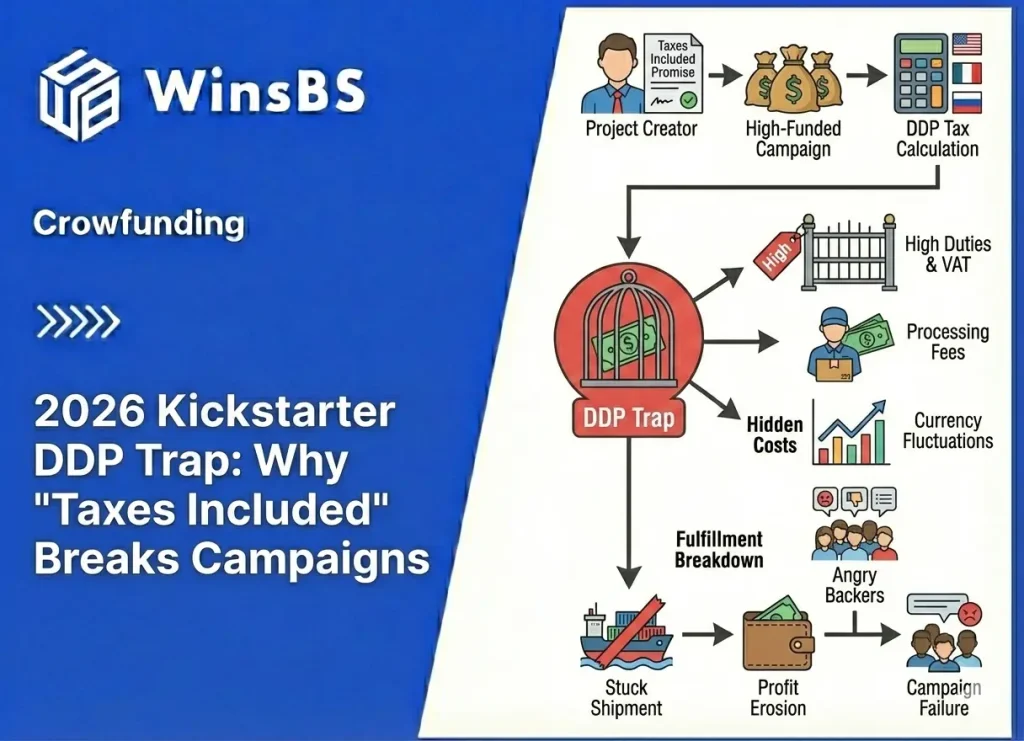
WinsBS vs ShipBob : Crowdfunding Fulfillment Review

WinsBS vs ShipBob for Crowdfunding Fulfillment Which One Actually Fits a Kickstarter or Indiegogo Campaign Better in 2026? Maxwell Anderson — Editor-in-Chief, WinsBS Research Updated for April 2026 Direct Answer If your project is basically ready to behave like a normal U.S. e-commerce brand when fulfillment starts, ShipBob is a reasonable choice. But a lot of Kickstarter and Indiegogo campaigns are not that clean by the time the warehouse needs a final file. The survey is still moving, bundle logic is still messy, international backers are starting to matter more, and what looked like “one shipping run” is quietly turning into two or three waves. In that kind of situation, WinsBS is usually the easier partner to work with—not because ShipBob is weak, but because crowdfunding creates exactly the kind of last-minute operational noise that WinsBS is more used to handling. Introduction Most creators do not realize they picked the wrong fulfillment model until the campaign is already too far along to change it cheaply. Everything looks manageable at first: the funding is in, production is moving, and the shipment file feels like something a normal 3PL should be able to process. Then the real campaign behavior starts showing up—survey data keeps changing, add-ons create new bundle logic, EU backers need cleaner duty handling, and hundreds of addresses move right before shipment lock. That is where the difference between ShipBob and WinsBS becomes real. ShipBob is very good at what it was built for: ongoing DTC operations with steady order flow, cleaner SKU structures, and a business that already behaves like retail. If a creator is basically launching a Shopify brand with crowdfunding as the first sales spike, ShipBob becomes a serious option. WinsBS is built for the part of the campaign where things are still moving. Not “messy” in a negative sense—unsettled in the way crowdfunding usually is when the campaign is successful. Reward tiers overlap. Bundle logic gets revised. BackerKit exports need cleanup. One wave turns into three. International shipments suddenly matter more than the team planned for. In the projects we review, this is usually the point where a campaign-first operator starts to feel very different from a retail-first one. This is especially true for the kind of teams that make up a large share of Kickstarter and Indiegogo launches: 1–4 full-time team members No dedicated logistics manager Most orders shipping inside one narrow fulfillment window Reward structures still changing as survey responses come in 10–20% address edits before final shipment lock 30–60% of backers outside the U.S. in more global campaigns For teams like that, the wrong 3PL does not just create inconvenience. It creates drag at exactly the point where the campaign needs clarity. So this comparison is not really about who has the bigger warehouse network or the nicer software dashboard. It is about something much more practical: are you choosing a partner for a stable retail flow, or for a campaign that is still changing while fulfillment prep is already underway? Executive Summary Most creators do not need a 12-point scorecard just to feel better about a decision. What they usually need is a quicker read on where the operational pressure will land once fulfillment starts. That is what this comparison is meant to do. Looking across the campaigns we review, the pattern is fairly consistent. ShipBob tends to look better when the project is already close to retail: cleaner SKU structures, more U.S.-centric demand, simpler packaging, and a real path into ongoing Shopify volume after the campaign. WinsBS tends to look stronger when the project still behaves like crowdfunding: BackerKit complexity, multiple shipping waves, international DDP requirements, component-heavy SKUs, and a small team trying to keep the file under control while fulfillment prep is already moving. The table below is not meant to flatten everything into a fake tie. It is meant to show where each partner starts to feel easier—or harder—to work with once the campaign gets real. Metric WinsBS ShipBob What Usually Matters in Practice Who It Usually Favors Crowdfunding workflow readiness Built around BackerKit changes, add-ons, and multi-wave fulfillment Works better once SKU and order data are already stable The more the file keeps changing before shipment lock, the more campaign-native operations start to matter. WinsBS North America speed and delivery stability More wave-focused planning, especially for campaign bursts Very strong network for normalized DTC parcel flow If the project ships in concentrated bursts, consistency often matters more than headline speed. Depends on campaign shape Pricing clarity Usually easier for creators to model around project phases More natural for ongoing DTC economics and recurring volume Small teams usually care less about perfect optimization and more about avoiding fee surprises during peak shipping. WinsBS for most campaign teams EU / UK / CA / AU routing, VAT, and DDP More campaign-aligned for global backer mixes and variable declared values Capable, but cleaner when order flow resembles stable retail exports Once international orders become a real share of the campaign, customs logic stops being a side issue. WinsBS System usability for changing campaign data More comfortable with batch edits, bundle shifts, and wave segmentation Strong automation once inputs stop moving The question is not which dashboard looks better. It is which system expects the file to still be changing. WinsBS Inventory accuracy and complex handling Stronger fit for component-heavy sets, premium packaging, and manual QC Excellent for standardized retail cartons and cleaner SKU environments Board games, hardware kits, and fragile multi-part products tend to expose this gap quickly. Depends on product type Support and project management More campaign-oriented support rhythm for lean teams Better fit for clients comfortable with structured, ticket-based support If the team needs fast decisions during survey close or shipping week, support structure matters more than people expect. WinsBS for smaller teams Returns and replacement handling More flexible for component-level issues and campaign-style exceptions Cleaner for standard retail returns loops Backers rarely behave like normal store customers when something arrives damaged or incomplete. WinsBS for complex products

Illustration showing global crowdfunding reward shipping with a lithium battery warning package, supporter group icon, world map with airplane, and compliance checklist beside WinsBS logo and title, symbolizing safe and compliant 3PL order fulfillment for eCommerce crowdfunding.
Crowdfunding Fulfillment, Order Fulfillment, Shipping & Logistics

Lithium Battery Compliance for Crowdfunding Rewards

Lithium Battery Compliance for Crowdfunding — 2025 Guide The Hidden Risk Behind Global Rewards Shipping A Practical Playbook for Kickstarter, Indiegogo & Gamefound Creators WinsBS Fulfillment Research Team – Maxwell Anderson November 2025 Executive Summary Overview: Battery Compliance Is Now the First Gate in Global Rewards Shipping If your Kickstarter or Indiegogo campaign includes any type of lithium battery—built-in, removable, or simply sitting inside the box—your project enters one of the most heavily regulated categories in cross-border shipping. Kickstarter’s 2025 tech review shows that over 30% of electronics campaigns contain lithium batteries, yet most creators only learn the rules after a carrier rejects pickup or customs stops an entire batch. Lithium batteries aren’t “hard” to move. They’re hard to move when the documentation isn’t aligned with aviation and customs rules. A factory safety test does not guarantee air approval. Air approval does not guarantee customs approval. And clearing customs doesn’t automatically authorize delivery into 80+ countries. This guide distills what WinsBS has learned from 500+ battery-inclusive crowdfunding projects (2023–2025): from paperwork mismatches that caused last-minute refusals, to route failures in the EU and Australia, to full recovery operations that brought delayed shipments back on track. If your priority is simple—delivering rewards on time without upsetting backers—this is the reference U.S. creators wish they had before launch day. Core Findings: Where Battery Projects Fail—and Why Factory tests ≠ transport compliance: Factories test for product safety, not aviation laws. Expired or outdated UN38.3/SDS files remain the single biggest reason DHL, UPS, and FedEx refuse battery shipments. Section 321 suspension increases manual checks: As of Aug 29, 2025, 321 de minimis is suspended for commercial imports. Battery products are now pulled for inspection far more often—even if the shipment value is low. Acceptance varies dramatically by region: Hong Kong and Taiwan handle battery parcels reliably. U.S. warehouses face stricter outbound checks. Australia requires mandatory SoC restrictions and performs frequent inspections. Documentation mismatches drive 15–20% failure rates: Incorrect Wh declarations, wrong HS codes (especially 8507), outdated SDS formats, and missing labels are the most common triggers for EU/UK/AU delays. Crowdfunding ≠ ecommerce: Shipping to 60–120 countries in a single wave multiplies compliance touchpoints that normal Shopify or Amazon operations never see. The point many creators miss: delays rarely come from the battery itself—they come from paperwork sequencing, packaging decisions, and route selection. Key Recommendations: How Creators Avoid Battery-Driven Delays Step 1 — Run a pre-launch compliance check: Validate UN38.3 (100Wh batteries. 9/10 Taiwan → U.S./EU Stable outbound inspection; predictable battery handling; high reliability for mid-sized campaigns. Slightly slower EU processing; limited postal flexibility for battery parcels. 8/10 Mainland China → Direct Air Strong price competitiveness; deep manufacturing integration; fast entry for U.S.-bound shipments. Strict document checks; higher “documentation mismatch” returns; occasional route downgrades to ground. 5/10 EU Hubs (Germany / Netherlands / Belgium) Germany = consistent, stable inspections. Netherlands = flexible battery handling. Belgium = strong for EU DDP flows. Occasional HS 8507 flagging; EU states differ in supplemental SDS requests. 7/10 Australia Predictable once accepted; ideal for local backers requiring ground-based redistribution. Extremely strict lithium rules; mandatory SoC limits; high return rate if labels aren’t perfect. 3/10 Canada Strong U.S.–Canada routing; predictable ground networks; smooth processing under 100Wh. Supplemental SDS requests for >100Wh batteries; inconsistent peak-season inspections. 6/10 Key Takeaway: The “correct” route isn’t the cheapest — it’s the one that aligns with your battery type, documentation, and target countries. Using a hub with strong lithium acceptance (HK/TW) dramatically lowers the chance of mid-route rejections or customs delays. 7 Common Battery Compliance Pitfalls in Crowdfunding (With Real Cases) Even well-prepared campaigns run into battery issues—not because the product is unsafe, but because global carriers and customs offices expect paperwork, labeling, and routing to match their exact standards. After supporting hundreds of battery-inclusive Kickstarter and Indiegogo projects, these are the seven failure patterns we see most often. The 7 Pitfalls That Derail Battery Shipments Pitfall What Actually Happens Typical Impact on Creators 1. No UN38.3 Report Carrier system flags the battery as untested; DHL/UPS refuse pickup immediately. Shipment returned to origin; creators lose 1–2 weeks and pay $1K–$3K in fees. 2. Expired UN38.3 Batteries technically “safe,” but treated as unverified if report is older than 12 months. Warehouse hold + reinspection; backers receive delays of 2–6 weeks. 3. SDS Not in GHS Format UPS/FedEx instantly reject outdated SDS templates from factories. Forced reissue of SDS; campaign loses 5–10 days during relabel and reapproval. 4. Missing or Incorrect IATA Battery Labels Cargo inspectors flag parcels; route gets downgraded from air → ground. Shipping times double; costs increase 15–30% depending on lane. 5. Wrong Watt-Hour (Wh) Declaration Carrier reclassifies shipment as “hazmat” or forces manual verification. Unexpected hazmat fees; 7–14 day delay; EU lanes heavily impacted. 6. Using Postal Routes That Don’t Accept Lithium National postal networks reject or destroy parcels containing lithium batteries. Zero recovery—backers never receive their rewards; campaign absorbs full loss. 7. Wrong HS Code (Especially 8507) EU/UK systems trigger extra checks or override DDP; backers are asked to pay duties. Backer frustration spikes; refund and support workload increases dramatically. Key Takeaway: These seven issues have almost nothing to do with the product itself. They’re paperwork, labeling, and routing decisions — and all of them are preventable with proper pre-shipment audits and a 3PL that understands global battery workflows. How a Specialized Crowdfunding 3PL (Like WinsBS) Prevents All These Issues Battery-inclusive campaigns don’t fail because creators lack effort — they fail because global carriers, customs offices, and regional hubs follow different playbooks. A standard ecommerce 3PL isn’t built for this. Crowdfunding requires workflows that anticipate document gaps, label mismatches, route restrictions, and country-by-country variations before shipments ever move. WinsBS built dedicated SOPs for Kickstarter, Indiegogo, and Gamefound campaigns from 2023–2025. The table below summarizes how these workflows directly neutralize the most common failure points. How WinsBS Removes Battery Shipping Risk Issue WinsBS SOP Outcome Missing / Expired UN38.3 Pre-flight document audit; expiration check; factory coordination to reissue compliant reports. Prevents DHL/UPS/FedEx rejection;

Illustration of safe shipping for electronics and battery products beside WinsBS logo and title, showing packages with lithium battery warning labels, airplane, truck, security scanner, and warehouse, symbolizing compliant 3PL fulfillment and order fulfillment services.
Ecommerce, Order Fulfillment, Shipping & Logistics

Safe Shipping for Electronics & Battery Products (2025)

Safe Shipping for Electronics & Battery Products (2025) Compliance, Cost Mitigation & Fulfillment Risk Control WinsBS Fulfillment Research Team – Michael November 2025 Executive Summary TL;DR Since January 1, 2025, the IATA Dangerous Goods Regulations (DGR), 66th Edition has been fully enforced worldwide, tightening compliance for UN38.3 testing and UN 4G/Class 9 certified packaging of lithium batteries and electronic products. This report reviews the first year of enforcement, analyzes real-world seller data, and provides practical insights for sustained compliance as the industry prepares for the upcoming 67th Edition in 2026. Since its enforcement at the start of 2025, the International Air Transport Association (IATA)’s Dangerous Goods Regulations (DGR) 66th Edition has redefined the operational baseline for shipping electronics and lithium batteries (UN 3481/3091). Carriers and customs agencies have reinforced documentation audits, demanding verified UN38.3 test reports, UN 4G/Class 9 certified outer packaging, and valid Safety Data Sheets (SDS, formerly MSDS) for every declared consignment. Over the first three quarters of 2025, B2B exporters and fulfillment centers reported higher inspection rates but lower rejection ratios—evidence that standardized documentation and packaging are reducing overall risk. However, compliance gaps remain for smaller exporters and crowdfunding projects, especially those lacking familiarity with multi-modal requirements under both air (IATA) and sea (IMDG) frameworks. In parallel, the U.S. Pipeline and Hazardous Materials Safety Administration (PHMSA) has already begun enforcing enhanced battery isolation standards, requiring 5 cm (2 inches) non-conductive spacing or certified fire-resistant partitions for lithium shipments stored or processed domestically. This report, compiled by WinsBS Research using aggregated 2024–2025 operational data, summarizes key compliance outcomes observed during the first implementation year of the IATA DGR 66th Edition. It also highlights emerging regulatory themes—such as digital traceability and the EU’s upcoming Battery Passport requirement under Regulation (EU) 2023/1542 —to help B2B sellers prepare for the transition to the 67th Edition in 2026. Key Regulatory Shifts & Risk Areas in 2025 Electronics Shipping Compliance Throughout 2025, the global compliance landscape for electronics and lithium-battery shipments has evolved significantly. The IATA Dangerous Goods Regulations (DGR), 66th Edition and the U.S. PHMSA battery isolation directive have reshaped how B2B exporters handle documentation, packaging, and transport classification. These updates, now fully enforced, demand operational precision and continuous monitoring to avoid costly detentions and rejected shipments. Below are the most notable regulatory shifts and risk areas identified by WinsBS Research during the first year of enforcement: Mandatory UN38.3 Verification: Airlines and customs authorities now require verified UN38.3 test reports before accepting any lithium battery shipment. Non-certified cells or missing summaries have led to repeated detentions in Hong Kong, Frankfurt, and Los Angeles hubs (2025 Q2 data). UN 4G/Class 9 Certified Packaging: The DGR 66th Edition mandates all packages containing lithium batteries (UN 3481/3091) to use UN 4G/Class 9 outer cartons. Carriers have reported a 15% decrease in damage incidents, but inspection frequency increased by 20%. SDS (Safety Data Sheet) Validation: SDS (formerly MSDS) documents must align with the GHS chemical classification system. Outdated SDS versions have been a primary cause of customs delays across EU ports. PHMSA 2025 Isolation Rule: Since July 2025, U.S. warehouses processing lithium shipments must apply 5 cm (2 inches) spacing or certified fire-resistant dividers to prevent thermal propagation. EU Battery Regulation (EU) 2023/1542: The first enforcement phase introduces the concept of a “Battery Passport” for traceability and recycling compliance. Sellers distributing to EU markets should prepare digital product records by mid-2026. These changes highlight a clear trend: global regulators are prioritizing documentation transparency and packaging integrity over shipment volume. Compliance audits have increased across both air and sea freight, emphasizing preventive validation instead of post-shipment correction. The table below summarizes the most impactful regulatory adjustments observed in 2025: Regulatory Area 2024 Baseline 2025 Enforcement Status Operational Impact for B2B Sellers UN38.3 Testing Accepted manufacturer declaration Mandatory verified test summary per shipment Documentation workload ↑ 30%; detentions ↓ 25% with proper verification UN 4G/Class 9 Packaging Recommended for bulk lithium shipments Now mandatory for all lithium-inclusive devices Packaging cost ↑ 8–12%, but insurance claims ↓ 20% SDS Documentation MSDS accepted under legacy format GHS-aligned SDS required, reviewed at customs Ensure SDS issue date ≤ 12 months to avoid clearance hold PHMSA Isolation Standards Advisory only Mandatory 5 cm (2 in) separation or fire-proof divider Warehouse retrofitting needed; improves safety compliance ratings EU Battery Regulation Not enforced Phase I: traceability & passport framework launched Requires data infrastructure for 2026 digital Battery Passport The 2025 data shows that early adopters of standardized documentation and certified packaging achieved higher on-time delivery rates and lower claim ratios. Sellers who continue using outdated formats face growing risks of refusal or surcharge penalties as regulators move toward the 67th Edition (2026). Practical Compliance Checklist for Electronics & Battery Shipments — Lessons from 2025 Enforcement Before shipping electronics or battery-powered products, a quick compliance check can help you avoid costly rejections or detentions. This 5-minute self-assessment summarizes the most common issues flagged under the IATA Dangerous Goods Regulations (DGR), 66th Edition and U.S. PHMSA 2025 requirements. Use it to confirm that your documentation, packaging, and labeling meet current standards before dispatch. The following questions will help you assess potential compliance risks in your fulfillment workflow: UN38.3 Test Verification: Has every lithium battery (UN 3481/3091) been tested and documented with a valid UN38.3 Test Summary? Missing test proof remains the leading cause of shipment refusals. Packaging Certification: Are you using UN 4G/Class 9 certified outer packaging with clear hazard labels and handling marks? Generic cartons no longer meet IATA 66th-Edition standards. SDS Accuracy: Does your Safety Data Sheet (SDS, formerly MSDS) follow the GHS format and include the most recent issue date? Customs authorities in the EU and U.S. now verify SDS validity upon inspection. Review your shipment against the checklist below to determine risk exposure and recommended next steps: Compliance Check What to Verify Risk Level Recommended Action UN38.3 Test Summary Missing or expired test report for lithium batteries High Obtain a valid test report from a certified lab (e.g., TÜV, SGS) before shipping. Attach the summary to your documentation pack. UN 4G/Class 9 Packaging Outer carton lacks UN marking or Class 9 hazard label High Switch to UN-certified packaging and ensure Lithium Battery Marks (120 × 110 mm) are printed and placed on two opposite sides. Safety Data