Free 1 Month of Warehousing for New Clients Start with lower storage cost from day one.

FREE QUOTE

Michael

Since 2013, Michael has been neck-deep in the world of order fulfillment—digging into every nook and cranny of warehousing, logistics, and the full supply chain. What started with mastering 3PL operations quickly expanded into a holistic grasp of how every piece connects: from the moment an order hits the system to the second it lands on a customer’s doorstep, he’s lived and breathed the nitty-gritty.​
Years of rolling up his sleeves in the field have turned him into a go-to for insights that matter—whether it’s streamlining warehouse workflows, troubleshooting last-mile snags, or untangling the complexities of end-to-end supply chain management. For Michael, it’s not just about the processes; it’s about sharing the hard-earned lessons that help businesses run smoother, faster, and smarter.​
Here, he breaks down the chaos of logistics into actionable wisdom—because when it comes to getting things from point A to point B (and every point in between), experience isn’t just valuable. It’s everything.​

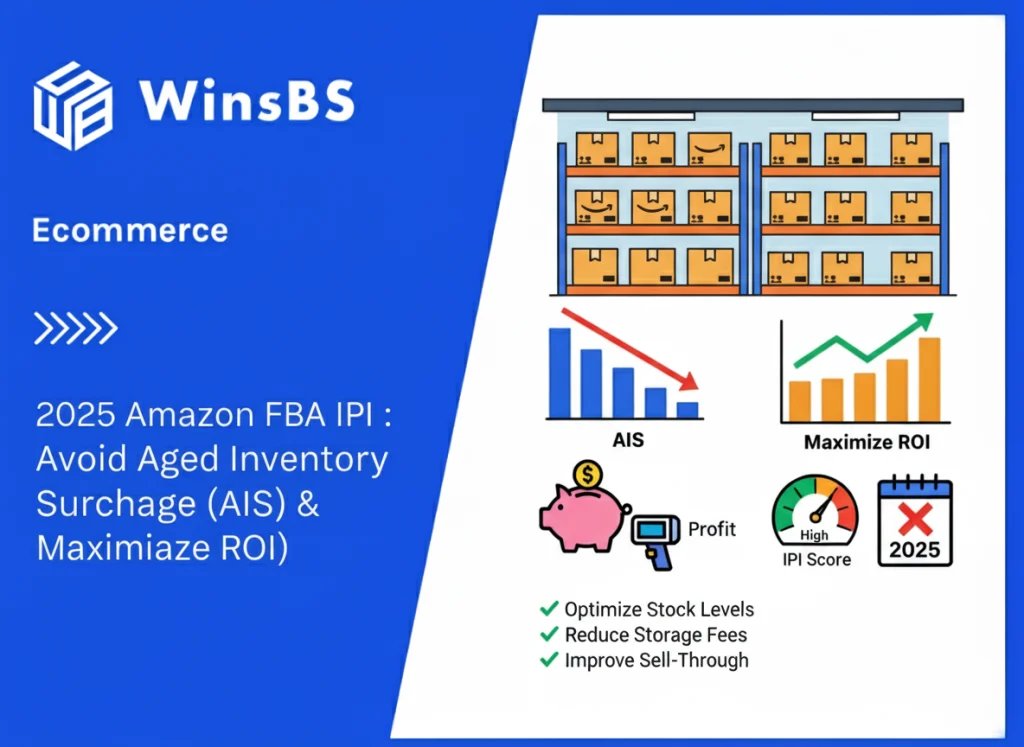
Illustration showing warehouse inventory, IPI score charts, ROI, and a calendar beside WinsBS logo and blog title, symbolizing Amazon FBA IPI management strategies for reducing AIS fees and maximizing ROI.
Ecommerce, Order Fulfillment

2025 Amazon FBA IPI : Avoid Aged Inventory Surcharge (AIS) & Maximize ROI

2025 Amazon FBA IPI Policy Deep Dive How to Avoid the Aged Inventory Surcharge (AIS) and Maximize Your ROI A Complete Guide for Shopify & FBA Sellers WinsBS Fulfillment Research Team – Michael November 2025 Executive Summary TL;DR You’ve hit your funding goal, but hidden fees in FBA could cost you thousands in excess storage and AIS penalties. WINSBS has helped thousands of US sellers avoid overpaying, reducing fulfillment costs by up to 30%. Read this 5-minute guide to avoid FBA AIS traps and save your margin. You’re a Shopify seller or FBA user, and your business is thriving. The excitement is high, and your customers are waiting. Now comes the real challenge: fulfilling your orders without draining your profits due to hidden Amazon fees. The new 2025 FBA IPI policy means your inventory management is more critical than ever. Incorrectly timed shipments or underestimating your storage needs can cost you significant extra fees, especially with the Aged Inventory Surcharge (AIS). You could end up spending 30%–50% more than expected, draining your profits. Amazon FBA is a vital platform for U.S. sellers, but it comes with its own unique challenges. From inventory limitations to the Aged Inventory Surcharge (AIS), managing your stock effectively is the key to avoiding unnecessary costs. That’s where WINSBS comes in. We’ve successfully helped over 3,000+ U.S. sellers (2025 YTD) optimize their FBA operations, saving them an average of 25% on fulfillment costs. This guide will walk you through the critical FBA IPI updates, how to avoid AIS penalties, and how WINSBS can help protect your margins. Key Changes in 2025 FBA IPI & AIS Risks – What You Need to Know The landscape for U.S. sellers is shifting in 2025 as Amazon updates its Inventory Performance Index (IPI) policy and introduces stricter regulations for the Aged Inventory Surcharge (AIS). Understanding these changes is crucial for managing your fulfillment strategy and avoiding unnecessary costs. Here are the key updates you need to be aware of: IPI Update Frequency: In 2025, the IPI score is now updated weekly instead of quarterly, which means your inventory health will be evaluated more frequently. This change requires proactive management to avoid penalties and keep your score above the threshold. Capacity Limits: Starting in May 2025, storage limits will be reduced to 5 months of forecasted sales, down from the previous 6-month threshold. This is especially important during peak seasons like Q4 to avoid exceeding storage limits. Aged Inventory Surcharge (AIS): AIS penalties now begin at 181 days, and the surcharge gradually increases as inventory ages. Proper inventory management is key to avoiding these increasing fees. With these updates, it’s more important than ever to ensure you’re working with a specialized fulfillment partner who understands the intricacies of Amazon’s new policies and how to avoid costly mistakes that could impact your bottom line. Below is a quick summary of the most important changes: Change 2024 Policy 2025 (Nov Update) Impact on Shopify/FBA Sellers IPI Update Frequency Quarterly Evaluation Weekly Refresh + Monthly Reset Real-time inventory monitoring is critical. Sync your data with tools like Zapier to stay ahead of changes. Storage Limits 6 months’ forecasted sales 5 months’ forecast (Effective May 2025) Reduced storage limits mean you’ll need to check your inventory regularly and plan shipments more frequently to avoid penalties. Aged Inventory Surcharge (AIS) Starts at 271 days Starts at 181 days Early action is required to clear excess stock before it incurs AIS penalties. Plan removals or sell off slow-moving items. Understanding these updates is the first step in adjusting your strategy to minimize risks and costs. Proper inventory management and timely actions can help you avoid unnecessary penalties and ensure that you are operating within Amazon’s rules. 5-Minute Self-Check: Is Your FBA Inventory on the AIS Path? You don’t have to wait for Amazon to surprise you with hidden fees. Take control of your inventory now before it’s too late. By performing this quick self-check, you can assess if your stock is heading straight for the Aged Inventory Surcharge (AIS) trap. The new 2025 FBA policies make inventory management more important than ever. With real-time IPI monitoring and smart inventory tools, you can stay ahead of any penalties and protect your bottom line. In this section, we’ll help you quickly assess your inventory for potential issues that could trigger AIS fees. Here are the key questions to consider: Excess Inventory: Do more than 20% of your stock have a shelf life of over 90 days? If so, you’re at risk of incurring high AIS penalties. Stockouts/Accurate Listings: Have you experienced stockouts for more than 3 days in the last 30 days? Low inventory accuracy can lead to penalties or restrictions. Sales Velocity: Are your products moving quickly? Slow-moving items increase the risk of higher AIS fees. Now, let’s dive into your self-assessment. Check your inventory against the following criteria: Inventory Check What to Look For Risk Level Suggested Action Excess Inventory More than 20% of stock over 90 days High Immediately remove excess stock from FBA or run a flash sale to move items quickly. Stockouts More than 3 days of stockouts in the last 30 days Moderate Replenish stock right away and make sure your listings accurately reflect current inventory levels. Sales Velocity Low sales velocity (under 60% sell-through rate) Moderate Run promotional offers or bundle products to boost sales and reduce slow-moving inventory. If your inventory check reveals any red flags, it’s time to act fast. Clearing out excess stock early will save you from unnecessary AIS penalties and keep your fulfillment costs under control. Use tools like WinsBS to sync your Shopify data with Amazon FBA and ensure your inventory is always up-to-date. Quick Fixes for Shopify-FBA Sellers: Emergency, Seasonal, & Long-Term Solutions Now that you’ve assessed your inventory and identified potential risks, it’s time to take action. In this section, we’ll go over some quick fixes to help you reduce AIS fees and keep your fulfillment costs in check. 1. Emergency Response: IPI
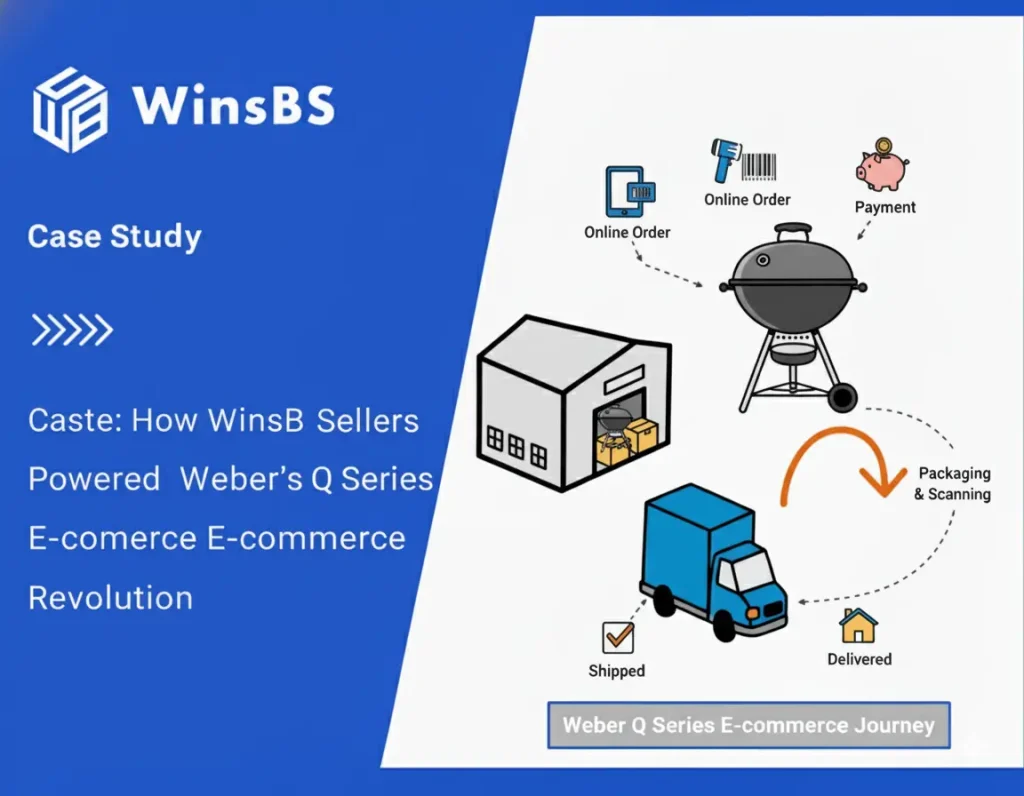
WinsBS logo and case study title beside a Weber Q Series grill close-up, symbolizing eCommerce fulfillment and 3PL order fulfillment services.
Ecommerce, Winsbs

Case Study: How WinsBS Powered Weber’s Q Series E-commerce Revolution

Case Study: Outdoor BBQ Brand Weber × WinsBS From Supply Chain Struggles to 42% E-commerce Boom in One Year — How WinsBS’s Smart Fulfillment Powered Weber’s Outdoor Grilling Revolution with Lightning-Fast Delivery, Pinpoint Accuracy, and 22% Cost Cuts. Get a Free Fulfillment Quote Creative Implementation: Weber Sparks U.S. Outdoor Grilling Revolution When the Weber team introduced their innovative Q Series portable gas grill, the core promise was “grill anywhere, anytime”—by directly addressing everyday grilling challenges. A deep dive into the U.S. market revealed top frustrations with traditional grills: oversized footprints that clutter urban spaces and inconsistent flame control causing uneven cooks and lost flavor. Weber countered with game-changing elements like “ultra-compact 320 sq in cooking area + electronic ignition + infinite control burner + foldable cart for easy transport,” plus iGrill app connectivity for precise temperature alerts and guided recipes, tailored for city dwellers and tailgate enthusiasts. The series spans from the budget-friendly Q1200 to the versatile Q2200, now available on Weber.com and Amazon, hitting over 75,000 units sold in Q3 2025 with a 35%+ customer loyalty rate. At the rollout stage, Weber recognized that bold innovations hinge on rock-solid fulfillment to succeed. Steering clear of patchwork logistics for new product waves, Weber teamed up with WinsBS, an established U.S. e-commerce 3PL specialist—boasting deep roots in outdoor lifestyle logistics (handling 50+ grilling and patio brands)—as their go-to fulfillment powerhouse. Weber’s Official Channels: Weber.com Amazon Store Instagram Weber’s Core Challenges: Regulatory and safety compliance – Stringent DOT hazardous materials rules for propane components and CPSC grilling standards threatened delays in customs clearance, stalling U.S. e-commerce rollouts and risking summer season misses by up to a month. Customer confidence in bulky shipments – Buyers preferred trusted incumbents like Char-Broil, prioritizing “intact delivery” for high-value items; early platform data indicated 7% order drop-offs linked to concerns over secure transport of foldable grills. Seasonal scaling costs – Kickoff runs of 10,000 units battled legacy carrier rates exceeding $20 per shipment, compressing profit margins to 18% or less and impeding direct-to-consumer expansion inspired by agile product launches for portable gas grills. These hurdles emphasized the urgency for an expert 3PL to navigate regulations, ensure flawless delivery, and streamline expenses in U.S. direct-to-consumer grill operations. “We sought a 3PL that locked in safety protocols from day one to fuel rapid brand momentum.” Fulfillment Synergy: From Standard 3PL to Customized Optimization’s “Mutual Empowerment” A U.S. Warehouse Network with Smart Inventory Allocation Strategic three-warehouse coverage — WinsBS’s Dallas central, Beaverton West Coast, and Carteret East Coast facilities span East, Central, and West regions, delivering 85% of U.S. grill orders in 3 days for seamless DTC portable grilling logistics. Dedicated propane and fuel zones — Constant 20-25℃ temperature and 40-60% humidity, with regular fire drills, ensure 100% DOT/CPSC compliance, preventing overselling via real-time API integration with Amazon backend. Efficiency Gains & Cost Transparency Packaging upgrades & rapid response — Addressing 8% “easy-to-dent” feedback, WinsBS switched to reinforced E-flute boxes + protective foam inserts (50% better impact resistance), branded with Weber LOGO and “safe grilling tips,” lifting ratings to 99%. Emergency fixes — For a 23-order “smoky black” shortage, Beaverton transfers via FedEx priority (WinsBS-covered costs) + complimentary grill brushes turned crisis into loyalty, with 17/23 repurchases. Cost savings — Logistics dropped 15% through pre-stocked hot SKUs in high-repurchase zones (e.g., California/New York) and dedicated Amazon picking channels for 24-hour fulfillment (same-day before 3pm). Clear optimization — Iterative monthly reviews provided transparent breakdowns, proving no hidden fees when customizing for low-price fast shipping. Iterative Customization & Scalable Growth Exclusive scheme evolution — The loop refined standard to bespoke: SKU bundling turned slow “matte silver” stock into “tailgate grilling kits” (20% off with tool sets), clearing 2000 units and boosting turnover 30%. Amazon/Weber.com synergy — Compressed timelines and compliance focus slashed first-trial damage rates from 8% to 0.2%, fostering 94% positive ratings and turning users into fans. Compact Q2200 portable gas grill in smoky black, fired up at a tailgate party, highlighting Weber’s ultra-portable grilling series for on-the-go enthusiasts. Customer Testimonial: Real Voices from Retail Partners “ Our debut summer shipment of Q Series portable grills hit a snag after 12 days in transit, with over 40% arriving scuffed or dented from inadequate padding—reviews poured in about ‘grill graveyard’ arrivals, dragging our 4.1 rating down fast. WinsBS’s Dallas central warehouse turned it around: Tailored reinforced crates slashed damage to under 0.3%, and 2-3 day Midwest deliveries transformed gripes into glowing 4.8-star praise. Amazon integrations once triggered stockouts mid-peak season, forcing frantic refunds and lost sales. With WinsBS’s API now alerting us 72 hours ahead, that 35-order blackout for the Q2200? A quick Beaverton airlift plus bonus grill tools fixed it—28 customers returned fired up, ditching the ‘unreliable shipper’ tags in comments. For outdoor brands like us chasing seasonal sizzle, bulletproof logistics and instant credibility are game-changers. WinsBS delivers every time. ” Weber Visit Website Grill Glow-Up: Before & After WinsBS Sparks the Fire Before: Fizzling Out 7-10 days Delivery Time Delayed summer barbecues 88% Order Accuracy Stockouts ruined tailgates 22% of sales Logistics Costs Heavy shipping ate profits 12% Return Rate Dented grills sparked complaints After: Blazing Success 2-4 days Delivery Time Hot off the grill, on time 98.5% Order Accuracy Every order sizzles right 15% of sales Logistics Costs Smoky savings for more flavor 1.2% Return Rate Perfect packs, happy crowds Backyard Bonuses Partnering with WinsBS has turned Weber’s outdoor adventures into a seamless feast for the senses, where every backyard gathering ignites with effortless excitement. With repeat grill purchases soaring by 28%, loyal enthusiasts are firing up their weekends more often than ever, transforming casual cooks into weekend warriors. This surge has fueled a remarkable 45% year-over-year sales explosion, empowering Weber to roll out innovative portable lines that fit perfectly into 2025’s on-the-go lifestyles—from urban patios to remote camping spots. Crowning it all, the Q Series has claimed the throne as Amazon’s top outdoor sensation, lighting up over 80,000 flames in Q3 alone, proving that smart fulfillment doesn’t

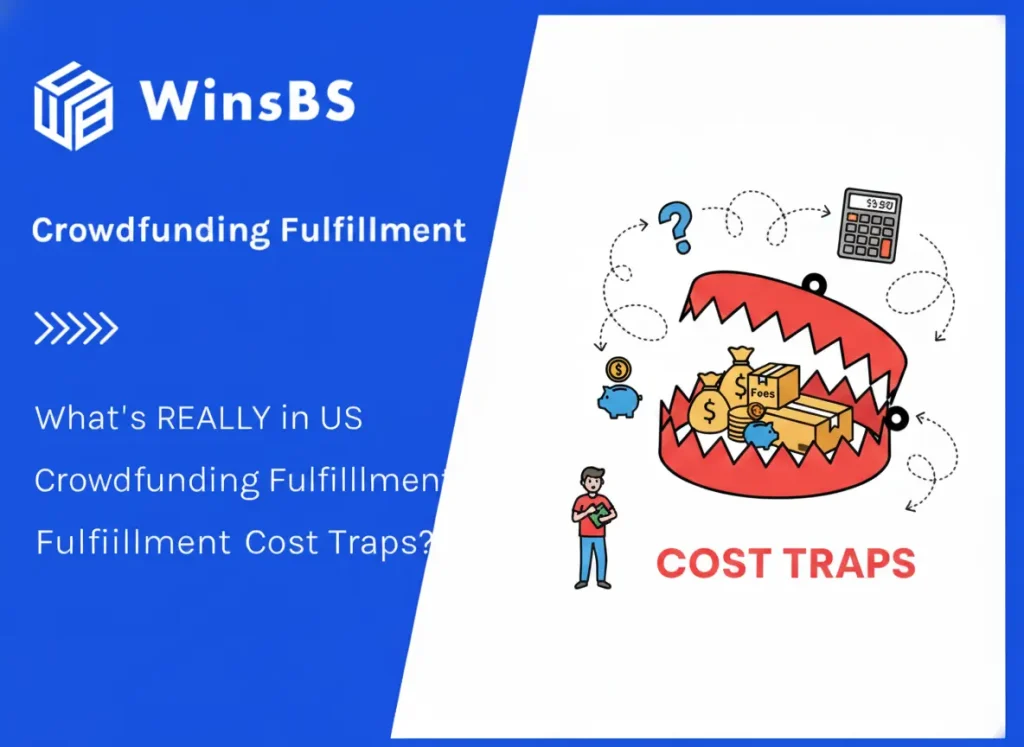
Illustration of a red trap devouring packages and money beside WinsBS logo and title, representing hidden cost traps in U.S. crowdfunding fulfillment and 3PL order fulfillment.
Crowdfunding Fulfillment, Order Fulfillment

What’s Really in US Crowdfunding Fulfillment Cost Traps?(2025)

What’s REALLY in US Crowdfunding Fulfillment Cost Traps Kickstarter, Indiegogo & GameFound WinsBS Fulfillment Research Team – Michael October 2025 Executive Summary TL;DR You raise $100K. A bad fulfillment partner quietly drains $30K–$50K in hidden fees, delays, and damage. WINSBS has shipped 127+ US campaigns and cuts that bleed to under 25%. Read this 5-minute bunker to map every trap—and claim your free 20% savings audit. You’re a US creator who just crushed a crowdfunding goal. The money’s in. Backers are hyped. Now the real fight starts: getting every pledge into backers’ hands without torching your margin. Platform rules, order quirks, and rookie fulfillment picks can swing your total spend 30%–50%. One wrong partner = profit vaporized. Kickstarter and Indiegogo throw you global, multi-SKU chaos (hardware, swag, food). GameFound locks you into tabletop DNA (boards, tokens, stretch-goal add-ons). Each demands a precision-fit fulfillment partner—not a generic 3PL. That’s where WINSBS enters. We’ve fulfilled 127+ US campaigns (live dashboard data, 2025 YTD) and shaved **25% average cost** off every client. This guide is your field manual: visible fees, hidden black holes, platform traps, and the exact WINSBS specs that bullet-proof your profit. I. Fulfillment Cost Breakdown: Visible + Hidden Black Holes 1. Visible Costs: Platform Fees & Payment Rails (2025 Rates) Summary: These are the line items you can see on your platform dashboard—but only one of them is negotiable once the money hits your account. Cost Line Kickstarter (Generalist) Indiegogo (Generalist) GameFound (Tabletop Vertical) Platform Fee 5% of total raised (zero if goal missed) 5% (negotiable to 4%–4.5% on $500K+ raises) 5% (no category surcharges) Payment Processing 3%–5% + $0.20/tx($10-and-under: 5% + $0.08) 3% + $0.20/tx(withdrawal 0.5%–1%; PayPal cheaper) 3% + $0.20/tx(volume discounts on deluxe bundles) Special Add-Ons None (no extra for int’l) InDemand refund insurance (~1% of raise) Per-add-on split-shipment fee ($1.5–$2/order) WINSBS Payment Optimization Layer (post-platform payout): We are not a payment provider. We optimize your existing Stripe/PayPal via volume-pooled routing. 2.9% + $0.25/tx → 15%–25% savings. Zero setup. Calculate Your Savings → 2. Hidden Cost Black Holes: Platform-Specific Profit Leeches Summary: These silent killers routinely eat 20%–40% of net profit. WINSBS neutralizes 90%+ via AI-driven WMS and multi-node US warehousing. Kickstarter International Clearance Black Hole15%–25% customs surcharges on int’l shipments.WINSBS Case: Full FDA/HTS doc suite → $15K saved, 0.3% hold rate. Founder Time Drain200+ hours on order wrangling.WINSBS API sync → 80% time reclaimed. Indiegogo Surge PremiumGeneric 3PLs charge 200% rush on stretch-goal spikes.WINSBS 24h surge → $8K saved, zero premium. Refund CascadeLate ships → 40% refund rate.WINSBS co-share model → 5% refund rate. GameFound Packaging PremiumCustom tabletop boxes → 30%–50% above standard.WINSBS anti-crush cartons → $1.80/unit (vs $3.20) → $12K saved. Component Damage8%–12% in transit.WINSBS kitting + climate racking → ≤1.8%. II. Platform-Specific Trap Map Summary: These are the razor-sharp pitfalls unique to each platform. WINSBS turns them into profit multipliers—here’s the trap-to-triumph playbook. Kickstarter Compliance + Int’l Minefield Generic logistics blind to platform rules → customs seizures and 200%–300% freight spikes. WINSBS Shield: 99.7% int’l pass rate + 3 US nodes (East/West/Central). Cross-region savings: 40%. Lock In Compliance → Indiegogo Surge + Refund Quicksand Stretch goals spike 4x orders → 72 hours+ delays and 30%+ refund exposure. WINSBS Shield: 24h surge capacity + 50/50 refund co-share. Penalty-free, refund rate crushed to 5%. Test Surge Capacity → GameFound Tabletop Ops Deficit Standard 3PL can’t handle bundles → 15% mis-ships and 5%–8% damage eat. WINSBS Shield: Dedicated kitting line + climate-controlled racking. 97% accuracy, ≤2% damage guarantee. Get Tabletop Quote → III. WINSBS Selection Framework (100% Match) Summary: Stop guessing. This is the exact 3-part checklist every platform demands. WINSBS checks every box—starting at $0.80/order with 20% locked savings. Platform Core Requirement 1 Core Requirement 2 WINSBS Proof Kickstarter Compliance docs + int’l clearance mastery 3+ US warehouses (bi-coastal + central) FDA/HTS library 5 nodes → 95% 2–3 day delivery Indiegogo 24h surge response, 4× volume tolerance Refund co-share (damage/reship split) AGV-powered WMS 50/50 split → 35% lower refund burn GameFound Kitting line + multi-SKU bundle logic ≤2% damage SLA (humidity/crush-proof) Tabletop bundling station 1.8% avg damage + FSC cartons WINSBS 100% SLA Guarantee: Miss accuracy, speed, or damage targets? Full month’s fulfillment fee refunded. Claim Your Guarantee IV. Action Center: Cost Snapshot + Self-Audit Summary: One glance tells you where the money leaks. WINSBS plugs them all—with live data, instant answers, and a free audit that locks in your 20% savings. Fulfillment Cost Delta Snapshot (WINSBS Live Data) Line Item Kickstarter Indiegogo GameFound WINSBS Optimized Payment Processing 3.5% + $0.30 4% + withdrawal 3.5% + $0.30 2.9% + $0.25 Int’l Hold Cost 15–25% 10–15% N/A 0.3% Surge Premium N/A 200% N/A 24h Free Component Damage Rate N/A N/A 8–12% ≤1.8% Creator Self-Audit (WINSBS Instant Answers) Kickstarter English compliance docs?3+ US warehouses? WINSBS: Yes + Yes. Download Doc Pack Indiegogo Surge response SLA?Refund co-share? WINSBS: 24h + Yes (50/50). Run Surge Simulator GameFound Kitting line?Climate racking? WINSBS: Yes + Yes. Get Tabletop Quote Lock It In: Book Your Free Fulfillment Audit—20% savings report, zero cost. Book Audit Now WINSBS: 127+ campaigns. $0.80/order start. 97% accuracy.

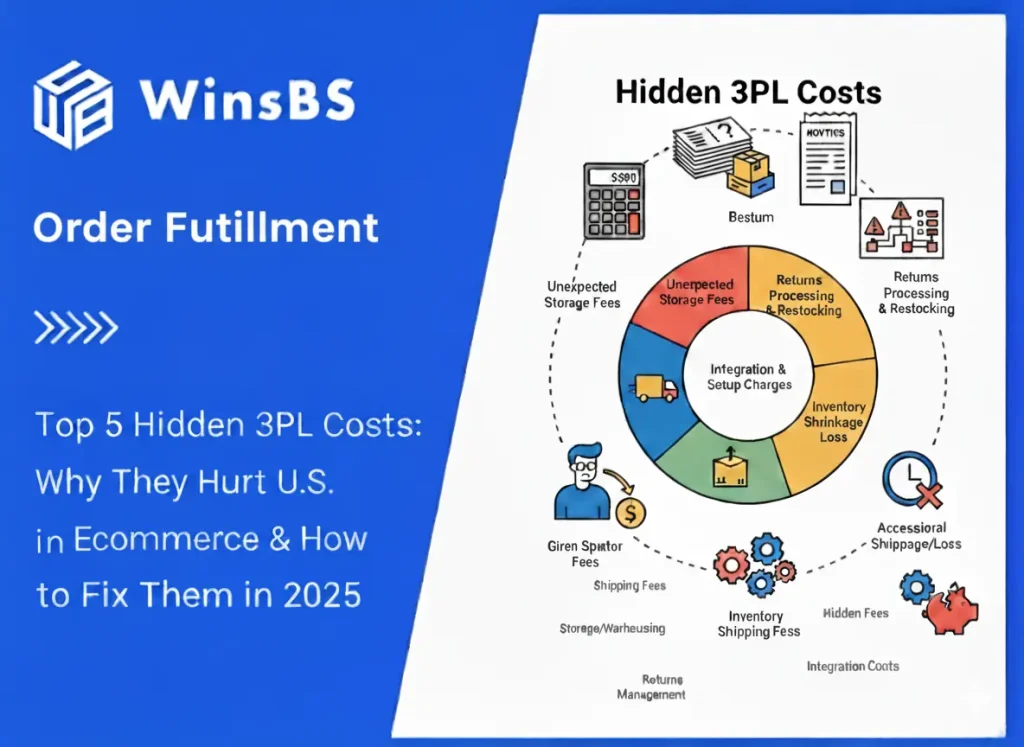
Infographic showing circular hidden 3PL cost model with U.S. map, money bag, question mark, and gear icons beside WinsBS logo and title, representing hidden 3PL costs and order fulfillment solutions for U.S. eCommerce in 2025.
Ecommerce, Order Fulfillment

Top 5 Hidden 3PL Costs: Why They Hurt U.S. E-commerce & How to Fix Them in 2025

Top 5 Hidden 3PL Costs: Why They Hurt U.S. E-commerce & How to Fix Them in 2025 WinsBS Fulfillment Research Team – Michael October 2025 Executive Summary Core Challenge: How a Single $1.50 Accessorial Fee Can Cost Your Business $180,000 Annually For high-volume US-based e-commerce brands, third-party logistics (3PL) is the critical infrastructure enabling the two-day shipping and free returns consumers demand. However, for many growing U.S. eCommerce brands, profit erosion doesn’t come from base fulfillment fees—it comes from hidden accessorial charges buried deep in the fine print. Industry Insight: Logistics audit analyses indicate 92% of operators report unforeseen surcharges on returns cause a quarterly profit margin decline of 5% to 12%. This scale effect is astonishing: a trivial $1.50 surcharge per order, at 10,000 orders/month, is an annual profit drain of $180,000. This guide audits the five most predatory 3PL cost traps, offering contract negotiation and continuous auditing strategies to reclaim control. Top 5 Hidden Cost Traps in 3PL TOP 1: Storage Overages & Penalties: The FBA-Style Inventory Trap Summary : Base storage fees are rarely the issue—it’s the penalty structure behind them that silently doubles your cost. Hidden Cost Type The Problem to Watch For Mitigation Strategy (Contract Negotiation Focus) Long-Term Storage Surcharges Rates can double or triple past the 30-to-60-day “free period,” often with no cap, punishing slow-moving inventory. Negotiate Tiered Rates and Caps: Mandate a hard maximum rate cap. Require proactive WMS alerts (e.g., 15 days notice) for inventory nearing the overage threshold. Minimum Volume Commitments (MVC) You are billed for unused pallet or cubic foot capacity if your inventory falls below the required minimum. Demand Flexibility and Buffer: Negotiate a floating buffer zone (e.g., ±20% fluctuation). If penalized, negotiate paying only the “Service Fee Differential,” not the full unused fee. “Common Area” Allocation Fees Some contracts allocate non-storage costs (aisles, offices) proportionally, inflating your billable space by 10%–15%. Demand Transparency: Stipulate that storage fees must be based only on the actual footprint of your product shelves/pallets, excluding shared facility overhead. TOP 2: Accessorial Charges: The Carrier Surcharge Markup Time Bomb Summary : What really costs you isn’t the shipping fee—it’s the invisible surcharges you can’t see or control. Hidden Cost Type Core Content Mitigation Strategy (Operational Control Focus) Residential Delivery Surcharge (RDS) Rising fee (approx. $4.00–$5.35/piece) applied to residential orders (60% of US volume). A common target for 3PL markups. Third-Party Carrier Audits: Use audit software to verify the 3PL is NOT adding an administrative fee on top of the official carrier RDS. Use USPS Priority Mail for small residential parcels for lower or no RDS. Fuel Surcharge Markup A percentage fee based on carrier rates. 3PLs often add their own admin markup on top of the floating cost. Set Markup Cap: Negotiate to follow the official carrier fuel surcharge rate; prohibit any 3PL administrative markup. Require monthly reports based on the official EIA index. Dimensional Weight (DIM) Discrepancies DIM weight is greater than actual weight. Oversized packaging by the 3PL rapidly escalates your freight cost. Mandatory Package Engineering & Penalties: Enforce maximum acceptable packaging dimensions in your SLA. Include a penalty clause allowing you to charge the freight cost differential if excessive packaging leads to a carrier rate upgrade. TOP 3: Fulfillment & Labor Fees: Unexpected Manpower Bills Summary : Be wary of tasks vaguely defined as “extra labor”—they are often breeding grounds for hidden fees. Hidden Cost Type The Problem to Watch For Mitigation Strategy (Process & Documentation Focus) Inbound Prep Fees Charged if your shipment lacks necessary barcodes (UPC, GS1) or has incorrect palletization. Standard Operating Procedure (SOP): Provide a detailed Inbound SOP. Negotiate an initial grace period (e.g., first 5 shipments free adjustment). Only accept charges for non-compliance documented with photo evidence. Kitting & Re-Packaging Assembling gift sets or bundles. Rates escalate dramatically if the scope is temporarily modified mid-contract. Pre-Negotiate Rates: Define all potential kitting projects (e.g., 3-piece assembly) and set clear per-piece rates before signing. Avoid using temporary hourly labor rates unless absolutely necessary. Returns Processing Fees Cost to inspect, re-stock, and re-package returned goods. This is usually the highest variable cost. Tiered Returns Policy: Divide returns into clear Tiers (Tier 1: quick check/restock; Tier 3: refurbishment/cleaning). Negotiate a lower rate for Tier 1 returns, and aim for a total cost cap on Tier 3 processing. TOP 4: Contractual Fine Print: The Crucial Landed Cost Liability Clause Summary : Liability waivers written for the 3PL can force you to pay twice when inventory is lost. Hidden Cost Type Core Content Mitigation Strategy (Legal Review Focus) Inventory Shrinkage Liability Compensation typically defaults to Cost Price, not replacement or Landed Cost, for lost/damaged inventory. Negotiate to Landed Cost (Critical): Consult legal counsel. Negotiate compensation to cover, at minimum, Landed Cost (Cost + Inbound Freight + Duties). Define a shrinkage tolerance (e.g., 0.5% of total inventory); losses over this threshold must be the full financial responsibility of the 3PL. Early Termination Penalties Exiting a contract early (often 3 years) can trigger a massive penalty of 6 to 12 months of average service fees. Insert “Non-Performance” Escape Clause: Define clear, measurable SLA KPIs (e.g., 99.8% accuracy). Negotiate a clause allowing penalty-free termination if the 3PL fails to meet these KPIs for three consecutive months. IT/WMS Integration Fees Cost to connect your ERP/OMS (Shopify, NetSuite) to the 3PL’s WMS. Push for Fixed-Fee Agreements: Avoid hourly IT consulting rates. Negotiate a one-time, fixed implementation cost to prevent fee escalation due to unforeseen technical issues. TOP 5: Administrative & Management Fees: The Death of a Thousand Cuts Summary : Don’t let small, monthly “handling fees” bleed your long-tail profits. Hidden Cost Type Core Content Mitigation Strategy (Audit & Agreement Focus) Invoice Processing Fees A fixed monthly fee ($50–$200) to send you a bill or report. Consolidate or Waive: Negotiate to have this fee waived or included in the Minimum Monthly Commitment. If charged, demand only one consolidated master invoice per month to avoid multiple processing fees. Billing Discrepancy Surcharges Some 3PLs charge for the time

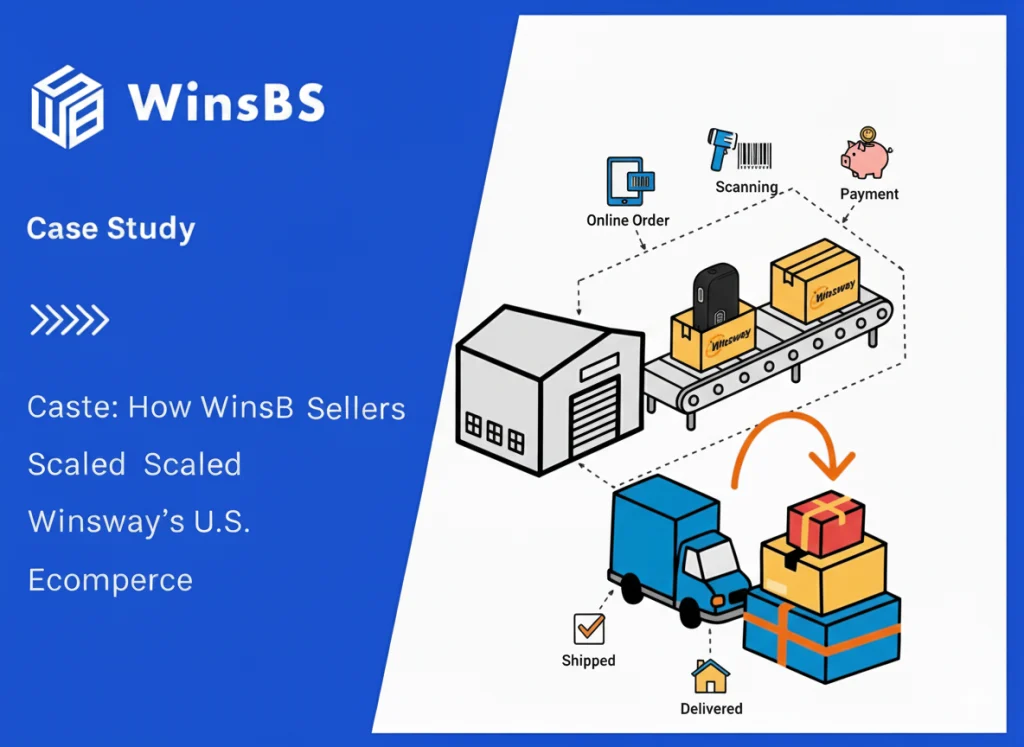
WinsBS logo with blog title "Case: How WinsBS Scaled Winsway’s U.S. E-Commerce", showing a warehouse line-art illustration with a worker placing a charging power bank onto a package labeled "Winsway" on a conveyor belt, with an orange arrow symbolizing 3PL fulfillment and order fulfillment process.
Ecommerce, Winsbs

Case Study: How WinsBS Scaled Winsway’s U.S. Ecommerce

Case Study: Top Temu Seller × WinsBS From 0 to top seller in 1 Year — How WinsBS U.S. Warehouses powered Winsway’s order fulfillment with speed, accuracy, and lower costs. Get a Free Fulfillment Quote Creative Implementation: WINSWAY Opens U.S. Power Bank Market with Crowdfunding Thinking When the WINSWAY team finalized the design for their first mini capsule power bank, their core value proposition was “zero-burden travel power”—the essence of crowdfunding: precisely capturing user pain points. After surveying the U.S. market, they identified two major issues with mainstream power banks: bulky designs unfit for pocket carry and discrepancies between labeled and actual capacity, leading to “endurance anxiety.” To address this, WINSWAY launched key features like “5000mAh/10000mAh ultra-compact capsule design + built-in Type-C cable + dual-device 22.5W fast charging,” with chip optimizations for LED digital display and wireless foldable output, targeting business commuters and outdoor travelers. The product line focuses on the “ultra-portable wireless series,” expanding from entry-level 5000mAh to premium 10000mAh models.Live on SHEIN, with Q3 2024 sales exceeding 100,000 units and a 25%+ repurchase rate. In the startup phase, the WINSWAY team knew: Creative ideas require reliable fulfillment to land. Unlike trial-and-error logistics for new ventures, WINSWAY selected WinsBS, a deep-rooted U.S. ecommerce 3PL provider—rich in consumer electronics experience (serving 50+ power bank brands)—as their top partner. WINSWAY’s Official Channels: TEMU Mall SHEIN Store TikTok WINSWAY’s Core Challenges: Lithium battery compliance – Strict UN38.3 certification and FDA warehousing standards posed risks of cargo seizure for non-compliance, complicating U.S. power bank ecommerce fulfillment and delaying launches by weeks. New brand trust barriers – Users favored established names like Anker, demanding “zero-damage delivery” to build credibility; early TEMU/SHEIN reviews showed 10% abandonment due to perceived reliability gaps in portable charger logistics. Small-batch trial sales costs – Initial 1000-unit runs faced traditional logistics fees of $3+ per unit, squeezing margins to under 15% and hindering crowdfunding-inspired DTC scaling for fast charging power banks. These challenges highlighted the need for a professional 3PL to resolve compliance, experience, and cost issues in U.S. DTC power bank fulfillment. “We needed a 3PL that nailed compliance from the start to build trust fast.” Fulfillment Synergy: From Standard 3PL to Customized Optimization’s “Mutual Empowerment” A U.S. Warehouse Network with Smart Inventory Allocation Strategic three-warehouse coverage — WinsBS’s Dallas central, Beaverton West Coast, and Carteret East Coast facilities span East, Central, and West regions, delivering 85% of U.S. power bank orders in 3 days for seamless DTC portable charger logistics. Dedicated lithium battery zones — Constant 20-25℃ temperature and 40-60% humidity, with regular fire drills, ensure 100% UN38.3/FDA compliance, preventing overselling via real-time API integration with SHEIN backend. Efficiency Gains & Cost Transparency Packaging upgrades & rapid response — Addressing 8% “easy-to-crush” feedback, WinsBS switched to E-flute rigid boxes + shock foam (50% better crush resistance), branded with LOGO and “safe fast charging” tips, lifting ratings to 99%. Emergency fixes — For a 23-order “cherry pink” shortage, Beaverton transfers via FedEx priority (WinsBS-covered costs) + $4 built-in cable gifts turned crisis into loyalty, with 17/23 repurchases. Cost savings — Logistics dropped 15% through pre-stocked hot SKUs in high-repurchase zones (e.g., California/New York) and dedicated TEMU picking channels for 24-hour fulfillment (same-day before 3pm). Clear optimization — Iterative monthly reviews provided transparent breakdowns, proving no hidden fees when customizing for low-price fast shipping. Iterative Customization & Scalable Growth Exclusive scheme evolution — The loop refined standard to bespoke: SKU bundling turned slow “mint green” stock into “travel fast charge kits” (20% off with LED cables), clearing 2000 units and boosting turnover 30%. TEMU/SHEIN synergy — Compressed timelines and compliance focus slashed first-trial damage rates from 8% to 0.2%, fostering 94% positive ratings and turning users into fans. Compact 10000mAh capsule power bank in cherry pink, held for display, highlighting WINSWAY’s ultra-portable fast charging series. Customer Testimonial: Real Voices from Retail Partners “ Our first Temu power bank batch arrived after 10 days, with half the cherry pink units dented from poor packaging—customers flooded reviews with ‘shipping nightmare’ complaints, tanking our 4.2 rating. WinsBS’s Carteret East Coast hub flipped the script: Custom E-flute boxes cut damage to 0.2%, and 1-2 day East deliveries turned those headaches into 4.9 stars. SHEIN syncs used to oversell, leaving us scrambling for refunds. Now, their API flags stockouts 48 hours early, and that one 23-order glitch? Carteret FedEx rush + free cables salvaged it—17 buyers came back stronger, no more ‘scam’ vibes in feedback. For DTC upstarts like us, real fixes and fast trust matter. WinsBS makes it happen. ” WINSWAY Visit Website Results: Data That Proves Fulfillment Is the Growth Engine Metric Before WinsBS After WinsBS Improvement Customer Feedback Order Accuracy 90% 99.9%+ +9.9% “API sync ended oversells on cherry pink models.” Avg. Delivery Time 4–6 days 2.9 days -50% “TEMU 24h channel cut East Coast waits to 1–2 days.” Logistics Cost % 16–18% 13.6% -15% “92% shipping discounts made small batches viable.” Damage/Return Rate 8% 0.2% -97.5% “E-flute boxes fixed crush issues—99% packaging wins.” Peak-Month Orders 1,500 orders 6,000 orders +300% “Black Friday tripled volume with 99.7% on-time.” Additional Outcomes: Repeat purchase rate up 30% (vs. industry 18%). 350% YoY revenue growth, fueling 10X expansion in 18 months. WINSWAY hit top seller status on TEMU with 100,000+ Q3 units sold. Why WinsBS Stands Out in U.S. Ecommerce Fulfillment Compliant Supply Chains Build Trust: Dedicated lithium battery zones in Carteret ensure 100% UN38.3/FDA transparency, eliminating seizure risks and providing real-time visibility for WINSWAY’s portable chargers. Technology Powers Elastic Scaling: API integration and AI predictions handle 300% TEMU spikes, cutting oversell incidents by 99.9% while slashing inventory costs 15% through smart SKU pre-stocking. Optimization as a Growth Lever: Emergency bundling turns slow stock like mint green into 20% off kits, boosting turnover 30% and transforming returns into loyalty via rapid FedEx fixes and custom gifts. Don’t just take our word for it See what our clients say about us “ Launching our capsule power banks on SHEIN, packaging crushes were killing reviews—8% returns

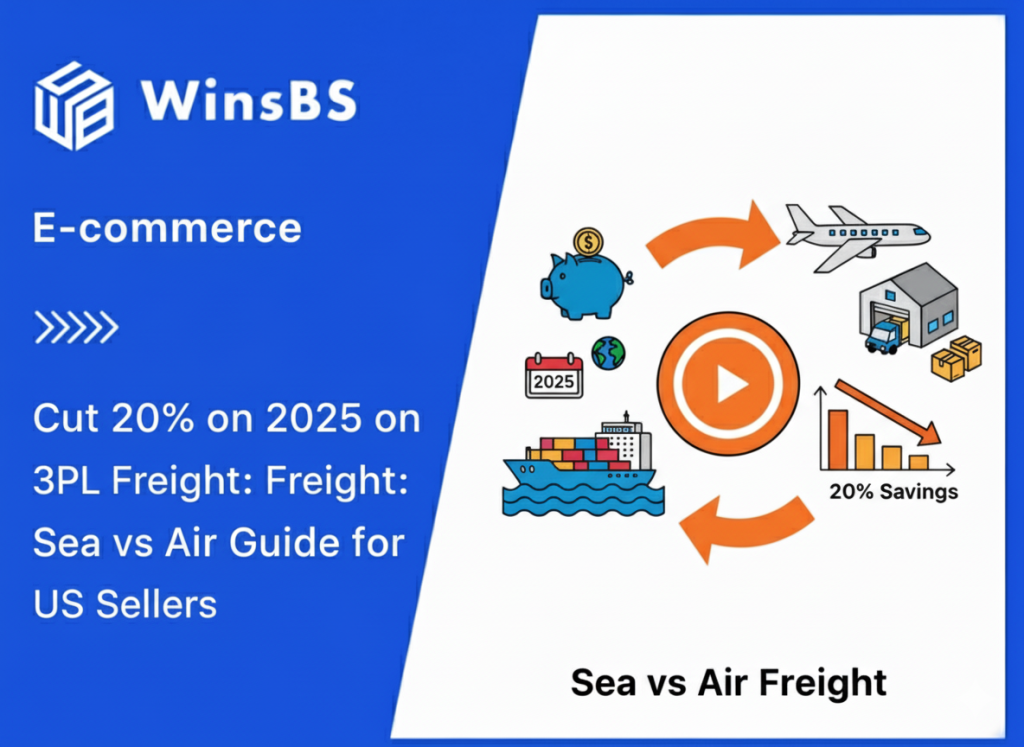
Infographic titled "Cut 20% on 2025 3PL Freight: Sea vs Air Guide for U.S. Sellers" under the E-commerce category, showing a cargo ship, airplane, warehouse, delivery truck, 2025 calendar, and a bar chart with "20% Savings", symbolizing 3PL freight, order fulfillment, and cost-saving comparison between sea and air shipping.
Ecommerce, Order Fulfillment

US E-Commerce Sellers: How to Cut 3PL Freight Costs 20% in 2025 Using Sea & Air

2025 3PL First-Mile Freight Costs Guide: Breaking Down Sea vs Air Shipping Fees for US Cross-Border E-Commerce Quick 3-Step Guide to Your 2025 3PL First-Mile Freight Costs Quickly spot risks and savings. Tap cards to expand. ? Step 1 – Identify Your Risks Tap to expand for your risks↓ Small <500kg/month: THC fees, de minimis duties apply. Mid 800–1500kg: LCL surcharges, FCL volume limits. Large >1500kg: Detention, inventory imbalance. ? Step 2 – Calculate Landed Cost Tap to expand formula & example ↓ = (Weight_KG * Rate_per_KG) + (Value * (Tariff_Base + 10%)/100) + (CBM * THC_35) + … Example: 400kg / 10 CBM electronics, $2,000 → Sea: ~$1,373, Air: ~$2,050 → Save $677 (25%) Paste formula into Excel or Google Sheets Enter weight, CBM, value, HS code (usitc.gov/hts → electronics → HS85xx) Add buffer days for potential delays ? Step 3 – Choose the Right Strategy Tap to expand strategies ↓ Small: Air + small-package; maintain 15-day buffer stock. Avoid LCL minimum thresholds. Mid: Shared FCL 10–15% savings, lock quarterly space, use LCL + dedicated line for misc fee reduction. Large: 80% sea + 20% air, pre-plan stock, contract free detention days. Case: Mid-tier seller Mike saved $8K and reduced turnover from 42 → 28 days by switching strategy. For US e-commerce sellers, 2025 freight is a balancing act: You need to ship fast enough to keep Amazon customers happy… but air freight at $6/kg can crush your ROI. You want to save with sea… but LCL’s “1CBM minimum” can trap you into overstocking. De minimis is gone, HS codes are trickier, and demurrage fees hit $120/day—one mistake and your quarter’s profit could vanish. I wrote this articlefor sellers who’ve had enough of “guesswork freight”: Skip the 45-minute Google searches—our 10-second self-check tells you if duties, fees, or delays are your biggest risk. No more “close enough” math—our Landed Cost formula includes every hidden fee (THC, LCL ops, even Q4 detention). See exactly how Mike saved $8k in Q3 (he ships 400kg/month—just like you) with a simple air/sea mix. This isn’t theory. It’s the same solution we’ve used with 1,000+ US sellers to cut freight costs by 15–25%. Take control of your freight costs—use Winbs check to see exactly what needs attention. 2025 First-Mile Freight Trends: Up 4-7% Overall, But It’s All About the Splits 2025 US cross-border shipping fees are splitting wide: LCL sea runs $1.1–2.1/kg on transpacific routes (up 20–25% YoY), FCL 20ft containers cost $3,500–4,800/unit. Economy air holds $3.2–6/kg, spiking to $6–7/kg during Q4 peaks. Policy alert: De minimis suspension begins Aug 29 for parcels under $800 (duties 3–6% + 10% baseline). B2C commercial shipments remain HS-based (e.g., electronics 3.5–5.6%). Transit update: Red Sea detours add 2–5 days in Q4; port congestion may worsen delays. IATA forecasts +5% air demand but rates remain flat. Seller impact: Small-batch shippers face misc fee jumps of 20% (THC costs rise), bulk shippers risk inventory mismatches. Quick action: Run the 10-second check below to identify if duties, fees, or delays are your top risk. 10-Second Self-Check: Freight Costs & Risks Seller Type / Monthly Volume Core Costs & Challenges Risk Level Recommended Action Small-Batch Sellers (<500kg/month) De minimis duties apply on <$800 parcels (3–6%) THC fees may represent 15–25% of shipping Fast turnover increases handling risk High Check Landed Cost; prioritize fast/air shipments; maintain small buffer stock Mid-Volume Sellers (800–1500kg/month) LCL surcharges 10–20% on some routes FCL minimums may impact flexibility Seasonal peaks require careful space planning Medium Balance LCL/FCL shipments; plan quarterly bookings; monitor demurrage fees High-Volume Sellers (>1500kg/month) Detention fees $50–80/day Inventory imbalances possible if demand fluctuates Sea freight preferable for cost efficiency Low Leverage sea freight; pre-plan stock levels; optimize warehouse rotation Identify your scale → Review costs & risks → Apply recommended actions to reduce shipping expenses. Full Landed Cost Calc Formula: Freight Cost Calculator = (Weight_KG × Rate_per_KG) + (Value × (Tariff_Base + 10%) / 100) + (CBM × THC_35) + (Delay_Days × Demurrage_120) + (Value × 0.5% Insurance) + (LCL_Fee_65 / Ticket) LCL Fee ($/Ticket): LCL operation fee per ticket FCL Fee ($/Ticket): FCL operation fee per ticket LCL FCL Weight (KG): Enter shipment weight in kilograms Rate per KG ($): Enter rate per kilogram Value ($): Enter shipment value for duties and insurance Tariff Base (%): Enter HS-based tariff percentage CBM: Enter cubic meters for THC calculation Delay Days: Enter estimated delay days for demurrage Tickets: Enter number of tickets for fee split Calculate Total Cost: — Contact WINSBS for Detailed Quote Var Breakdown: Tariff_Base = HS rate (electronics 3.5-5.6%); THC = Port handling $35/CBM; Demurrage = $120/day; Insurance = 0.5% of value. Example: 400kg / 10CBM electronics, $2000 value, HS 3.5% +10%: Sea $1.6/kg → $1,373 (~$3.43/kg); Air $4.5/kg → $2,050 (~$5.13/kg) — Save $677 (25%). Seller-Tier Strategies: Now that you’ve crunched the numbers, let’s match you to a strategy that actually fits your workflow—no jargon, just solutions to your biggest headaches. Quick summary: <500kg/month: LCL minimums (1 CBM / ~353 lb) force overstock. Use air freight + small parcels to avoid minimums. 800–1500kg/month: Too large for costly LCL but too small for a full container — consolidated (shared) FCL splits the cost. >1500kg/month: Mix sea and air to avoid stockouts and overstock caused by one-size-fits-all shipping. Small-Batch (<500kg/month) — Fast-moving goods Recommended: Air + small parcels (typically $4–$6/kg, 7–10 day delivery). How to implement Pick a carrier: Use services like ShipBob or WINSBS. Sign up, enter weight and HS code, and get a quote. Many providers have no minimum under ~50kg (110 lb). Mix transport: ~70% air for urgent restocks and ~30% sea for backup inventory. Reorder trigger: Restock when stock drops below 15 days of average sales; automate with Excel or an inventory tool. Avoid LCL minimums: LCL providers often bill a full 1 CBM even for smaller shipments—air + small parcels avoids that “empty-space tax.” Mid-Volume (800–1500kg/month) — Large items Recommended: Shared FCL (consolidated shipping) or LCL plus a dedicated freight line. How to implement Consolidated FCL: Search

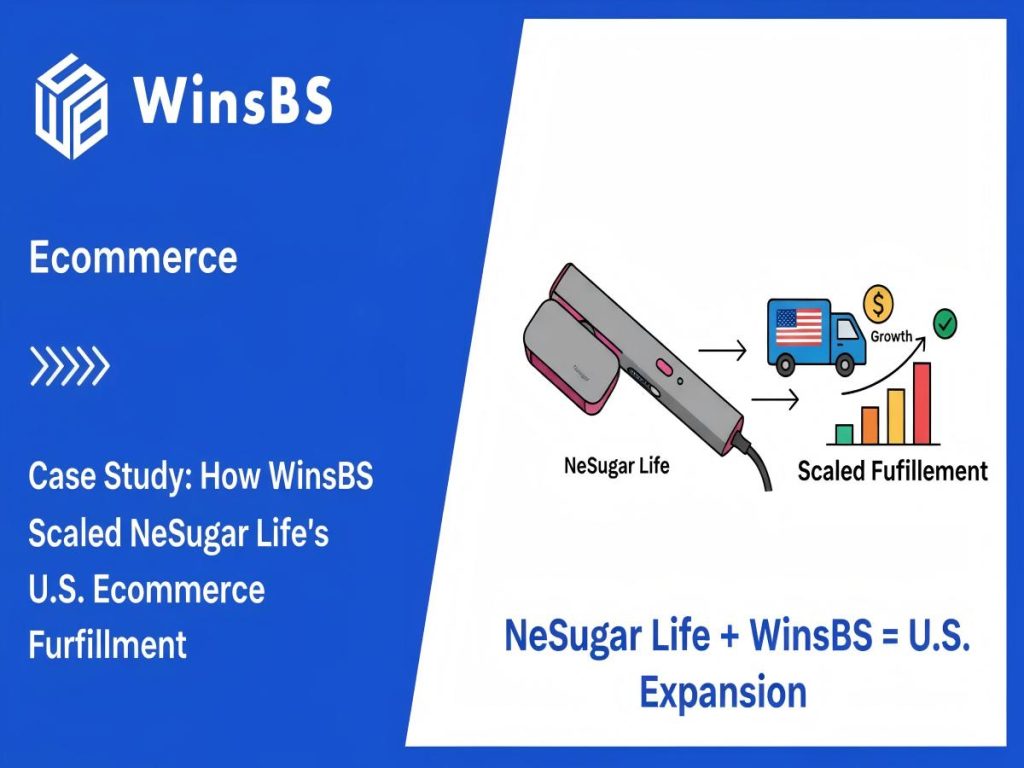
WinsBS logo with eCommerce category and case study title on the left, and NeSugar Life product with an arrow pointing to a truck featuring the U.S. flag, growth chart, and “Scaled Fulfillment” text on the right, symbolizing 3PL fulfillment and U.S. order fulfillment expansion.
Ecommerce, Winsbs

Case Study: How WinsBS Scaled NeSugar Life’s U.S. Ecommerce Fulfillment

Case Study: NeSugar Life × WinsBS From 150%–200% YoY Growth to ~8X in 4 Years — How WinsBS U.S. Warehouses powered NeSugar Life’s order fulfillment with speed, accuracy, and lower costs. Get a Free Fulfillment Quote A Fast-Growing DTC Brand with Supply Chain Headaches NeSugar Life is a DTC brand focused on portable personal care electronics, including handheld garment steamers and travel-friendly irons, priced between $29.9 and $109. Products are sold through its Amazon U.S. Store, Shopify website, and social platforms like Facebook and YouTube. NeSugar Life’s Channels: Shopify Website Facebook YouTube Amazon Store NeSugar’s Core Challenges: Unstable delivery times – A single West Coast warehouse meant East Coast customers waited 5–7 business days, with complaint rates exceeding 15%. Inventory mismatches – Their former 3PL often mis-shipped SKUs (e.g., the wrong steamer nozzle attachment). Unsold inventory piled up (10%), while stockouts reached 8%. High logistics costs – Shipping consumed 18%–20% of revenue, compared with an industry benchmark of 12%–15% for DTC consumer electronics (Deloitte 2024 Ecommerce Logistics Report). Inability to handle peak seasons – On Black Friday, delayed orders hit 20%, and returns surged to 8%. “We needed visibility and accountability. The old 3PL left us blind to inventory accuracy, and customers noticed every mistake.” WinsBS’s Fulfillment Solution: From Chaos to Control A U.S. Warehouse Network with Smart Inventory Allocation Direct control on the West Coast — WinsBS operates its own facility in Beaverton, Oregon, ensuring safe storage and professional, consistent order processing for small electronics. Strategic three-warehouse distribution — Leveraging data that showed East (40%), Midwest (35%), and West (25%) order shares, WinsBS activated New Jersey, Dallas, and Oregon warehouses. This allowed 85% of orders to arrive within 3 days and cut average shipping distance by 45%. Efficiency Gains & Cost Transparency Batch picking & automation — With WinsBS’s WMS, pick efficiency jumped from 120 units/hour to 300 units/hour. Custom SKU rules — NeSugar Life set pairing rules in the system, eliminating nozzle mix-ups. Cost savings — Logistics spend dropped from 18.5% to 12.2% of revenue, thanks to flat-rate packing, per-unit storage fees, and carrier-negotiated discounts. Clear invoices — A monthly breakdown of costs reassured finance teams. When NeSugar requested eco-packaging, WinsBS provided an immediate cost comparison, proving there were no hidden charges. Professional Returns Processing & Happier Customers Reverse logistics overhaul — Returned steamers were inspected (functional testing), verified for condition, and restocked within 3 days. Return rates dropped from 8% to 3.5%. Handheld garment steamer in pink, held by a model, showcasing NeSugar Life’s portable electronics. Customer Testimonial: Real Voices from Retail Partners “ WinsBS’s in-house West Coast warehouse is the real difference. Before, West Coast orders took 4+ days; now they arrive in 1–2 days. During back-to-school season, they processed 200+ orders in one day and even warned us 72 hours before stockouts. Their WMS let us set SKU pairing rules, so no more wrong nozzles shipped. And when products were returned, WinsBS inspected, cleaned, and restocked them in 3 days — with photos of any damaged units. For small retailers like us, efficiency and transparency matter. WinsBS delivers both. ” NeSugar Life Visit Website Results: Data That Proves Fulfillment Is the Growth Engine Metric Before WinsBS After WinsBS Improvement Customer Feedback Order Accuracy 90% 99.7%+ +9.7% “Nozzle mismatches finally solved.” Avg. Delivery Time 5.8 days 2.9 days -50% “West Coast deliveries cut from 4 days to 1–2.” Logistics Cost % 18.5% 12.2% -6.3% “Invoices are clear and predictable.” Return Rate 8% 3.5% -56% “Returns inspected, cleaned, restocked fast.” Peak-Day Capacity 500 orders 2,000 orders +300% “Handled Black Friday with no delays.” Additional Outcomes: Repeat purchase rate up 22%. 150%–200% YoY growth, compounding into 8X expansion in 4 years. NeSugar Life earned a place on the Inc. 5000 Fastest-Growing Companies list. Why WinsBS Stands Out in U.S. Ecommerce Fulfillment Transparent Supply Chains Build Trust: Owning and operating U.S. warehouses eliminates outsourcing risks and provides direct visibility for brands. Technology Powers Elastic Scaling: Dynamic routing and real-time dashboards let brands handle 300% order spikes while cutting inventory carrying costs by 28%. Reverse Logistics as a Growth Lever: Returns, once a cost center, became a competitive edge—reducing loss while improving collaboration with suppliers through evidence-based reporting. Don’t just take our word for it See what our clients say about us “ As a small retailer selling Nesugar’s popular compact steamer heads (a go-to for travel and small-space users), we needed a fulfillment partner that matched the brand’s reputation for reliability—WinsBS has delivered that and more, thanks to their U.S. Western Warehouse. NeSugar Life Operations Manager ” “ Efficiency is another win. Before WinsBS, Western U.S. orders took 4+ days to ship; now, 1–2 days max. During a recent back-to-school rush, they processed 200+ orders in 24 hours—no delays, no backorders. NeSugar Life Founder & CEO ” “ Costs are totally transparent—no hidden fees. When we asked about reducing packaging waste, they shared an upfront cost comparison. Returns are inspected, cleaned, and restocked in 3 days with photo proof. NeSugar Life Supply Chain Director ” “ WinsBS’s in-house West Coast warehouse stood out immediately— not just faster delivery, but full visibility into inventory, SKU-level accuracy, and zero middleman delays. ” WinsBS × NeSugar Life: Just the Right Fit When NeSugar Life began scaling sales of its compact garment steamers, fulfillment became a breaking point. Previous providers outsourced their operations, creating blind spots in inventory control and inconsistent handling of fragile electronic parts. With WinsBS, the onboarding process was radically different. The team gave us a walkthrough of their self-operated Beaverton facility, showing clear workflows for receiving shipments from our factory, storing, and shipping small appliances. From day one, we had confidence that stock would be managed safely, without the chaos we experienced before. Efficiency was the next breakthrough. With WinsBS’s WMS-driven processes, our pick-and-pack speed tripled, allowing the team to handle seasonal surges like back-to-school without delays. Orders that once took 4–5 days to reach the West Coast now arrive in just 1–2 days. During one rush period,

Warehouse exterior with multiple trucks beside WinsBS logo and blog title, symbolizing 3PL fulfillment, US warehouse network, and order fulfillment services.
Ecommerce, Order Fulfillment, Warehousing

3PL Fulfillment: Do You Need Many Warehouses in the US?

Does a 3PL Really Need Many Warehouses Across the US in 2025? Why More Warehouses Often Slow Ecommerce Fulfillment Instead of Improving It Updated December 2025 · US Ecommerce Fulfillment TL;DR In 2025, the performance of a 3PL fulfillment provider is no longer determined by how many warehouse order fulfillment centers appear on a map. For most ecommerce fulfillment services and crowdfunding brands, excessive warehouse count introduces inventory fragmentation, routing errors, higher storage fees, and slower exception handling. High-performing order fulfillment companies focus instead on inventory truth, execution speed, and system coordination. WinsBS operates a deliberately lean U.S. warehouse network because fewer, well-engineered fulfillment centers consistently outperform sprawling networks. Contents Why “More Warehouses” Became a Marketing Myth What Merchants Actually Pay for in 3PL Fulfillment Inventory Fragmentation: The Hidden Cost of Multi-Warehouse Models Speed vs. Distance: What Really Determines Delivery Time Why WinsBS Uses Fewer US Fulfillment Centers When More Warehouses Do Make Sense WHY “MORE WAREHOUSES” BECAME A MARKETING MYTH In the last decade, many 3PL fulfillment providers promoted warehouse count as a proxy for capability. Sales pages proudly advertise “40+ US warehouses” or “nationwide order fulfillment centers,” implying that geographic saturation alone delivers faster ecommerce fulfillment services. This narrative emerged by borrowing consumer expectations from Amazon’s internal logistics model, but it ignores a fundamental difference: most merchants do not operate with Amazon-level inventory depth, forecasting accuracy, or system maturity. For independent ecommerce sellers and crowdfunding brands, inventory is finite, volatile, and often replenished cross-border. In that environment, spreading inventory across too many warehouse order fulfillment centers creates more operational risk than benefit. WHAT MERCHANTS ACTUALLY PAY FOR IN 3PL FULFILLMENT According to the 2025 Third-Party Logistics Study (Langley et al.), shipper satisfaction correlates most strongly with three variables: order accuracy, fulfillment speed, and total landed fulfillment cost. Warehouse count ranks far below these execution metrics. When brands evaluate ecommerce fulfillment services, they are rarely asking: “How many warehouses do you have?” They are asking: How quickly does inventory become available to sell after inbound arrival? How often are orders shipped incorrectly? How predictable are delivery promises during peak demand? How expensive does fulfillment become as volume scales? A 3PL with dozens of underutilized warehouse order fulfillment centers cannot answer these questions better than a focused operator. In many cases, it answers them worse. INVENTORY FRAGMENTATION: THE HIDDEN COST OF MULTI-WAREHOUSE MODELS Inventory fragmentation is the most common failure pattern in large warehouse networks. When stock is split across too many US fulfillment centers, no single location holds enough units to fulfill demand cleanly. The result is a cascade of operational problems: Orders are split across multiple warehouses, increasing pick, pack, and shipping costs. One location stocks out while another holds excess inventory. Forecasting errors multiply because demand signals are diluted. Returns are processed far from original outbound locations. For ecommerce fulfillment services, these issues directly degrade customer experience. Customers see partial shipments, inconsistent delivery times, and higher shipping charges, even though the merchant technically operates “closer” warehouses. SPEED VS. DISTANCE: WHAT REALLY DETERMINES DELIVERY TIME A common misconception is that warehouse proximity alone determines delivery speed. In reality, ecommerce order fulfillment time is driven by a chain of execution events: Inbound receiving speed and accuracy Inventory system availability Pick and pack throughput Carrier cutoff alignment Exception handling discipline A well-run warehouse order fulfillment center shipping via ground services often outperforms a closer but congested facility relying on air upgrades. In 2025, carrier networks favor predictable volume and clean handoffs far more than marginal distance reductions. WHY WINSBS USES FEWER US FULFILLMENT CENTERS WinsBS is an order fulfillment company, not a warehouse landlord. Our U.S. ecommerce fulfillment services are designed around execution reliability, not warehouse proliferation. We operate a limited number of strategically placed US fulfillment centers covering the West Coast, Midwest, and East Coast. This structure allows us to: Maintain high inventory accuracy across all SKUs Prevent unnecessary order splitting Optimize ground shipping coverage to most US customers Control storage and labor costs for our clients By concentrating volume instead of diluting it, WinsBS achieves faster order fulfillment and lower total ecommerce fulfillment costs than many larger 3PL fulfillment providers with sprawling networks. WHEN MORE WAREHOUSES DO MAKE SENSE It would be misleading to claim that a multi-warehouse strategy is never appropriate. There are scenarios where expanding warehouse order fulfillment centers is justified — but these scenarios are far narrower than most 3PL marketing suggests. More US fulfillment centers tend to work when: The brand operates at very high and stable order volumes nationwide. SKU counts are limited and demand is evenly distributed. Inventory forecasting accuracy is consistently high. Systems are capable of real-time inventory synchronization across nodes. The cost of inventory imbalance is lower than the cost of slower delivery. This profile fits large, mature retail operations with deep capital reserves. It does not fit most ecommerce fulfillment services clients, and it rarely fits crowdfunding brands where demand spikes are unpredictable and inventory replenishment is time-sensitive. WHY LARGE WAREHOUSE NETWORKS STRUGGLE OPERATIONALLY As warehouse count increases, operational complexity grows non-linearly. Each additional fulfillment center adds: Another inventory reconciliation process Another inbound receiving schedule Another set of labor constraints Another failure point for routing and exceptions For many 3PL fulfillment providers, technology maturity lags behind network expansion. Inventory may appear “available” at a system level, but execution-level realities — delays in receiving, mis-slotted pallets, or carrier cutoff mismatches — undermine promised delivery times. This is why merchants often experience slower ecommerce order fulfillment after migrating to a provider with more warehouse order fulfillment centers, despite higher advertised coverage. TOTAL COST OF FULFILLMENT VS. PERCEIVED SPEED Warehouse expansion is expensive. Facilities near major population centers command higher rent, higher labor costs, and higher local compliance burdens. Those costs do not disappear. They are passed directly to ecommerce fulfillment services clients through storage fees, handling charges, and peak surcharges. In many cases, brands pay more to ship from a closer warehouse than they would to ship ground from a