DDP vs DAP: 2025 Guide for Cross-Border eCommerce Sellers
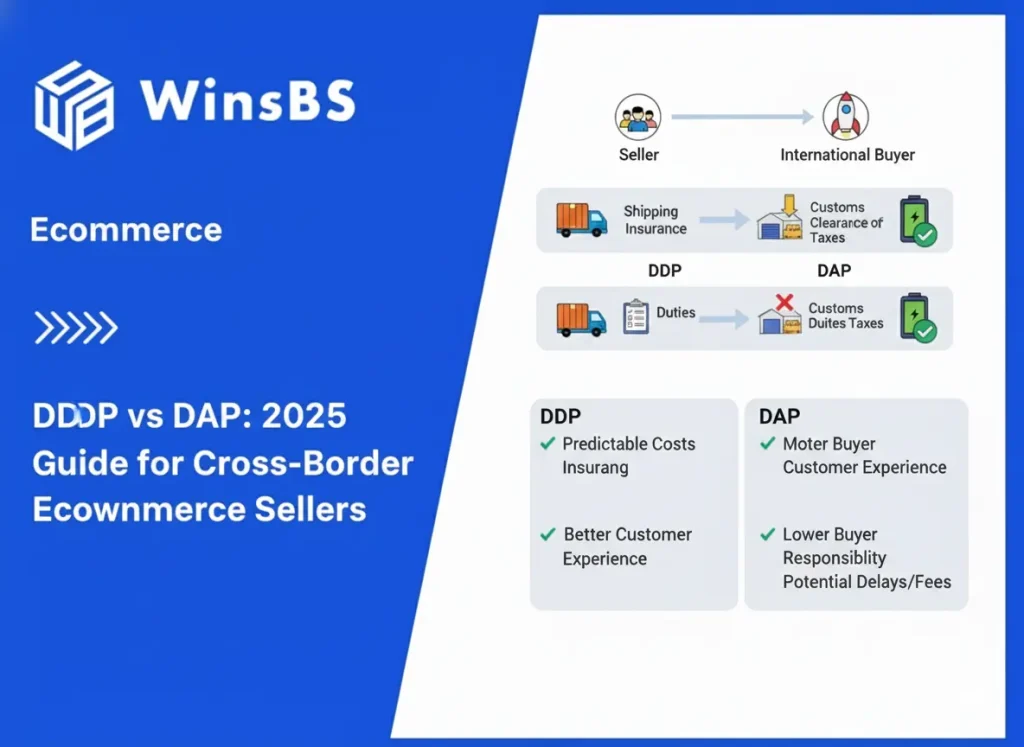
DDP vs DAP: Incoterms for Cross-Border Parcels Which Incoterm Should eCommerce Sellers Use in 2025? WinsBS Fulfillment Research Team – Michael December 2025 TL;DR DDP (Delivered Duty Paid) gives buyers a seamless, tax-inclusive delivery experience. DAP (Delivered at Place) pushes duties and VAT onto buyers at arrival, often causing refusals, delays, and negative reviews. In 2025, with tighter U.S. Section 321 enforcement, strict EU VAT rules under IOSS, and platform requirements from Shopify and TikTok Shop, DDP has become the de facto standard for cross-border parcels shipping from China to the U.S., EU, and UK. Brands switching from DAP to DDP consistently report: 10–15% higher checkout conversion 20–40% fewer returns and refusals Faster customs clearance and more predictable lead times Better logistics scores and algorithm visibility on major platforms For eCommerce brands shipping globally, DDP is no longer optional. It is the operating baseline for reliable cross-border parcels. For brands that want to move from “surviving” to “scaling,” a well-designed DDP workflow is now a core advantage. Get Started for Free and see how a full-chain DDP setup can work for your store. INCOTERMS FOR ECOMMERCE: A PRACTICAL OVERVIEW Incoterms are standardized trade rules published by the International Chamber of Commerce (ICC). They define who pays for freight, who handles customs, who pays duties and taxes, and where risk transfers from seller to buyer along the route. Traditional freight forwarders work with a longer list of Incoterms, but for cross-border eCommerce parcels, two terms do almost all of the work: DDP — Delivered Duty Paid DAP — Delivered at Place On paper, the difference between DDP and DAP looks like a small shift in who pays for duties and VAT. In practice, they create completely different customer journeys and P&L outcomes. For a Shopify, TikTok Shop, Amazon FBM, or crowdfunding brand, choosing the wrong term can be the difference between profitable scaling and constant firefighting. WHAT IS DDP (DELIVERED DUTY PAID)? Under DDP (Delivered Duty Paid), the seller takes responsibility for the entire cross-border parcel journey. That includes export procedures, international transport, import customs clearance, duties and VAT, and final-mile delivery to the buyer’s door. In a DDP setup, the seller or their logistics partner typically handles: Export clearance from the origin country (for example, China) Line-haul via air freight or express lanes Customs declaration in the destination country Payment of duties, VAT, and any import taxes Handover to last-mile carriers such as USPS, UPS, DHL, DPD, or Royal Mail The buyer receives a parcel that feels almost identical to a domestic purchase: the price shown at checkout is the price paid, with no extra door charges, no customs forms to fill, and no surprise visits from carriers asking for taxes. This is why DDP has become the default for modern cross-border eCommerce. It matches expectations shaped by Amazon Prime and other domestic delivery standards: transparent pricing, predictable timing, and minimal friction. WHAT IS DAP (DELIVERED AT PLACE)? DAP (Delivered at Place) is the mirror image of DDP when it comes to taxes and customs. Under DAP, the seller pays for transportation to the destination country or specified place, but the buyer is responsible for duties, VAT, and any clearance fees when the parcel arrives. In a DAP workflow, the buyer must often: Pay duties and VAT before release Pay carrier handling or brokerage fees Interact with customs or a postal operator Authorize the release of the parcel This may be acceptable for professional importers in a B2B context. For consumer parcels, it is a major break in the customer journey. Most retail buyers are not prepared to handle paperwork, unexpected charges, or customs deadlines. Many will refuse the parcel outright. As regulators, platforms, and buyers have evolved, DAP has shifted from “cost-saving shortcut” to “legacy freight term that does not fit eCommerce.” It still has a place in bulk B2B transactions but is a poor choice for direct-to-consumer shipping. DDP VS DAP: SIDE-BY-SIDE COMPARISON Putting both terms in a side-by-side matrix makes the trade-offs clearer: Aspect DDP (Delivered Duty Paid) DAP (Delivered at Place) Duties & VAT Paid by seller; taxes can be embedded at checkout Paid by buyer at arrival; often a surprise Customs Clearance Handled by seller or logistics partner Requires buyer action and payment Buyer Experience Like domestic delivery; no extra steps “Pay to get your package” experience Refusal Rate Typically under 5% Often 20–40% for retail parcels Delivery Speed Fewer holds and faster customs decisions Delays when buyers do not act quickly Total Cost Lower when returns, holds, and penalties are included Higher long-term due to operational friction Platform Performance Supports strong delivery scores and rankings Increases risk of penalties and demotion Best Use Case Cross-border B2C parcels High-value B2B freight with professional importers For cross-border parcels, this DDP vs DAP Incoterms comparison makes the conclusion straightforward: DDP aligns with how eCommerce actually works; DAP fights both buyer behavior and regulatory direction. DDP, DAP, AND DDU: COMPLETE DEFINITION CLUSTER Search engines and readers both benefit from a clear cluster of key term definitions. In the Incoterms space, three acronyms show up again and again: DDP (Delivered Duty Paid) means the seller assumes all responsibility for delivering the goods to the agreed destination, including paying duties, VAT, and any import-related taxes or fees. The buyer pays nothing at the door and has no customs interaction. DAP (Delivered at Place) means the seller is responsible for delivering the goods to a named place, usually in the destination country, but the buyer must pay duties, VAT, and any customs or carrier fees prior to release or delivery. DDU (Delivered Duty Unpaid) is an older term no longer part of the official Incoterms list and has effectively been replaced by DAP. In practice, DDU and DAP both signal that duties and taxes will be collected from the buyer on arrival. For eCommerce sellers, the practical interpretation is simple: DDP is the modern standard for consumer parcels. DAP is a legacy freight term that fits only B2B use cases.