What Is a 3PL in 2026?
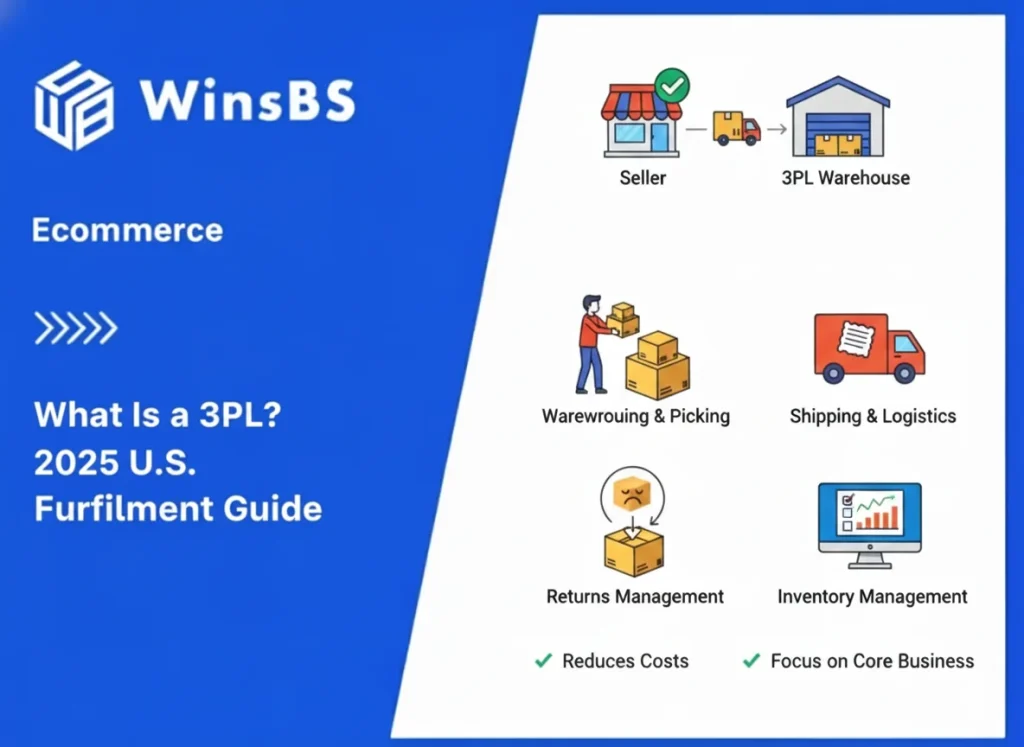
What Is a 3PL in 2026? What people usually mean when they ask it, and how to tell whether handing fulfillment to a partner would actually help your business Maxwell Anderson MARKETING MANAGER | WINSBS April 2026 In Brief If your team is spending too much time fixing stock issues, chasing late outbound, or sorting out returns, this is usually the kind of partner you start looking at. At that point, nobody really cares what the acronym means. You are trying to work out whether handing this work over would actually make the week run better. Why this matters now This is not a small niche question anymore. The U.S. Census Bureau reported that total U.S. retail e-commerce sales in 2025 reached $1.2337 trillion and accounted for 16.4% of total retail sales. Once online sales sit at that scale, order handling, returns, stock accuracy, and delivery consistency stop being back-room details. They start shaping how the whole operation feels day to day. The situation most teams are actually in By the time someone on the team asks “what is a 3PL,” things usually are already getting messy. Orders are growing, inventory numbers are harder to trust, customer promises feel a little less safe, and warehouse work is landing on people who were not supposed to spend their week on warehouse work. Table of Contents Why This Question Comes Up What You Are Actually Handing Over What Changes for the Team What Problem You Are Really Solving When Teams Usually Reach This Point What to Check Before You Sign What Bad Fit Looks Like Frequently Asked Questions Keep Reading Usually This Question Comes Up When the Team Is Feeling Drag Very few people search “what is a 3PL” because they suddenly want to learn logistics vocabulary. Usually it comes up after one too many days where the same stock issue, packing delay, or return question keeps bouncing back to the same two or three people. Orders are climbing. Stock numbers take longer to trust. Returns are piling up on somebody’s desk. Support is asking operations for answers more often than anyone likes. So the real question is not what the acronym means. It is whether your own team should still be carrying all of this. What usually shows up before this search happens The order count is no longer the hard part. The hard part is keeping inventory, shipping, and returns aligned. Warehouse work is taking time away from sales, product, or customer support. The team can still ship orders, but it cannot do it cleanly at the speed growth now requires. The business needs fulfillment to feel more stable, not just more active. What You Are Actually Handing Over When You Bring in a 3PL In plain English, a 3PL is the outside team you bring in when you do not want your own people receiving cartons, checking stock, packing orders, sorting returns, and chasing warehouse mistakes as part of a normal Tuesday. If that still sounds too broad, picture the handoff more literally. You are handing over the shelf, the packing table, the outbound queue, the return pile, and a lot of the daily back-and-forth that sits around them. That is why a 3PL is more than extra warehouse space. If all you needed was somewhere to put cartons, the business would not be asking this question. What makes a 3PL useful is that there is a working operation behind the space: receiving discipline, stock control, order routing, returns handling, and enough reporting that you can still understand what is going on once volume rises. What Actually Changes for the Team Once This Work Moves Out The biggest change is not abstract. It is that fewer people on your side are spending their week dealing with receiving delays, stock questions, pick mistakes, late outbound, and returns cleanup. A good 3PL does not just change where inventory sits. It changes who wakes up worrying about the daily mess around that inventory. The team gets time back If founders, operators, or support people keep getting dragged into warehouse questions, that usually is the first sign the current setup is costing more than it looks. A good 3PL gives some of that time back. The quiet waste gets easier to see A lot of brands look at a 3PL quote and only see new fees. What they miss is the cost of continuing to do this badly in-house: slower shipping, more mistakes, delayed returns, stock that nobody fully trusts, and senior time going into the wrong place. Customers feel fewer surprises Customers do not care whether your warehouse situation is understandable from the inside. They care whether orders ship on time, whether stock was real when they paid for it, and whether returns are handled cleanly. When a 3PL helps, it usually shows up first as fewer unpleasant surprises. The operation becomes easier to run One of the clearest signs a team needs help is when inventory, shipping, and returns seem to mean different things depending on who you ask. A good 3PL helps turn that into something people can actually manage without guessing. Before You Hire One, Make Sure You Are Solving the Right Problem This is where a lot of bad decisions start. Teams mix several logistics jobs together, sign with the wrong partner, and then spend the next three months wondering why the original headache is still there. So before you say “we need a 3PL,” stop for a minute and ask what is actually going wrong. Is it freight movement? Warehouse execution? Carrier performance? Amazon rules? Or a messy mix of all of them? The quickest way to stop mixing these roles up If you are talking to… They mainly help with… Use them when… Freight forwarder Moving goods from origin to destination Your main problem is inbound freight, routing, customs paperwork, or getting cargo into market 3PL Receiving, storage, pick and pack, outbound orders, returns Your main problem is day-to-day order execution once inventory is already