
Online Support
Typically replies within 5 minutes
Hello! How can we assist you today?

Winsbs

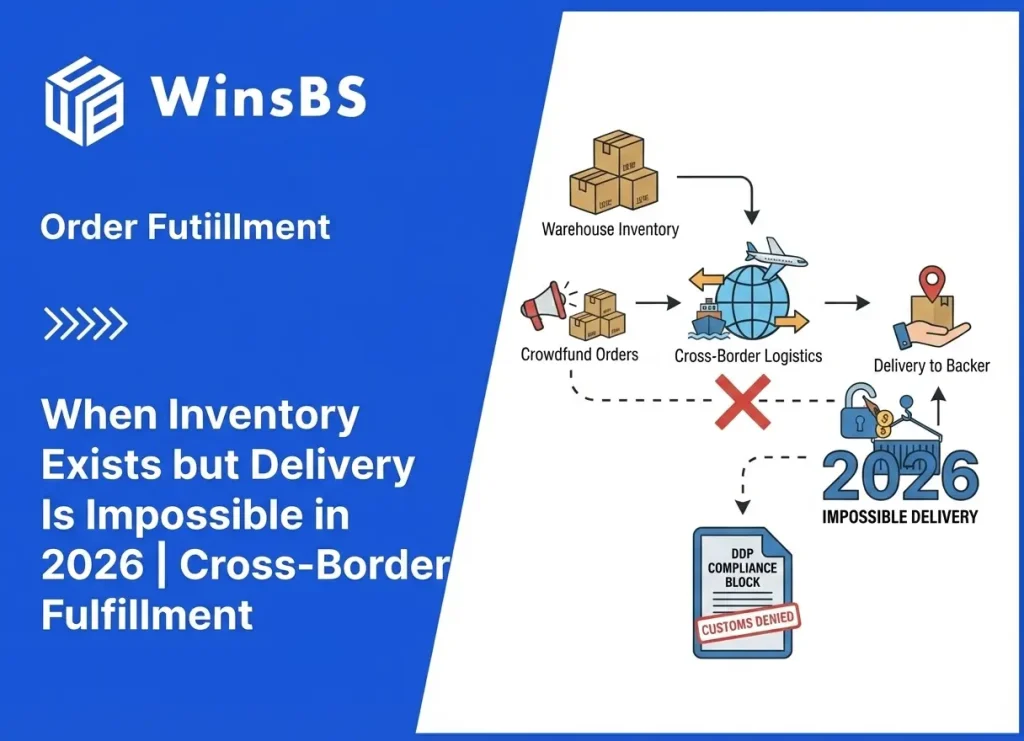
Logistics infographic banner beside WinsBS logo and title, showing warehouse inventory and crowdfunding orders blocked from cross-border logistics by compliance and customs restrictions, symbolizing order fulfillment challenges and cross-border fulfillment barriers in 2026.
Crowdfunding Fulfillment, Ecommerce, Order Fulfillment, Shipping & Logistics, Warehousing, Winsbs

When Inventory Exists but Delivery Is Impossible in 2026 | Cross-Border Fulfillment

When Inventory Exists but Delivery Is Impossible in 2026 Why “In Stock” Doesn’t Always Mean “Deliverable” in Cross-Border Fulfillment WinsBS Fulfillment — Maxwell Anderson Updated February 2026 · Cross-Border Fulfillment · DDP Shipping · Customs Clearance · Inventory Availability TL;DR: In 2026, many ecommerce sellers are facing a new reality: inventory can show in stock inside the warehouse, yet the shipment is blocked at the border. This often appears as a customs hold despite inventory availability or a DDP shipment blocked at border 2026. The reason is structural. Warehouse systems confirm physical availability. Customs clearance and carrier routing systems confirm legal admissibility and route eligibility. Since the Section 321 de minimis ended impact on ecommerce shipments in August 2025, more parcels now move through formal entry review in the United States. In the EU, the upcoming €3 customs duty on low value parcels (effective July 1, 2026) adds another validation layer. In Canada, full enforcement of CARM importer responsibility increases entry-level scrutiny. If you have not reviewed where warehouse control ends, see what fulfillment actually includes in 2026 . On this page 0. The Inventory Is Available. The Shipment Isn’t Moving. 1. Inventory Exists in One System — Delivery Is Decided in Another 2. The Three Status Layers: Physical, Legal, and Route 3. Why the Warehouse Cannot Fix a Customs or DDP Block 4. Same Inventory, Different Market — Different Customs Outcome 5. When Inventory Actually Becomes Deliverable in 2026 6. The Moment “In Stock” Stops Being the Right Question Methodology & Sources 0. The Inventory Is Available. The Shipment Isn’t Moving. You log into your fulfillment dashboard and see available inventory. Units were received, scanned, and stored correctly. Nothing is backordered. Nothing is out of stock. An order is placed. It moves through pick and pack. A shipping label is generated. Tracking activates. From an operational standpoint, the order has been fulfilled under your cross-border fulfillment workflow. Then the tracking status changes. Clearance delay Held at customs Importer information required Entry under review Undeliverable — return to sender At this stage, inventory is still accurate. The warehouse shows no processing error. DDP shipping may have been selected. Duties may have been prepaid. Yet the shipment is not moving. This is the scenario behind many searches such as “in stock but cannot deliver” or “customs hold despite inventory.” Sellers are discovering that inventory availability does not guarantee customs clearance once a parcel enters formal entry review. “In stock” is a warehouse status. “Deliverable” is determined later — at customs entry and route validation. The warehouse confirms possession. Customs authorities and carriers confirm permission. 1. Inventory Exists in One System — Delivery Is Decided in Another Most ecommerce operators assume that once inventory is available inside a fulfillment warehouse, delivery becomes a matter of transportation timing. If the warehouse can pick it and the carrier can scan it, shipment completion feels inevitable. That assumption increasingly breaks down in 2026. A warehouse management system (WMS) tracks physical control: units received, units stored, units allocated, and units shipped. It verifies inventory accuracy and confirms operational execution. Customs clearance systems evaluate something different: declared value, classification, importer identity, and compliance triggers. Carrier systems evaluate route eligibility, service-level compatibility, and automated risk flags. These systems do not share a single definition of “ready.” The warehouse defines ready as physically available. Customs defines ready as legally admissible. Carriers define ready as route-compatible. This structural separation became more visible after the Section 321 de minimis ended impact on ecommerce shipments in August 2025. As more U.S.-bound parcels shifted into formal entry, customs hold rates increased — even when inventory was correctly processed and DDP shipping was selected. If you want a deeper breakdown of where warehouse responsibility ends, review what fulfillment actually includes in 2026 . When sellers search for “why shipment stuck at customs 2026,” they are often encountering this separation between physical inventory status and entry-level validation systems. 2. The Three Status Layers: Physical, Legal, and Route To make “in stock but cannot deliver” situations predictable, separate the shipment into three statuses that operate independently in cross-border fulfillment: the warehouse status, the customs clearance status, and the carrier route status. The first is physical status. This is what your fulfillment warehouse and WMS can prove: units exist, were received, and can be picked, packed, and shipped. This is the layer that shows inventory availability. The second is legal status. This becomes visible at customs entry. Even when DDP shipping is selected, customs clearance can pause if the entry record requires validation of importer identity, classification, valuation, or other admissibility triggers. This is where “customs hold despite in stock” happens. The third is route status. Carriers apply route eligibility and service-level screening. A shipment can be physically shipped and still become undeliverable if the chosen route or service level is not permitted for that shipment profile. Physical availability does not guarantee customs clearance. Customs clearance does not guarantee route eligibility. Inventory vs Deliverability: Physical, Legal, Route Layers (2026) Diagram showing that inventory availability is confirmed by the warehouse, while deliverability depends on customs clearance and carrier route eligibility. PHYSICAL STATUS Fulfillment Warehouse / WMS • Inventory received & counted • “In stock” / available quantity • Pick / pack / label executed • Parcel tendered to carrier handoff LEGAL STATUS Customs Entry / Clearance • Importer identity validation • Classification / valuation review • Admissibility triggers • Holds can occur even under DDP release ROUTE Carrier Validation • Service-level rules • Route eligibility • Automated exceptions • “Undeliverable” Inventory availability lives in the warehouse layer — deliverability is decided by customs clearance and route eligibility. The three layers that create “customs hold despite in stock” outcomes: warehouse inventory availability, customs legal admissibility, and carrier route eligibility. Once you can name these three statuses, most “DDP shipment blocked at border 2026” cases stop looking random. The warehouse can be correct and complete, while customs clearance or carrier routing is still unresolved. 3. Why the Warehouse Cannot
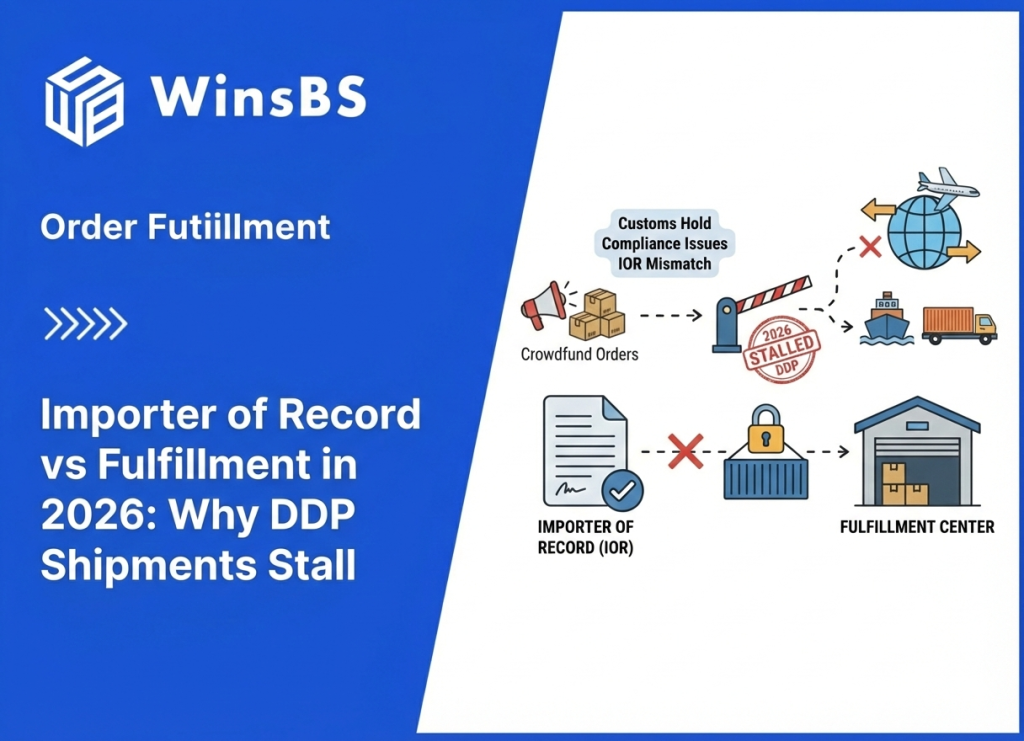
Logistics infographic beside WinsBS logo and title showing crowdfunding orders routed to a customs hold with a stalled DDP shipment stamp, illustrating importer of record mismatch and order fulfillment delays in cross-border 3PL fulfillment.
Crowdfunding Fulfillment, Ecommerce, Order Fulfillment, Shipping & Logistics, Warehousing, Winsbs

Importer of Record vs Fulfillment in 2026: Why DDP Shipments Stall

Importer of Record vs Fulfillment in 2026 Why DDP Shipments Stall at Customs After US De Minimis End, EU €3 Duty & Canada CARM WinsBS Fulfillment — Maxwell Anderson Updated February 2026 · Cross-Border Entry · Customs Clearance · DDP · Importer Liability Positioning note: This article continues the execution boundaries and responsibility splits documented in Order Fulfillment in 2026: What It Includes & Where It Stops , What Fulfillment Companies Are Not Responsible For (2026) , Where DDP Fulfillment Ends , and “Taxes Included” ≠ Import Guarantee (DDP VAT 2026) . It documents a repeatable 2025–2026 shift in cross-border execution: “DDP shipping” can still stall at customs when the entry record cannot validate a legally recognized importing entity. Confirmed system changes that increased importer validation frequency: CBP — E-Commerce FAQs (US, de minimis suspension effective Aug 29, 2025) , European Commission — €3 customs duty on low-value e-commerce packages from July 1, 2026 , and CBSA — CARM (Canada Assessment & Revenue Management) . You Shipped Correctly. Customs Still Asked Who the Importer Is. You did what any cross-border ecommerce seller would reasonably do. You paid the supplier. You moved inventory into a fulfillment warehouse. You confirmed carton markings and declared value. You selected DDP shipping to avoid delivery-time tax surprises. The warehouse executed normally. Inventory was received. Orders were picked and packed. A shipping label was generated. Electronic customs data was transmitted. Tracking went live. For several days, the shipment behaved like a normal international delivery. Then the status changed. Held at customs — pending importer clarification Clearance delay — importer information required Entry under review — declaration validation Nothing in your dashboard showed unpaid tax. Nothing in the warehouse workflow showed error. The carrier confirmed receipt. Yet customs clearance did not proceed. Because the customs system was no longer evaluating fulfillment execution. It was evaluating whether a legally accountable importing entity was recognized inside the entry declaration. Fulfillment moves goods. Customs releases goods only when a recognized importing party stands behind the declaration. If that legal layer was never configured — or cannot be validated at entry — shipment pauses. Fulfillment vs Customs vs Legal Import Layer 2026 Visual representation of fulfillment execution layer versus customs importer validation layer. FULFILLMENT Pick · Pack · Label DDP Shipping Data Transmission CUSTOMS ENTRY Declaration Review Importer Validation Liability Recognition HOLD Importer Not Recognized Structural separation in 2026: warehouse execution and importer validation occur in different system layers. 1. What Fulfillment Actually Completed — And Where It Stops When the shipment stalled, the first instinct was to look backward. Did the warehouse miss something? Was the commercial invoice incomplete? Did DDP not apply correctly? But look at what fulfillment had already completed. Inventory received and logged Order transmitted from ecommerce platform Pick and pack executed Shipping label generated Electronic customs data transmitted Parcel tendered and accepted by carrier From an operational standpoint, fulfillment execution ended successfully. What changed in 2025–2026 is not warehouse performance — it is customs entry behavior. On August 29, 2025, U.S. Customs and Border Protection suspended broad use of Section 321 de minimis treatment for many shipments, increasing the volume of parcels moving through formal entry channels. Formal entry requires a recognized importing party to be declared in the customs record. This shift increased the frequency of situations where warehouse execution completes normally — but clearance pauses at the legal validation layer. Public Case Example (U.S., 2025-2026) Following the issuance of Executive Order 14324, “Suspending Duty-Free De Minimis Treatment for All Countries,” U.S. Customs and Border Protection (CBP) initiated a systemic shift in how low-value ecommerce parcels are processed. By late 2025, trade reports from legal and logistics analysts confirmed that the $800 de minimis threshold—previously the backbone of direct-to-consumer fulfillment—effectively hit a “zero-tolerance” phase. This resulted in significant cargo holds at key entry points like Los Angeles (LAX) and New York (JFK), specifically targeting shipments where the legal “Importer of Record” was not clearly distinguished from the “Fulfillment Provider.” Source: White House — Executive Order on Suspending De Minimis Treatment . The warehouse did not change. The customs validation threshold did. Fulfillment completes physical movement. Customs entry requires validated legal accountability. Once the shipment enters formal review, fulfillment cannot supply that accountability if it was never declared in advance. 2. When Entry Systems Tighten, Legal Identity Becomes Visible The United States is not the only system that increased importer validation. In the European Union, customs reform scheduled for July 1, 2026 introduced a €3 fixed duty for parcels valued under €150 — including shipments where VAT was prepaid at checkout. Even when VAT is handled through IOSS, customs entry still evaluates the declared importing entity separately. Tax linkage and legal responsibility operate as different validation layers. If the declaration cannot validate the responsible importing party, clearance pauses — regardless of prepaid tax. Canada implemented a similar structural tightening through full rollout of the Canada Assessment and Revenue Management (CARM) system. Official reference: CBSA — CARM Registration . Under CARM, businesses acting as importers must register directly with CBSA. Without recognized registration status, entry validation cannot finalize. Public Case Example (EU, 2025–2026) Following increased enforcement of customs controls on low-value e-commerce imports (particularly from China via platforms like Temu and Shein), EU authorities reported widespread non-compliance issues, including inaccurate declarations, safety risks, and valuation mismatches. This led to a surge in parcel holds and clearance delays where importer data or entry records did not align properly. Reuters and the European Commission highlighted how tightened checks and the upcoming customs reforms have impacted direct-to-consumer shipments, with many low-value parcels facing additional scrutiny or holds due to declaration inconsistencies. Key Sources: Reuters — EU to tighten checks on cheap products from sites like Temu and Shein (Feb 2025) — Covers EU-wide customs operations prioritizing safety and compliance risks on e-commerce goods. European Commission — Large-scale EU customs control action shows most third-country e-commerce goods do not follow standards (Jan 2026) — Official report on non-compliance in billions

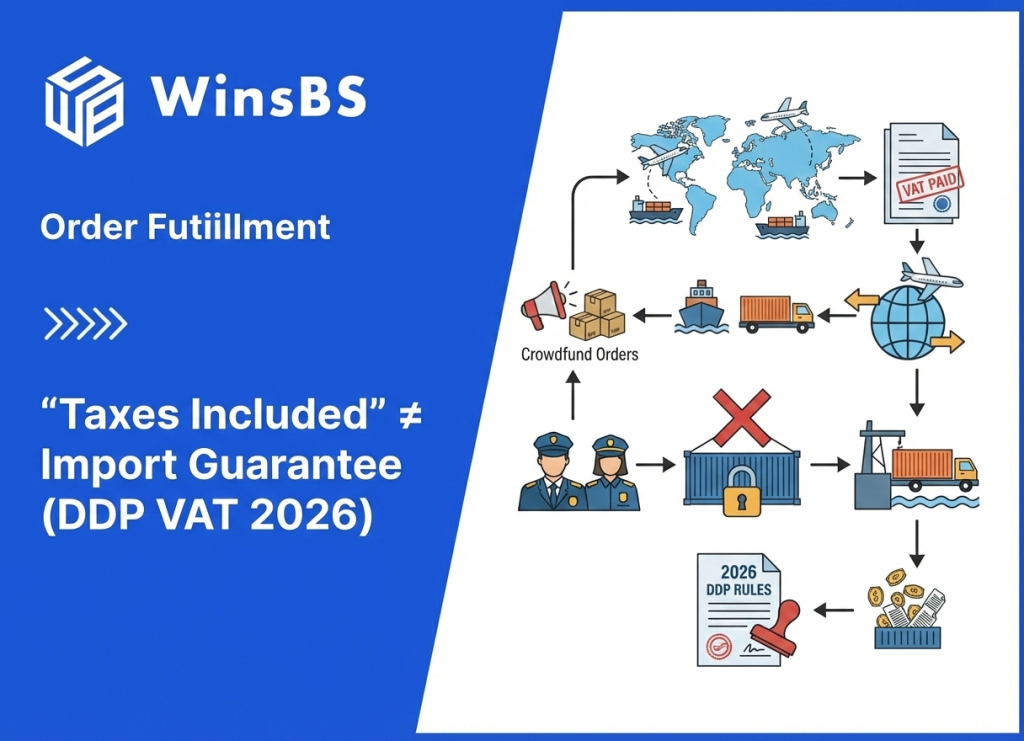
Cross-border logistics infographic beside WinsBS logo and title, showing VAT paid documents, global shipping routes, customs inspection, and a locked container symbolizing DDP order fulfillment risks and import compliance in crowdfunding fulfillment.
Crowdfunding Fulfillment, Ecommerce, Order Fulfillment, Shipping & Logistics, Warehousing, Winsbs

“Taxes Included” ≠ Import Guarantee (DDP VAT 2026)

“Taxes Included” ≠ Import Guarantee (DDP VAT 2026) Why VAT & GST Get Recalculated at EU, UK & Canada Borders WinsBS Fulfillment — Maxwell Anderson Updated February 2026 · Cross-Border DDP · VAT / GST · Customs Validation Positioning note: This article builds on the execution boundaries explained in Order Fulfillment in 2026: What It Includes & Where It Stops , What Fulfillment Companies Are Not Responsible For (2026) , and Where DDP Fulfillment Ends . It documents a repeatable cross-border scenario in 2026: VAT or GST is collected at checkout — yet import tax is requested again at entry in the EU, UK, or Canada. Contents 0. The Parcel Arrived. The Tax Bill Arrived Too. 1. The Order That Looked Fully Settled 2. Where the Recalculation Actually Begins 3. Why the 3PL Cannot Repair This Stage 4. Route Differences: EU, UK, Canada, US 5. 2026 Confirmed Validation Variables 6. When the Buyer Says, “But I Already Paid” 0. The Parcel Arrived. The Tax Bill Arrived Too. The shipment was sent under DDP. At checkout, your buyer saw “taxes included.” The order total already reflected VAT or GST. No additional fee was expected at delivery. The warehouse packed the order. A label was generated. Tracking went live. For several days, everything moved normally. Then one of two things happened. If the parcel was entering the UK, Royal Mail sent a payment request before delivery. If it entered Canada, the courier issued a GST collection notice. If it entered parts of the EU, the parcel paused in customs with VAT under review. The buyer forwarded the message to you. “I thought tax was included.” From your side, it was. The dashboard shows prepaid shipping. The invoice shows tax collected. Nothing is marked unpaid. But the import system is not looking at your checkout page. It is evaluating the parcel as it enters the country. This is the moment where the logic breaks: You paid the tax at sale. The import system is calculating tax at entry. Both are real. They are not the same system. This article starts from that split. 1. The Order That Looked Fully Settled The order was simple. A €120 skincare device shipped from Shenzhen to Germany under a DDP cross-border fulfillment structure. VAT was calculated at checkout. The buyer paid €142.80 in total, including 19% VAT. On your dashboard, the order showed: Product value: €120 VAT collected at checkout: €22.80 Shipping: prepaid (DDP) Status: paid The fulfillment system received that order exactly as shown. The warehouse picked the unit. A DDP shipping label was generated. Electronic customs declaration data was transmitted with: Declared value: €120 HS code attached for EU import classification Sender: your entity Importer: auto-assigned under the shipping structure The parcel left the warehouse. Up to this point, every number matched. The VAT collected at checkout matched the invoice. The invoice matched the shipment record. Nothing was missing from the fulfillment side. Three days later, the parcel reached the EU entry point. Now the EU import system evaluated the parcel independently as an import declaration, not as a checkout transaction. It did not look at the Shopify checkout page. It did not see the buyer-facing “tax included” confirmation. It evaluated: Is there a valid VAT or IOSS linkage inside the entry data? Does the importer registration match the declared responsible party? Is the declared goods value consistent with EU entry thresholds? If any of those elements do not reconcile inside that customs validation system, the parcel is treated as taxable at entry — regardless of what was paid at sale. That is the split. At checkout, VAT was a pricing component. At EU border entry, VAT becomes a compliance validation event. Those two events reference the same amount. They do not share the same verification logic. And that structural separation between checkout tax collection and import tax validation only becomes visible when the parcel reaches the border. 2. Where the Recalculation Actually Begins Three days after dispatch, the parcel reaches the EU entry hub. At that moment, the shipment is no longer treated as an order. It is treated as an import declaration under EU customs validation. The system now checks whether the VAT that was collected at sale is properly linked inside the electronic entry data. For the €120 device shipped from China to Germany, one of four recurring validation triggers typically initiates re-evaluation. 1) VAT or IOSS linkage mismatch If an IOSS number was used for EU VAT-at-sale collection, it must be correctly attached to the customs declaration and match the declared goods value. If the number is missing, expired, misformatted, or not recognized inside the EU import dataset, the system does not assume VAT was paid at checkout. It calculates VAT again at entry. 2) Importer identity inconsistency The checkout invoice lists your company as seller. The EU entry declaration may list a different acting importer depending on the DDP routing structure. If those identities do not reconcile inside the customs validation system, VAT is not considered validated. The parcel pauses for tax assessment. 3) Value structure difference between sale and entry Checkout total: €142.80 (goods + VAT). Declared import value: €120 (goods only). The EU customs system evaluates the declared goods value, not the buyer-facing checkout total. If VAT linkage does not successfully validate against that declared value, VAT is recalculated against €120 at entry. 4) Multi-parcel split creating independent entry records If the shipment was operationally split into two parcels for routing efficiency, each parcel is evaluated independently at EU entry. If one parcel crosses a validation threshold differently, or loses IOSS linkage in data transmission, it may fall outside the prepaid VAT structure. One parcel clears normally. The other enters VAT reassessment. At this stage, the EU import system is not “charging twice.” It is performing its own tax validation cycle based on the customs declaration record. And once that validation cycle begins, the checkout record is no longer relevant to the import decision. In standard cross-border

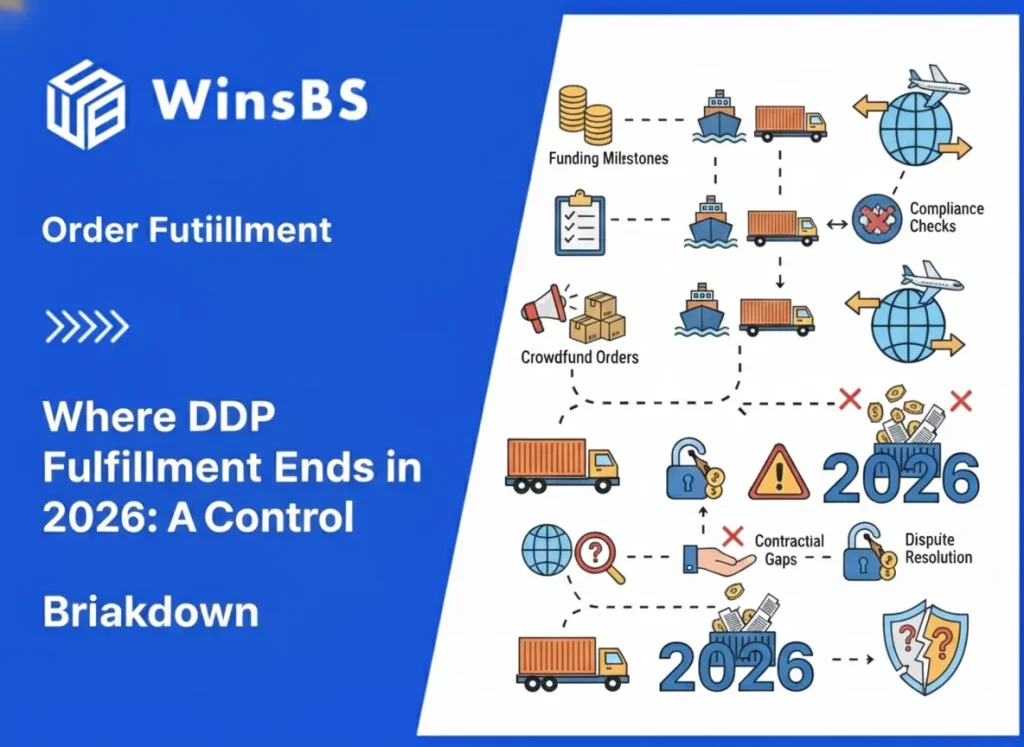
Cross-border logistics and crowdfunding fulfillment infographic beside WinsBS logo and title, showing ships, cargo planes, trucks, and global delivery icons illustrating where DDP fulfillment control ends in 2026 and the order fulfillment process.
Crowdfunding Fulfillment, Ecommerce, Order Fulfillment, Shipping & Logistics, Warehousing, Winsbs

Where DDP Fulfillment Ends in 2026: A Control Breakdown

Where DDP Fulfillment Fails A Stage-by-Stage Breakdown of Where Control Actually Ends (2026) WinsBS Fulfillment — Maxwell Anderson Updated February 2026 Positioning note: This article does not explain what DDP is. It documents a single, repeatable fulfillment moment in 2026: DDP finishes its role — and the shipment continues into a system it does not control. Contents 0. When Everything Looked Done — and Then Nothing Moved 1. What DDP Has Already Finished — Before You Start Looking for Answers 2. When the Flow Stops Responding — Even Though Nothing Is Broken 3. What Happens When You Go Back to the Fulfillment Provider 4. The Stage Where DDP Stops Deciding Anything 5. When DDP Changes the Experience — and When It Doesn’t Change the Outcome 6. Returning to the Moment You Realized Nothing Else Would Move Methodology & Sources — WinsBS Research 0. When Everything Looked Done — and Then Nothing Moved By the time this problem shows up, you have already done the reasonable thing. You didn’t cut corners. You didn’t improvise. You selected DDP, accepted “taxes included,” and paid in full. From your perspective, the risky parts were handled up front. There should be no surprise charges, no doorstep friction, no last-minute decisions left unresolved. And for a while, everything confirms that assumption. Orders are packed. Labels are generated. Tracking numbers appear. The warehouse shows the work as complete. The carrier accepts the shipment. Nothing in the dashboard signals a problem. Then progress stops. Not with an error message. Not with a rejection notice. Just… no movement. At first, this feels like a normal delay. You wait, because waiting still makes sense. Nothing looks broken enough to act on. When waiting turns into checking, the confusion begins. You refresh tracking. You compare it to other shipments. You look for an exception code, a missing scan, any clue that explains the pause. There isn’t one. So you go back one step. You open the fulfillment dashboard again. Everything there looks finished. Orders are closed. Tasks are completed. There is no pending action to click into. This is the moment that feels wrong. If the shipment exists, and shipping has already started, there should still be a way to move it forward. You don’t feel like something failed. You feel like something should still be working — and isn’t. That assumption is what creates the stall. Not because you missed a step, but because the part of the system you are trying to push has already stopped responding. This page starts from that exact moment — the moment where everything looks complete, and yet nothing you do seems to matter anymore. 1. What DDP Has Already Finished — Before You Start Looking for Answers By the time the stall becomes obvious, DDP is no longer doing anything in the background. That sounds counter-intuitive, because from your side, everything that DDP promised seems to have happened. You saw the payment go through. You saw “taxes included” at checkout. You saw shipping proceed without any doorstep charges. Those are not illusions. They are confirmations that DDP has already completed the part of the flow it controls. Money has been collected and allocated. The shipment has been labeled and routed under a prepaid structure. The carrier accepted the handoff on that basis. This is why the dashboards feel calm. There is no unpaid balance, no missing fee, no billing exception waiting to be resolved. From a usage perspective, DDP looks “done” because it is. What it does not do — and never shows you — is stay attached as an active lever. There is no background process where DDP keeps checking whether the shipment is moving. There is no status where prepaid shipping can be re-applied to unlock the next step. Once payment and routing are complete, DDP leaves the flow quietly. What follows still looks like shipping. Tracking updates may appear. The parcel may move between nodes. But those movements no longer respond to how shipping was paid for. This is the first mismatch most creators run into. From your perspective, the condition that should enable progress — payment — has already been satisfied. From the system’s perspective, that condition has already been consumed. This is the same boundary described earlier in Order Fulfillment in 2026: What It Includes (and What It Doesn’t) and What Fulfillment Companies Are Not Responsible For (2026) : execution finishes cleanly, and the shipment continues into a stage that no longer reacts to execution signals. Nothing is wrong with the payment. Nothing is missing from the shipment. The confusion starts because you are still trying to push a lever that has already disengaged. 2. When the Flow Stops Responding — Even Though Nothing Is Broken After DDP has finished its part, the shipment does not stop immediately. That is what makes this stage difficult to recognize. For a while, things still move. Tracking updates may appear. The parcel may pass through one or two nodes. Carrier status changes at least once. From the outside, this looks like normal transit. There is no clear signal telling you that anything has changed. Then the movement slows. Not into an error. Not into a failed state. Just into stillness. At this point, most creators do what they have done successfully before: they try to trigger progress through action. They wait a bit longer. They refresh tracking more frequently. They compare this shipment to others that are still moving. When that does not work, they try intervention. They ask whether something is missing. They ask whether a document needs to be re-uploaded. They ask whether the shipment can be “re-processed” or “pushed.” Nothing changes. Not because the questions are wrong, but because the flow you are now watching does not react to those inputs. This is the first practical sign that the role of the system has shifted. Earlier, progress followed execution. Doing something — packing faster, paying earlier, resubmitting information — produced a visible effect. Here, action no longer

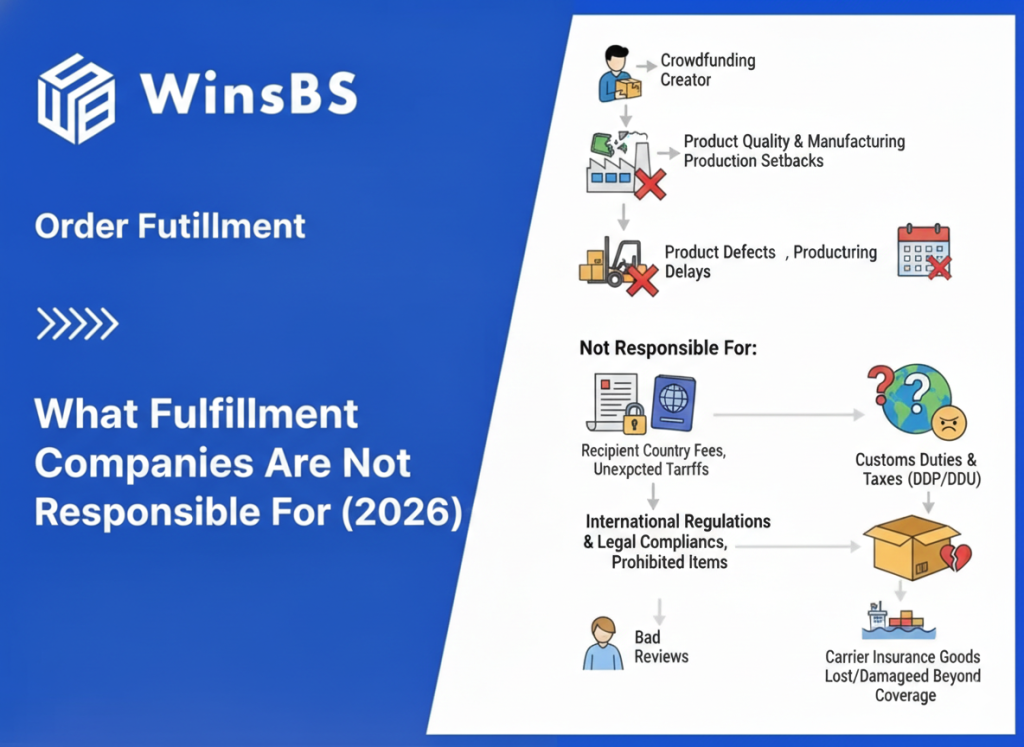
Crowdfunding fulfillment responsibility chart beside WinsBS logo and title, illustrating what 3PL order fulfillment companies are not responsible for, including production delays, customs duties, international regulations, and post-delivery reviews.
Crowdfunding Fulfillment, Ecommerce, Order Fulfillment, Shipping & Logistics, Warehousing, Winsbs

What Fulfillment Companies Are Not Responsible For (2026)

What Fulfillment Companies Are Not Responsible For: Why “We Paid the 3PL” Still Doesn’t Move Accountability (2026) WinsBS Fulfillment — Maxwell Anderson Updated February 2026 Positioning note: This page is not a “what 3PLs do” explainer. It documents a single recurring fulfillment moment in 2026: warehouse execution is finished, the shipment stops advancing, and responsibility still points back to the creator. Contents 0. When Fulfillment Closed — and Responsibility Didn’t Move 1. What Fulfillment Companies Are Actually Contracted to Do 2. Where the System Stops Treating Fulfillment as the Decision Maker 3. Why Responsibility Defaults Back to You — Even After You Paid a 3PL 4. Capability Is Not Responsibility — and Never Was 5. When Expecting Fulfillment to Carry Responsibility Stops Making Sense 6. Where This Leaves You — and Why It Keeps Repeating Methodology & Sources — WinsBS Research 0. When Fulfillment Closed — and Responsibility Didn’t Move With It By the time this question comes up, most creators already understand what happened operationally. The warehouse finished its work. Orders were packed. Labels were generated. Shipments entered the network. This is the same moment described in Order Fulfillment in 2026: What It Includes (and What It Doesn’t) — the point where fulfillment closes its checklist, but the shipment stops advancing for reasons unrelated to warehouse execution. What follows is not confusion about what failed. It’s confusion about who the system is now waiting on. From the creator’s perspective, the logic feels straightforward: a fulfillment provider was paid, the work was completed, and shipping moved forward. So when questions surface later — about value, documentation, or shipment structure — the instinctive response is to turn back to the 3PL. That’s when the disconnect becomes visible. Support replies arrive quickly, but they don’t escalate. There is no “next step” inside the fulfillment dashboard. The answer is always some variation of: this is outside our scope. At this point, most creators aren’t disputing the process anymore. They’re disputing the outcome: if fulfillment execution is finished, why does responsibility still point back to them? This article exists to answer only that question — not by revisiting how fulfillment works, but by clarifying where responsibility was never transferred in the first place. 1. What Fulfillment Companies Are Actually Contracted to Do Once fulfillment closes its operational checklist, the system doesn’t become ambiguous. It becomes specific. The shift that catches creators off guard isn’t procedural — it’s contractual. Fulfillment companies are engaged to perform a defined set of actions, not to guarantee downstream outcomes. Those actions are concrete, measurable, and confined to execution inside the fulfillment environment. In practice, that scope looks like this: receiving and checking inventory into the warehouse storing units under agreed handling conditions picking, packing, and labeling orders generating shipping labels and handoff records tendering parcels into the carrier network Every one of these steps can be verified. They either happened or they didn’t. Once they have happened, the fulfillment provider’s obligation is considered complete in formal terms. There is no pending responsibility waiting to activate later. This is where many creators assume there must be a hidden second layer — some implied continuation of responsibility once shipping begins. There isn’t. Fulfillment contracts are written around execution boundaries, not around shipment admissibility or post-handoff decisions. The provider is responsible for doing the work correctly, not for what happens when the shipment is later evaluated by external systems. That distinction is easy to miss because, operationally, everything still looks connected: tracking updates, carriers scan, and parcels keep moving. From a contractual standpoint, it isn’t one continuous responsibility chain. The fulfillment agreement closes when warehouse execution ends. What follows may still involve shipping, but it no longer involves the same responsibility structure. This is why fulfillment providers can confirm that all required actions were completed — and still have no authority to respond when questions surface later. Understanding this boundary breaks a common business assumption: paying for execution transfers accountability for outcomes. In fulfillment, it doesn’t. 2. Where the System Stops Treating Fulfillment as the Decision Maker The moment fulfillment closes its part, the shipment doesn’t enter a gray area. It enters a different decision framework. Up to this point, progress responds to execution. If something is wrong, it can be fixed. If something is missing, it can be added. If something slows down, more effort often restores movement. That logic ends when fulfillment finishes. What replaces it is not another operational checklist, but an evaluation phase that no longer measures effort or quality of execution. It measures whether the shipment can proceed exactly as it is. This is where creators often feel the system has gone silent. There is no error message. No failed task. No actionable alert inside the fulfillment dashboard. Internally, the system has stopped asking whether the order was fulfilled correctly. It is asking whether the shipment qualifies to move forward without changes. That question does not belong to fulfillment. Once a shipment is being evaluated beyond warehouse execution, fulfillment providers no longer have the authority to adjust inputs, reinterpret details, or reframe how the shipment is presented. They cannot revise structure mid-stream. They cannot substitute responsibility. They cannot respond on behalf of another party when the shipment is questioned. At this point, continuing to escalate within the fulfillment relationship produces no result — not because the provider is unwilling, but because the system is no longer listening to them. This is why responses start to sound repetitive: “We’ve completed our scope.” “There’s nothing further we can do on our end.” “This is outside our responsibility.” Those statements are signals that the decision-making layer has moved elsewhere. From the creator’s perspective, it feels like abandonment. From the system’s perspective, the correct party is now expected to answer. Responsibility doesn’t follow the boxes. It remains anchored to a role that fulfillment execution never included — and once the system reaches that point, no amount of warehouse performance can substitute for it. 3. Why Responsibility Defaults Back to You

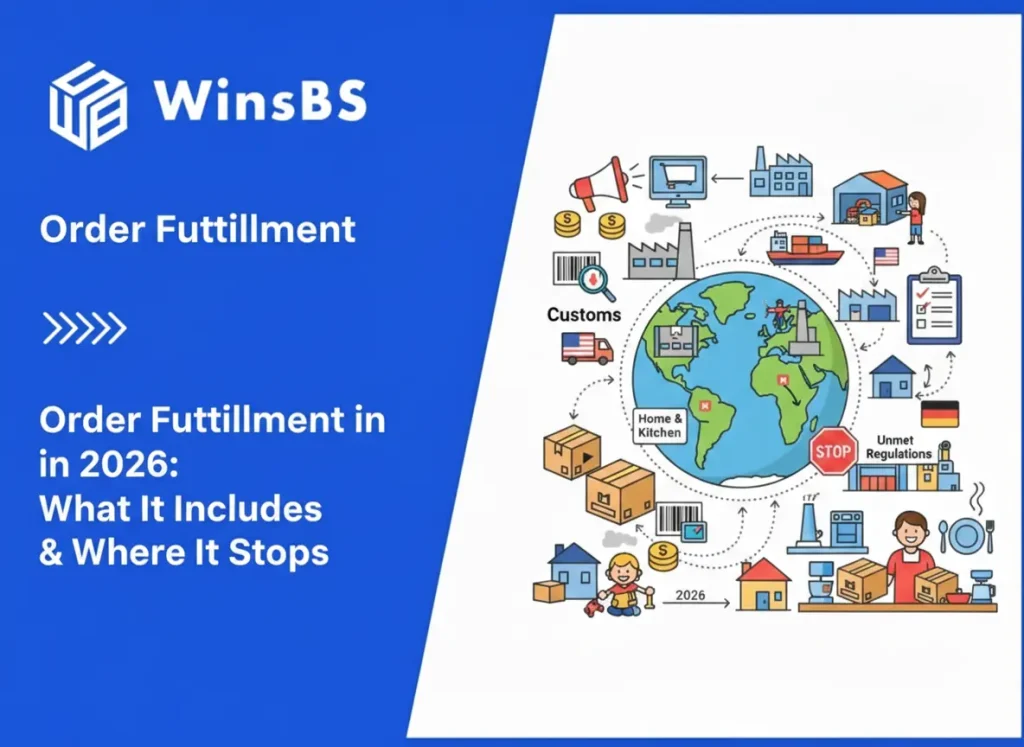
Global supply chain illustration with cargo ships, trucks, warehouses, customs checkpoints, and international flags beside WinsBS logo and title, symbolizing global order fulfillment and cross-border 3PL fulfillment services.
Crowdfunding Fulfillment, Ecommerce, Order Fulfillment, Shipping & Logistics, Warehousing, Winsbs

Order Fulfillment in 2026: What It Includes & Where It Stops

Order Fulfillment in 2026: What It Includes (and What It Doesn’t) WinsBS Fulfillment — Maxwell Anderson Updated February 2026 Positioning note: Order fulfillment remains operationally mature in 2026. Its limits appear not in warehousing or shipping, but in cross-border and DDP scenarios where customs clearance becomes the first hard boundary. A fully executed fulfillment floor — inventory received, orders packed, and parcels staged for outbound movement. This is the point where most teams assume uncertainty is behind them. Contents 0. When Everything Looked Finished 1. What “Fulfilled” Actually Meant 2. Where Outcomes Stop Following Fulfillment 3. Why This Comes Back to You 4. Why This Got Harder After 2025 5. What Keeps Applying Pressure in 2026 6. Where This Leaves You 0. When Everything Looked Finished — and Nothing Moved By the time most creators reach this point, the work already feels complete. The campaign closed. Funds settled. Inventory arrived. Orders were packed. Labels printed. Tracking sent. None of that is assumed. Those steps really happened. In most shipping contexts, this is where uncertainty fades. Not because delivery is instant, but because what remains is procedural. Movement continues. Problems, if they appear, surface later — at the door, on an invoice, or in customer support. That expectation is learned. In domestic shipping, and in many cross-border flows for years, this was the moment when things stopped going backward. Delays were possible. Reversals were not. So when progress slows here, it feels wrong. Tracking still updates. Nothing shows as “exception.” The warehouse confirms completion. The carrier confirms pickup. Yet nothing advances. Days pass without a status change that explains anything. Replies arrive, but answers don’t. Backers don’t accuse — they ask whether this is normal. You refresh the dashboard, expecting to find a switch you missed. There isn’t one. At this point, most creators assume something failed earlier. A packing error. A missed scan. A warehouse mistake. A carrier issue. Those assumptions are reasonable. Until now, outcomes followed execution. What’s actually happening is quieter. The shipment hasn’t failed. Nothing has “broken.” It has entered a part of the journey where progress is no longer decided by how well fulfillment was done — and no one tells you when that transition occurs. From your perspective, this still looks like shipping. From the system’s perspective, it isn’t. 1. What “Fulfilled” Actually Meant — in the System, Not in Your Head Fulfillment outcomes are shaped long before inventory reaches a warehouse. Documentation, unit structure, and compliance decisions begin at the factory level. In practice, order fulfillment refers to warehouse execution — receiving inventory, picking and packing orders, and handing shipments into the carrier network. When creators say an order was “fulfilled,” they’re usually referring to something concrete. Inventory arrived. It was checked in. Orders were picked and packed. Labels printed. Boxes left the building. That work was real. And it was completed. Where confusion starts is assuming that “fulfilled” is a global milestone. It isn’t. It’s a local one. It means the warehouse finished its responsibility. It means the fulfillment system closed its checklist. It does not mean the shipment finished being evaluated. From your side, the process still feels continuous. You don’t experience stages. You experience momentum: money in, product out, boxes moving. The system doesn’t see it that way. Fulfillment exists to answer one question well: Was this order executed correctly? Once the answer is yes, the system moves on. What follows is not an extension of fulfillment. It’s a handoff. And handoffs are where assumptions matter. Up to this point, outcomes track effort. If something slows, you fix it. If something goes wrong, you correct it. After fulfillment closes its part, that relationship weakens. Not because anything failed. But because the question being asked has changed. The system is no longer checking execution. It’s evaluating the shipment as an entry. That shift comes without an alert. Nothing in your dashboard says you’re now in a different decision framework. So creators keep pulling the same levers — re-checking packing, asking the 3PL to confirm details, hunting for a missed scan. Those actions make sense. Until they don’t work. At this stage, effort no longer restarts movement. Because effort is no longer what’s being measured. This is the first point where the intuition — if fulfillment was done right, delivery will follow — stops matching reality. Not because fulfillment failed. But because fulfillment already finished. 2. Where the Outcome Stops Following Fulfillment There is a point in every cross-border shipment where effort stops producing movement. Up to that point, progress responds to execution. If something slows, you fix it. If something breaks, you correct it. Then the relationship ends. Not gradually. Not with a warning. From the outside, everything still looks normal. Tracking updates. Statuses stay neutral. The box keeps moving. Internally, the shipment has crossed into a different decision path. It is no longer being processed as cargo in transit. It is being evaluated as an entry. That distinction is the first hard boundary fulfillment cannot cross. Before this point, mistakes are operational. After it, they are structural. The question being asked is no longer whether the order was executed correctly. It becomes whether the shipment qualifies to move forward exactly as it arrived. Speed doesn’t matter here. Efficiency doesn’t help. Past shipments are irrelevant. Once evaluation begins, progress is no longer linear. You can’t push it through with tickets. You can’t repack your way out of it. You can’t ship faster next time and fix this one. This is why the pause feels so disorienting. From your perspective, the work is already done. From the system’s perspective, the deciding step has only just begun. And because that step does not belong to fulfillment, it doesn’t appear where creators expect to see it. This is where good fulfillment guarantees delivery stops working. Not because fulfillment failed. But because fulfillment is no longer the system making the decision. 3. Why This Always Comes Back to You — Even After You Paid a

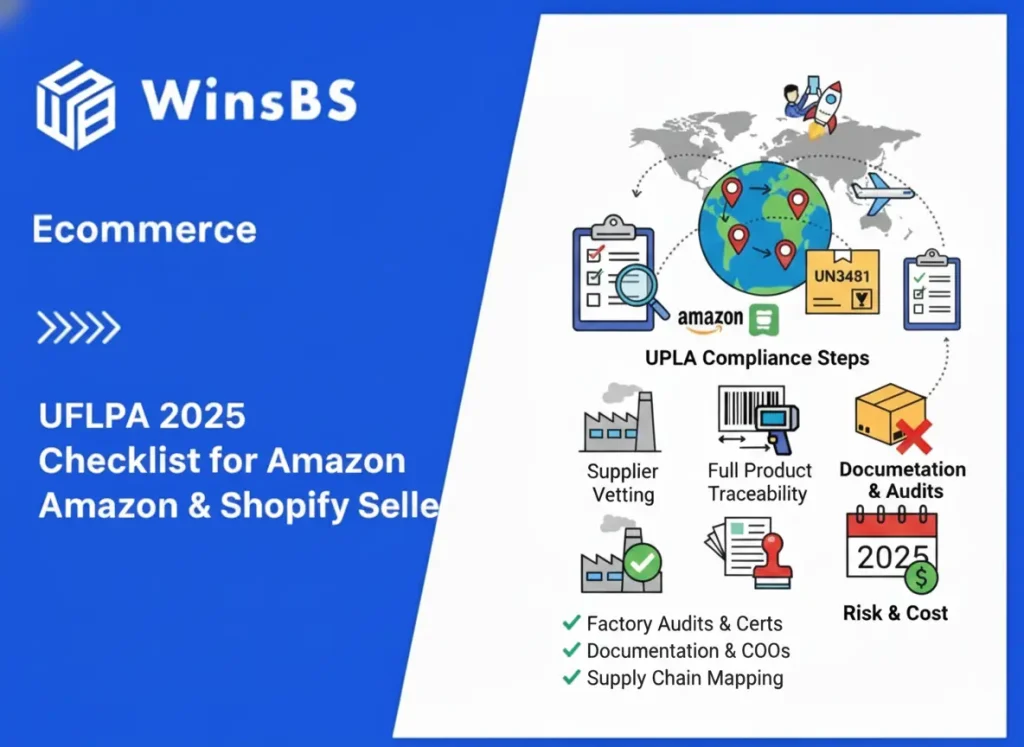
WinsBS Ecommerce banner with the title "UFLPA 2025 Checklist for Amazon & Shopify Sellers" and compliance-themed icons showing diligence, supply chain transparency, and UFLPA guidelines for cross-border eCommerce sellers.
Ecommerce, Order Fulfillment, Shipping & Logistics, Winsbs

UFLPA 2025 Checklist for Amazon & Shopify Sellers

UFLPA 2025 Compliance Checklist for Amazon & Shopify Sellers How to Keep U.S. Imports Admissible and Out of CBP Detention By Maxwell Anderson · WinsBS Research · Updated November 2025 TL;DR The Uyghur Forced Labor Prevention Act (UFLPA) has moved from a “China cotton issue” to a broad supply-chain enforcement regime. As of January 15, 2025, the DHS UFLPA Entity List includes 144 entities, and CBP has detained more than 6,000 shipments worth billions of dollars, including many small-parcel e-commerce imports. De minimis (under $800) shipments are no longer a safe loophole. Amazon FBA and Shopify brands importing into the U.S. must be able to prove, with clear and convincing evidence, that their goods are free of Xinjiang (XUAR) links and free of any entities on the UFLPA list. This guide gives you a practical, 4-phase checklist to build a defensible UFLPA compliance program, prepare a complete CBP rebuttal package, and keep your products out of detention. QUICK ACTION GUIDE — WHAT TO DO THIS QUARTER If you are an Amazon or Shopify seller already shipping to the U.S., use this quick sequence as your “UFLPA action plan.” Step 1 – Name an owner: Assign a single UFLPA compliance owner (often the import compliance manager or head of operations). Step 2 – Issue a zero-tolerance policy: Publish an internal forced-labor and UFLPA policy, and push it to all suppliers. Step 3 – Map high-risk SKUs: Identify products in textiles, solar, electronics, EV batteries, metals, PVC, aluminum, and red dates as priority. Step 4 – Trace back to raw materials: For each high-risk SKU, build a documented chain from raw material to finished good. Step 5 – Screen against the UFLPA Entity List: Verify that no factory, trader, or upstream processor is on the DHS list (144 entities as of Jan 2025). Step 6 – Build your CBP rebuttal package template: Prepare a standard document pack with invoices, production records, utility bills, payroll, and audit reports. Step 7 – Align Amazon FBA / Shopify SFN flows: Ensure your 3PL and FBA/SFN routing are traceable and consistent with your documentation. Step 8 – Run a tabletop detention drill: Simulate a CBP detention and rehearse a 30-day rebuttal response. If you need help benchmarking your current risk or tracing a specific SKU, you can work with the WinsBS U.S. fulfillment & import compliance team or request a free diagnostic below. INTRODUCTION — WHY UFLPA NOW DEFINES E-COMMERCE IMPORT RISK The Uyghur Forced Labor Prevention Act (UFLPA) has been in force since June 2022. It flips the burden of proof: any goods wholly or partly mined, produced, or manufactured in China’s Xinjiang Uyghur Autonomous Region (XUAR), or involving entities on the UFLPA Entity List, are presumed to be made with forced labor and therefore inadmissible into the United States. As of the January 15, 2025 Federal Register update, the UFLPA Entity List maintained by the U.S. Department of Homeland Security (DHS) has expanded to 144 entities, including parent companies, subsidiaries, and affiliates. Throughout 2024–2025, U.S. Customs and Border Protection (CBP) has detained more than 6,000 shipments under UFLPA, targeting not only bulk consignments but also e-commerce small parcels and de minimis shipments flowing to Amazon FBA and direct-to-consumer brands. For Amazon and Shopify sellers, UFLPA is no longer an abstract policy issue. If you are the Importer of Record (IOR), CBP will expect you to demonstrate that your supply chain is free from forced labor and free from any UFLPA-listed entities. Even if Amazon, Shopify, or a 3PL handles your logistics, you remain responsible for admissibility. This guide is written for U.S.-bound brands using Amazon FBA, Shopify, and third-party logistics (3PL) networks. It translates the UFLPA framework into a practical 4-phase checklist, with tables, risk matrices, and documentation examples that you can immediately align with your operations. UFLPA IN 2025 — WHAT CHANGED AND WHY IT MATTERS Before you build a checklist, you need a clear snapshot of the 2025 enforcement landscape. 1.1 UFLPA Entity List — 144 Entities and Growing Scrutiny As of November 2025, following the DHS announcement on January 14, 2025 and the Federal Register notice on January 15, 2025, the UFLPA Entity List includes 144 entities. These cover a wide network of Chinese companies and affiliates involved in: Textiles and apparel (including cotton and yarn originating in XUAR) Polysilicon and solar supply chains Metals such as copper, aluminum, lithium-related materials, and steel inputs Chemicals including caustic soda used in textile and industrial processing Agricultural products such as red dates and other specialty crops Any direct or indirect sourcing from entities on this list places your shipment under the UFLPA rebuttable presumption, meaning your goods are presumed inadmissible unless you can overturn that presumption. 1.2 High-Risk Sectors for E-Commerce Brands CBP and DHS have signaled particular concern around the following sectors, which are common in Amazon and Shopify catalogs: Apparel & textiles: T-shirts, hoodies, activewear, socks, underwear, fashion accessories. Electronics & components: consumer electronics, PCBs, power banks, chargers, smart devices. EV and battery products: e-bikes, scooters, power tools, lithium-ion modules. Solar-related and metals: lighting, small solar kits, components with copper, aluminum, or steel. Plastic & PVC products: flooring, accessories, industrial components. Food & agricultural: red dates, snacks, and specialty ingredients. 1.3 The FLETF 4-Dimensional Risk Lens The Forced Labor Enforcement Task Force (FLETF) focuses on four dimensions of risk: Geographic risk: direct or indirect links to XUAR or other high-risk locations. Entity risk: relationships with companies on the UFLPA Entity List or their affiliates. Commodity risk: categories like cotton, polysilicon, lithium, aluminum, PVC, and seafood. Supply-chain risk: opacity, intermediaries, and missing documentation across tiers. Your compliance program should mirror this lens: not just “China vs. non-China,” but a structured evaluation across geography, entities, commodities, and supply-chain transparency. PHASE 1 — BUILD AN INTERNAL UFLPA COMPLIANCE PROGRAM UFLPA compliance starts inside your organization. CBP will look for a credible, documented program, not just a one-off supplier questionnaire. 2.1 Policy, Governance, and Training At a minimum, Amazon and Shopify brands should implement

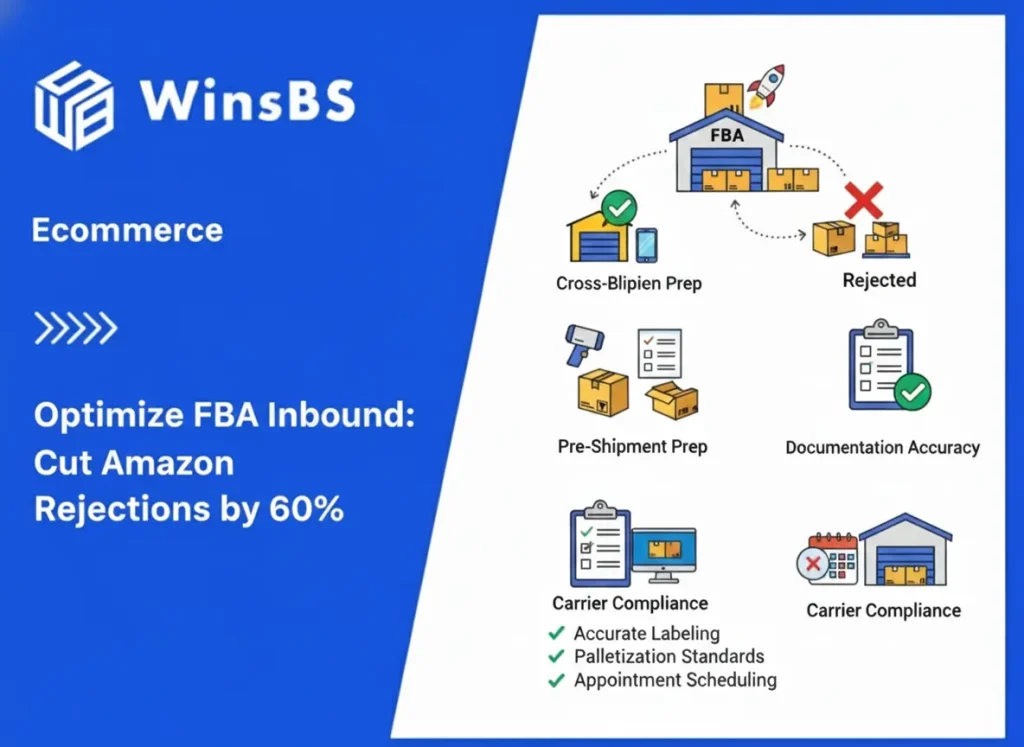
Flowchart illustrating the FBA inbound process beside WinsBS Ecommerce title, showing steps for preventing Amazon rejections through proper prep, documentation accuracy, and carrier compliance, symbolizing FBA inbound and 3PL fulfillment services.
Ecommerce, Order Fulfillment, Shipping & Logistics, Winsbs

Optimize FBA Inbound: Cut Amazon Rejections by 60%

Optimize FBA Inbound & Cut Rejection Rate by 60% A 2025 Compliance Playbook for U.S. E-commerce Sellers & Crowdfunding Creators Maxwell Anderson — Research Editor-in-Chief, WinsBS Research & Content Marketing Manager, WinsBS Updated December 2025 · Portland, Oregon TL;DR In 2025, Amazon tightened its FBA inbound enforcement around carton tolerance, pallet height, barcode placement, and shipment consolidation. For most small and mid-sized brands, inbound failures are no longer caused by sloppy labeling alone—they are triggered by mismatched carton specs, incorrect warehouse routing, missing ASNs, and non-compliant mixed-SKU pallets. Across 120+ U.S. SMB sellers and 30+ crowdfunding campaigns, WinsBS Research observed baseline inbound rejection rates of 12–18%, with optimized 3PL-driven workflows reducing that to 4–7%. This guide outlines a practical, data-backed framework to optimize your FBA inbound process, cut rejection risk by 60%+, and protect Q4 launches, crowdfunding pledge deliveries, and long-term sell-through. INTRODUCTION For U.S. e-commerce sellers and crowdfunding creators, FBA inbound is where profit margins and customer trust are earned—or quietly destroyed. When inbound runs smoothly, inventory activates in one to three days, campaigns transition from “funded” to “fulfilled,” and teams can focus on product, marketing, and community. When inbound fails, everything backs up: cash flow, reviews, ad performance, and even investor confidence. A single rejected shipment can erase months of careful planning. It does not just generate fees. It delays restocks, pushes critical launch dates past key retail weeks, and forces teams into expensive workarounds— last-minute air freight, emergency relabeling, or short-term 3PL contracts at unfavorable rates. The 2025 enforcement cycle made this risk more visible. Amazon tightened its expectations around: Carton conformity – consistent dimensions, weight range, and overhang tolerance Pallet standards – 40" × 48" GMA-style pallets, max 72" height, four-way entry Barcode rules – scannable FNSKU on flat surfaces, PDF417 pallet labels in North America Shipment consolidation – reduced tolerance for partial splits and inconsistent routing These changes are reasonable from Amazon’s perspective. They reduce manual labor and keep high-volume fulfillment centers efficient. But for small sellers and crowdfunding teams—often running lean, without a dedicated logistics manager—the learning curve is steep and the penalty for missteps is high. This article presents a practical, data-driven FBA inbound optimization framework built from WinsBS Research’s audit logs of 38,000+ FBA cartons shipped into ONT8, TEB3, SBD1, and GYR2. It is written for U.S. founders, operators, and campaign owners who want to: reduce FBA inbound rejection rates by 60% or more protect limited working capital from avoidable fines and delay fees deliver crowdfunding rewards on time, without overloading support teams use a 3PL partner not just as storage, but as an inbound risk filter If FBA feels like a “black box” that periodically returns your cartons with vague defect notes, this guide is designed to give you language, metrics, and checklists that your internal team and your 3PL for FBA prep can act on immediately. For a broader overview of how WinsBS supports omnichannel fulfillment beyond Amazon FBA, see WinsBS U.S. fulfillment network and 3PL services . 2025 FBA INBOUND ENFORCEMENT SNAPSHOT Amazon’s 2025 inbound policy updates were not a surprise to large brands with in-house supply chain teams. For SMBs and crowdfunding projects, however, the impact felt sudden. Many founders first “learned” the new rules from a rejection notice, not from documentation. At a high level, the 2025 changes emphasized four enforcement pillars: Carton tolerance: stricter expectations around consistent carton dimensions, weight ranges, and overhang. Custom packaging that looks great in a campaign video often violates these rules. Pallet standards: 40" × 48" GMA pallets with max 72" height and four-way fork access became the enforced norm, not a suggestion. Edge protection and stable stacking moved from “best practice” to “prerequisite for smooth receiving.” Barcode placement and format: FNSKU labels must be on flat, scannable surfaces and cannot sit on corners or curves. U.S. pallets increasingly require PDF417 labels. Labeling over existing barcodes without full coverage triggers mis-scan risk. Shipment consolidation and routing: Amazon pushed for “optimized splits”—shipments with consistent carton groupings per SKU, flowing to specific fulfillment centers. Partial or inconsistent splits became harder to justify, especially for standard-size catalog items. Official guidance is available across Amazon’s help pages, including inbound requirements and packaging standards. Sellers should review current documentation via Amazon Seller Central and resources like the FBA Packaging and Prep Requirements and FBA Receiving Guidelines . The enforcement outcome is simple: FBA inbound errors are less tolerated, more expensive, and more visible in your Seller Central performance metrics. That is exactly why a structured, repeatable inbound workflow matters in 2025 and beyond. THE REAL COST OF FBA INBOUND REJECTIONS A rejection notice is not just an operational annoyance. It is a signal that your inbound system is leaking cash. When we model the fully loaded, pre-tax cost of a typical FBA inbound rejection, four buckets emerge: Direct fees: reprocessing, relabeling, storage delay charges, and disposal fees Time value: delayed inventory activation and missed promotional windows Opportunity cost: lost buy-box exposure, ad performance, and ranking momentum Reputation impact: delayed crowdfunding deliveries and frustrated early customers Across the WinsBS sample, the average SMB seller lost $9,500–$14,000 per quarter from inbound non-compliance once all four buckets were accounted for. For crowdfunding campaigns, a single rejected pallet could delay thousands of backer shipments and push the entire project into a reputational “red zone.” Cost Component Typical Range (Per Event) How It Shows Up Reprocessing & relabel fees $120–$480 per shipment Per-unit handling charges applied to mis-labeled or non-compliant cartons Storage Delay Fees (demurrage) $150–$300 per pallet Charged when goods sit idle while Amazon investigates or awaits corrections Extra freight & re-routing $400–$2,000 per event Emergency moves to new FCs, returns to origin, or last-minute consolidations Lost sales & ranking impact $1,500+ in weekly contribution margin Q4, Prime Day, or launch window inventory arriving too late For founders and CFOs, the conclusion is straightforward: FBA inbound optimization is not a “nice-to-have ops tweak.” It is a margin-protection lever. Cutting rejection rates from 15% to 5% can yield a five-figure

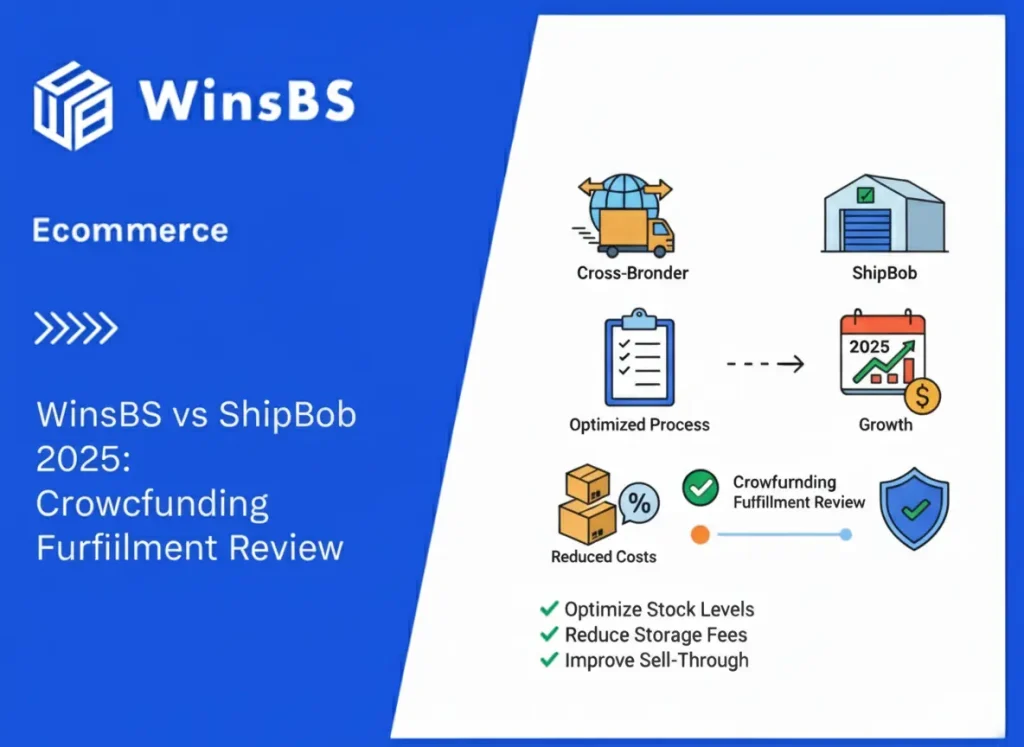
Graphic comparing WinsBS and ShipBob for ecommerce and crowdfunding fulfillment, featuring the WinsBS logo, a ShipBob warehouse, cross-border shipping icons, process checklist, 2025 growth and cost-saving symbols, and stock optimization indicators.
Ecommerce, Order Fulfillment, Shipping & Logistics, Winsbs

WinsBS vs ShipBob 2025: Crowdfunding Fulfillment Review

WinsBS vs ShipBob 2025 Crowdfunding Fulfillment Review A 12-Metric Comparison for Kickstarter & Indiegogo Teams Maxwell Anderson — Editor-in-Chief, WinsBS Research November 2025 TL;DR WinsBS is built around the operational realities of complex crowdfunding campaigns— BackerKit surveys, add-ons, late pledges, multi-wave delivery, and global VAT. ShipBob is one of the strongest U.S. 3PLs for high-volume, stable DTC brands, but its workflows are not designed around the fast-changing data patterns that come with Kickstarter and Indiegogo projects. For lean teams and campaigns with shifting SKUs, WinsBS tends to offer a smoother path from production to delivery. Introduction Crowdfunding fulfillment carries a very different operational profile compared with traditional e-commerce. A typical Kickstarter or Indiegogo campaign moves through several unpredictable stages: surveys with hundreds of combinations, add-on upgrades, last-minute address edits, and multiple waves of delivery. Backers are spread across the U.S., Europe, the UK, Canada, Australia, and dozens of smaller markets. Many creators only discover these workflow differences after their campaign has ended. ShipBob and WinsBS serve creators from two different ends of the fulfillment spectrum. ShipBob is designed for ongoing DTC operations with steady weekly volume, stable SKU structures, and predictable replenishment. Its automation and network scale work best when order flow stays consistent month after month. WinsBS is structured differently. Its systems and teams are accustomed to crowdfunding volatility—orders that arrive in huge batches instead of weekly cycles, pledge data that changes multiple times before shipping, and global backer bases that require IOSS, VAT, or DDP workflows. Where ShipBob favors standardization, WinsBS operates with far more flexibility for project-based needs. Most creators working with Kickstarter or Indiegogo fall into the small-to-mid-sized category: 1–4 full-time team members No internal logistics manager Order volume concentrated within a narrow fulfillment window Reward structures that change as surveys come in Address changes from 10–20% of backers Global backer distribution, often 30–60% outside the U.S. These teams tend to feel the operational gap the most. A fulfillment model designed for weekly Shopify cycles does not always translate cleanly to BackerKit-driven workflows and multi-wave shipping. This is where the differences between ShipBob and WinsBS become clear in practice—not in marketing materials, but in how campaigns move through survey collection, pick/pack logic, and last-mile delivery. Executive Summary The comparison below covers twelve operational areas that repeatedly determine how smoothly a crowdfunding project moves from production to fulfillment. The ratings reflect common outcomes observed across a wide range of campaigns involving both partners. Metric WinsBS ShipBob Operational Notes Best Fit Crowdfunding workflow readiness Strong for BackerKit, add-ons, multi-wave Designed for stable SKUs ShipBob works best with repeat DTC volume, not shifting survey data. WinsBS North America speed & stability Consistent, even for batch waves Very strong for Shopify/Amazon brands Peak-season variance increases with one-time campaign spikes. Depends on campaign size Pricing transparency Project-based and predictable More complex, DTC-oriented Campaigns without ops managers benefit from simpler fee structure. WinsBS EU/UK/CA/AU VAT & DDP Structured and frequently used Functional but built around Shopify flows Global backer distribution amplifies the difference. WinsBS System integration & tools BackerKit-friendly; strong bulk tools Enterprise-leaning automation Address-change waves often require more manual handling on Shopify-centric systems. WinsBS Inventory accuracy & handling Strong for multi-component sets Strong for standardized cartons Tabletop games and multi-SKU rewards benefit from WinsBS structure. Depends on product type Customer service responsiveness Campaign-oriented escalation paths Ticket-based, optimized for recurring brands Campaign timelines shift quickly; structured support helps. WinsBS for lean teams Returns & backer experience Clear flows for Kickstarter/IGG Standard DTC loops Backers expect project-specific guidance, not e-commerce templates. WinsBS Insurance & liability Transparent for short-term projects Standard enterprise terms Campaigns often need shorter-cycle clarity. Slight edge to WinsBS Payment terms & cash flow Creator-friendly options in many cases Fixed 3PL net terms Campaigns face tooling and production cash pressure. WinsBS Reputation among creators Positive for complex projects Strong for large DTC brands Two different customer bases with different needs. Depends on campaign type Contract flexibility Project-based Long-term DTC orientation ShipBob isn’t structured for “campaign-only” operations. WinsBS Overall, ShipBob remains one of the strongest choices for brands with steady monthly volume and a conventional DTC structure. For Kickstarter and Indiegogo campaigns—where order data, SKU counts, and global routing change frequently—WinsBS tends to align more naturally with the realities of project-based fulfillment. 1. Crowdfunding Workflow Readiness Kickstarter and Indiegogo campaigns rarely ship in a single, clean batch. BackerKit surveys introduce dozens—sometimes hundreds—of unique combinations. Add-ons are unlocked late in the campaign. Address edits spike during the final 40 days. Late pledges come in while production is already under way. And once everything looks stable, a portion of backers change their SKU selections or upgrade bundles. These patterns expose a structural difference between fulfillment partners built for weekly Shopify cycles and those designed for project-style operations. ShipBob’s automation is optimized for steady DTC volume: consistent SKUs, predictable replenishment, and orders flowing in at a relatively even pace. When the entire dataset changes three or four times before shipping, the system requires additional manual handling or workflow adjustments. WinsBS works from the opposite direction. Its teams and systems expect instability—survey waves, add-on waves, late pledges, and follow-up retail allocations. Many campaigns come in with pledge data that needs several iterations of cleaning before it can even be mapped into a WMS. WinsBS handles these shifts as a normal part of the process rather than an exception. BackerKit Mapping & SKU Variants BackerKit exports often include nested structures: bundles inside bundles, optional inserts, premium add-ons, and reward tiers that share components. These exports can change dramatically once surveys close. WinsBS: Comfortable with multi-layer SKU logic and bundle decomposition. Variant mapping, component-level pick lists, and “reward-to-SKU” translations are handled as part of standard onboarding. ShipBob: Works best when SKU structures stay stable. Every major change—new bundles, new component SKUs, or redefined kit logic—requires additional steps and can slow down prep for large waves. Multi-Wave Shipping Few crowdfunding campaigns ship in a single continuous wave. Early bird orders, bulk waves, late pledges, and retail reserve allocations

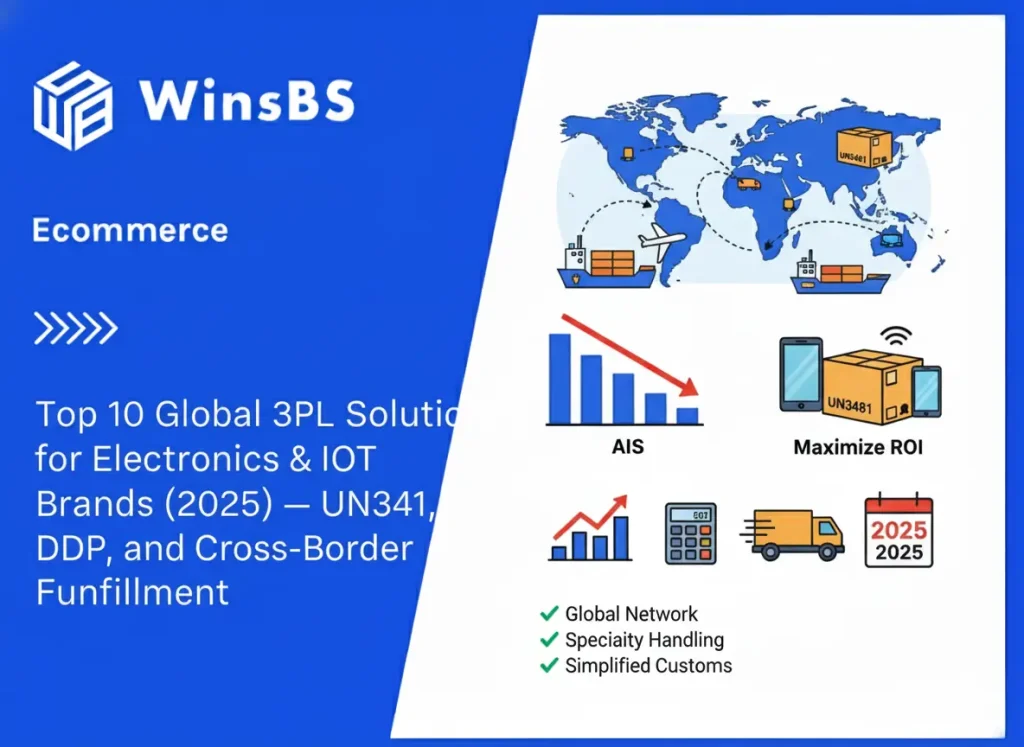
Global map with shipping routes, lithium battery warning packages, smart devices, warehouses, and logistics staff beside WinsBS logo and title, symbolizing 3PL fulfillment and cross-border order fulfillment for electronics and IoT brands.
Ecommerce, Order Fulfillment, Shipping & Logistics, Winsbs

Top 10 Global 3PL Solutions for Electronics & IoT Brands (2025)

Best Global 3PL Solutions for Electronics Brands (2025) ESD-Safe Fulfillment & Worldwide Delivery for Tech, IoT & Hardware Startups WinsBS Fulfillment Research Team – Maxwell Anderson November 2025 In 2025—a defining year for global supply chain realignment—the electronics and tech hardware sector has become one of the fastest-growing categories in e-commerce, reaching a market size of over $1.3 trillion. For startups and SMBs manufacturing in China, Vietnam, and Southeast Asia, this surge brings both extraordinary opportunity and new logistical pressure—especially in electronics fulfillment and cross-border delivery. The central challenge? High-value electronics require speed, compliance, and precision. While global buyers expect 2–5 day delivery with full tracking, brands are now facing complex customs clearance, UN3481 lithium battery restrictions, and rising freight surcharges across major trade lanes. In 2025, the average landed cost for small electronics shipped from China has risen by 10–18%, making it harder for emerging hardware brands to stay competitive. Many 3PLs still rely on outdated systems or fragmented regional networks—leaving gaps in serial-number tracking, DDP (duties paid) billing, and ESD-safe warehousing. These oversights can lead to damaged goods, customs delays, or unexpected post-shipment costs. For electronics brands and IoT device makers, finding a 3PL partner experienced in global electronics fulfillment—from Shenzhen to New Jersey—has become mission-critical. That’s why we’ve compiled this global analysis. It’s written for hardware founders, crowdfunding innovators, and direct-to-consumer tech brands who want to simplify fulfillment from Asia to North America and Europe— with transparent DDP pricing, prepaid duties, and optimized delivery performance. Why now? 2025 marks the acceleration of cross-border electronics logistics and 3PL digitization. Data from WinsBS Research’s 2025 Fulfillment Study shows that brands leveraging 3PL networks with multi-region hubs achieve up to 98% on-time global delivery and save 20–30% in total landed cost through consolidated DDP routes from China and Hong Kong. Our report identifies the unique challenges in this field—lithium battery compliance (UN3481), high-SKU component management, temperature and ESD-controlled storage, and international warranty returns. Whether you’re launching an IoT gadget, audio accessory, or consumer electronics line, you’ll find scalable electronics fulfillment solutions to ship faster, reduce duties risk, and expand globally from your Asian supply base. Let’s dive in. Electronics 3PL Selection Methodology A compliance-first and data-driven framework helping global electronics and IoT brands—especially those manufacturing in Asia—identify 3PL partners that deliver safety, efficiency, and scalability. Built from WinsBS Research’s 2025 Electronics Fulfillment Study. 1. Core Principle — Compliance → Cost Efficiency → Scalability Selecting a 3PL for electronics fulfillment isn’t just about moving boxes—it’s about protecting assets, complying with regulations, and optimizing cost-to-serve across borders. WinsBS Research recommends a three-tier selection logic specifically designed for electronics, tech hardware, and IoT device brands: Compliance: Can the provider handle UN3481 lithium batteries, ESD-safe warehousing, and export documentation? Cost Efficiency: Can it offer predictable DDP pricing and consolidated shipping from China or Hong Kong? Scalability: Does the system integrate easily with your e-commerce platforms and adapt to multi-market expansion? 2. Electronics Supply Chain Challenges & Required 3PL Capabilities Electronics fulfillment faces unique operational risks—compliance, damage prevention, and cross-border complexity. The following matrix maps the top five challenges against the 3PL capabilities essential for global electronics fulfillment. Supply Chain Challenge Typical Manifestation Required 3PL Capability Compliance & Certification UN3481 lithium battery handling, export documentation, customs audits Certified hazardous goods handlers, automated export paperwork, DDP model with pre-cleared customs Fragility & ESD Protection Shock-sensitive electronics damaged in transit or storage ESD-safe packaging zones, anti-static shelving, climate & humidity-controlled warehouses Cross-Border Complexity Long lead times, tariff uncertainty, and multiple customs points Consolidated DDP routes from China, real-time customs tracking, regional bonded warehouse network High SKU & Serial Tracking Product traceability, warranty, and after-sales requirement WMS with serial number tracking, batch recall functions, and traceable inventory APIs Return & Repair Flow Warranty repairs, DOA returns, component exchanges Integrated reverse logistics with QC inspection, repair & refurbish lines, and international RMAs 3. Three-Step 3PL Evaluation Model (Weighting: 40% / 35% / 25%) ① Compliance — Certification & Safety Standards (40%) Certified to handle lithium batteries (UN3481) and restricted components? ESD-safe storage zones and anti-static handling procedures implemented? Full documentation for export/import: MSDS, CE, RoHS, FCC compliance? Prepaid duties (DDP) and customs clearance experience from China, Hong Kong, or Vietnam? Insurance and cargo protection policies for high-value electronics? ② Cost Efficiency — From China Fulfillment & DDP Optimization (35%) Supports hybrid models: factory-to-consumer (F2C), DDP cross-border, and local hub distribution? Offers tiered rate cards for startups and SMBs with low-to-mid volume shipments? Provides transparent billing for freight, pick-pack, packaging, and customs? Optimized multi-country delivery network: China → USA/EU/UK via 6+ hubs? Integration-ready with Shopify, WooCommerce, Amazon, TikTok Shop? ③ Scalability — Technology, Network & Support (25%) Global WMS integration with real-time tracking and AI-based routing? Dedicated account managers and multilingual support teams? Automated SLA dashboards with fulfillment accuracy KPIs? Ability to add hubs (US/EU/Asia) or switch fulfillment models as you scale? Data compliance with GDPR, CCPA, and cybersecurity frameworks? 4. Practical Application — From Compliance Screening to Proven Partner To implement this electronics 3PL selection methodology, WinsBS Research suggests the following step-by-step roadmap for brands exporting from Asia to global markets. Step Action Goal Step 1: Compliance Screening (Safety) Filter top 10 3PLs certified for UN3481, ESD, and cross-border DDP operations Eliminate non-compliant or regionally limited providers Step 2: Cost & Network Analysis (Efficiency) Compare shipping lanes from China/Hong Kong → USA/EU/UK; request detailed landed-cost breakdown Identify the lowest total cost per order with stable transit times Step 3: System Integration (Scalability) Validate WMS/OMS integration with Shopify, Amazon, and ERP systems Ensure data transparency and smooth sync across platforms Step 4: Pilot & Review Run a 30-day pilot shipping from China through two shortlisted 3PLs Measure on-time delivery, customs performance, and unit cost Top 10 Best 3PL for Electronics & Tech Brands (2025) Last updated: Nov 2025 A curated global comparison by WinsBS Research highlighting electronics-focused 3PL partners with proven capabilities in UN3481 compliance, ESD-safe warehousing, and DDP cross-border delivery from China. 3PL Company Electronics Focus Global Network