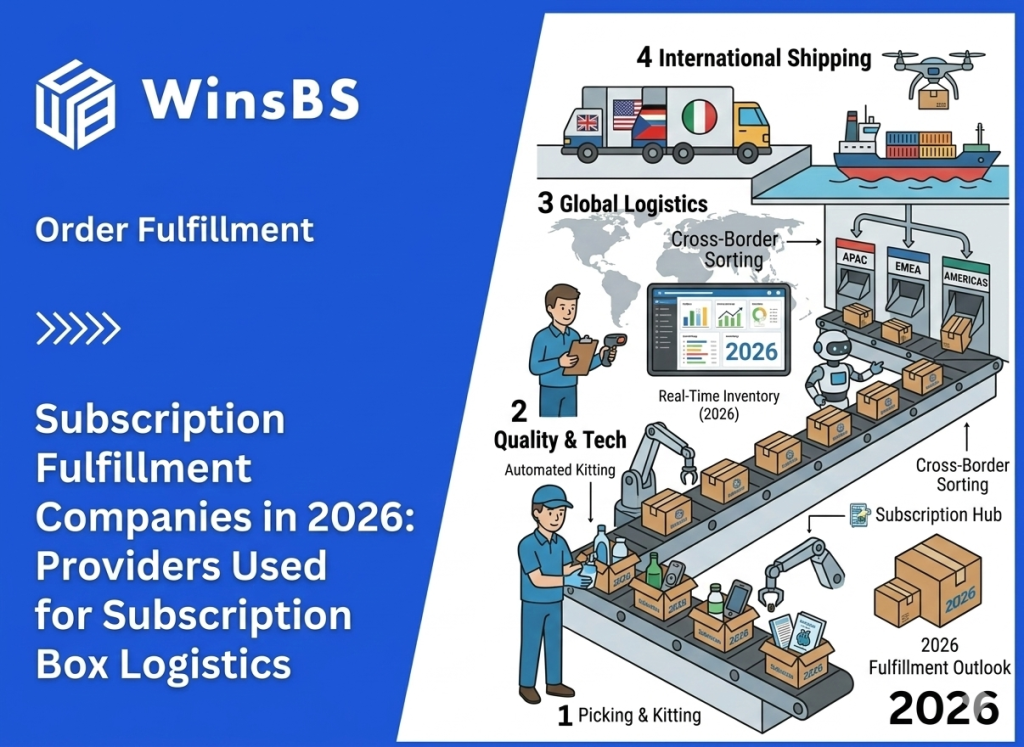
Subscription Fulfillment Companies in 2026: Providers Used for Subscription Box Logistics
Subscription Fulfillment Companies in 2026 Providers Used for Subscription Box Logistics and Recurring Shipping Maxwell Anderson Independent 3PL Research March 2026 TLDR Subscription fulfillment operates on recurring shipping cycles rather than continuous ecommerce order flow. Brands managing subscription boxes often encounter operational complexity once assembly workflows, SKU rotation, and monthly shipping waves begin to scale. This guide explains which fulfillment providers appear most often in subscription logistics discussions, how recurring shipment cycles affect warehouse operations, and what operational signals indicate when subscription brands begin moving toward specialized 3PL fulfillment. Contents Quick Answers About Subscription Fulfillment Subscription Fulfillment Providers Frequently Used by Brands Subscription Fulfillment Capability Matrix Operational Patterns in Subscription Fulfillment Execution Capabilities Required for Subscription Fulfillment Subscription Fulfillment Execution Signals Dataset When Subscription Brands Need Specialized Fulfillment Operational Risk Signals in Subscription Logistics Subscription Fulfillment Within the 3PL Landscape Observation Sources and Signal Methodology This article is part of the 2026 Ecommerce 3PL Signal Index which tracks operational signals across fulfillment providers used by ecommerce brands. Subscription fulfillment appears frequently in logistics discussions because recurring shipping cycles introduce different operational pressures than standard ecommerce order flows. Quick Answers About Subscription Fulfillment Quick Answer What is subscription fulfillment? Subscription fulfillment refers to the logistics process of preparing and shipping recurring customer orders on a fixed cycle. Unlike standard ecommerce fulfillment, subscription operations usually involve recurring batch releases, box assembly, and shipping coordination tied to billing schedules. Quick Answer How is subscription fulfillment different from ecommerce fulfillment? Subscription fulfillment differs from standard ecommerce fulfillment because orders are generated in recurring cycles rather than placed one by one throughout the day. This creates monthly or weekly shipping waves, recurring assembly work, and inventory staging requirements that are less common in continuous ecommerce order flow. Quick Answer What operational challenges appear in subscription box logistics? Common challenges include recurring box assembly, SKU rotation between cycles, inventory forecasting, compressed shipping windows, and growing support requests after each release. These issues usually become more visible as subscriber volume rises and each cycle requires more coordinated warehouse work. Quick Answer When do subscription brands start using 3PL fulfillment? Many subscription brands move to third-party fulfillment when in-house packing starts taking multiple days each cycle or when assembly, shipping, and inventory coordination begin to consume too much operational time. This shift often happens once recurring volume, box complexity, or subscriber geography grows beyond what a small internal team can handle consistently. Subscription Fulfillment Providers Frequently Used by Brands Subscription brands usually evaluate fulfillment providers differently from standard ecommerce sellers. Once recurring shipping cycles begin to scale, the operational question shifts from simple order shipping to managing batch releases, box assembly, and recurring warehouse workflows tied to subscription billing schedules. The providers below appear frequently in subscription fulfillment discussions because they are associated with recurring shipping operations, box kitting workflows, and logistics infrastructure that supports subscription-based distribution models. Recurring Ecommerce Operations ShipBob Typical Subscription Fit: DTC subscription brands scaling recurring shipments through an ecommerce-focused warehouse network. Operational Signals: Recurring order handling, batch shipping workflows, and platform integrations used by subscription-based businesses. Subscription Box Operations ShipMonk Typical Subscription Fit: Subscription box brands dealing with multi-SKU assembly, rotating products, and recurring cycle shipments. Operational Signals: Box kitting workflows, recurring shipping support, and infrastructure suited for assembly-heavy subscription programs. Warehouse Technology Infrastructure ShipHero Typical Subscription Fit: Brands with recurring order cycles that require stronger warehouse systems and inventory visibility. Operational Signals: Warehouse management systems, order processing control, and operational infrastructure supporting recurring fulfillment. Structured Product Handling Red Stag Fulfillment Typical Subscription Fit: Subscription programs shipping higher-value or operationally sensitive products. Operational Signals: Order accuracy emphasis, careful handling workflows, and fulfillment operations focused on reliability. Flexible Growth Stage Fulfillment Fulfillrite Typical Subscription Fit: Earlier-stage subscription brands transitioning away from in-house packing operations. Operational Signals: Recurring shipment support and flexible batch fulfillment workflows. Distributed Fulfillment Network Quiet Platforms Typical Subscription Fit: Growing brands needing distributed fulfillment capacity across recurring shipping cycles. Operational Signals: Network-based fulfillment infrastructure and scalable recurring order processing. Enterprise Logistics Infrastructure Whiplash Typical Subscription Fit: Large subscription brands requiring enterprise-scale infrastructure and integrations. Operational Signals: Omnichannel logistics, warehouse orchestration, and recurring shipment execution capacity. Mid-Market Subscription Logistics Shipfusion Typical Subscription Fit: Mid-sized subscription brands shipping recurring boxes across North America. Operational Signals: Recurring order processing, kitting workflows, and batch shipping coordination. Global Shipping Infrastructure Easyship Typical Subscription Fit: Subscription brands prioritizing cross-border shipping and international subscriber delivery. Operational Signals: International shipping coordination, duty handling infrastructure, and global carrier integrations. Cross-Border Fulfillment WinsBS Typical Subscription Fit: Brands managing recurring shipments with stronger international or cross-border logistics requirements. Operational Signals: Global shipping coordination and fulfillment workflows supporting recurring cross-border distribution. At a glance, many subscription fulfillment providers appear similar. Operational differences usually become clearer once recurring shipping cycles, box assembly complexity, and subscriber geography begin shaping warehouse operations. Subscription Fulfillment Capability Matrix Subscription fulfillment providers often appear similar at a surface level. The operational differences usually emerge once recurring shipping cycles, box assembly workflows, and international subscriber distribution begin shaping warehouse operations. The matrix below compares common capabilities observed in subscription fulfillment environments rather than marketing claims. Provider Subscription Cycle Handling Box Kitting SKU Rotation Batch Shipping International Shipping ShipBob Strong Moderate Moderate Strong Moderate ShipMonk Strong Strong Strong Strong Moderate ShipHero Strong Moderate Moderate Strong Moderate Red Stag Fulfillment Moderate Moderate Limited Moderate Moderate Fulfillrite Moderate Moderate Moderate Moderate Moderate Quiet Platforms Strong Moderate Moderate Strong Moderate Whiplash Strong Strong Moderate Strong Strong Shipfusion Strong Moderate Moderate Strong Moderate Easyship Moderate Limited Limited Moderate Strong WinsBS Moderate Moderate Moderate Moderate Strong The capability comparison above is intended as a workflow snapshot rather than a ranking. Subscription brands typically evaluate providers based on how recurring cycles, assembly complexity, and shipping coordination affect operational reliability over time. Operational Patterns in Subscription Fulfillment Subscription fulfillment usually operates differently from standard ecommerce logistics because orders are not generated continuously throughout the day. Instead, shipments are often released in recurring cycles tied to billing schedules,