
Online Support
Typically replies within 5 minutes
Hello! How can we assist you today?

Michael

Since 2013, Michael has been neck-deep in the world of order fulfillment—digging into every nook and cranny of warehousing, logistics, and the full supply chain. What started with mastering 3PL operations quickly expanded into a holistic grasp of how every piece connects: from the moment an order hits the system to the second it lands on a customer’s doorstep, he’s lived and breathed the nitty-gritty.​
Years of rolling up his sleeves in the field have turned him into a go-to for insights that matter—whether it’s streamlining warehouse workflows, troubleshooting last-mile snags, or untangling the complexities of end-to-end supply chain management. For Michael, it’s not just about the processes; it’s about sharing the hard-earned lessons that help businesses run smoother, faster, and smarter.​
Here, he breaks down the chaos of logistics into actionable wisdom—because when it comes to getting things from point A to point B (and every point in between), experience isn’t just valuable. It’s everything.​

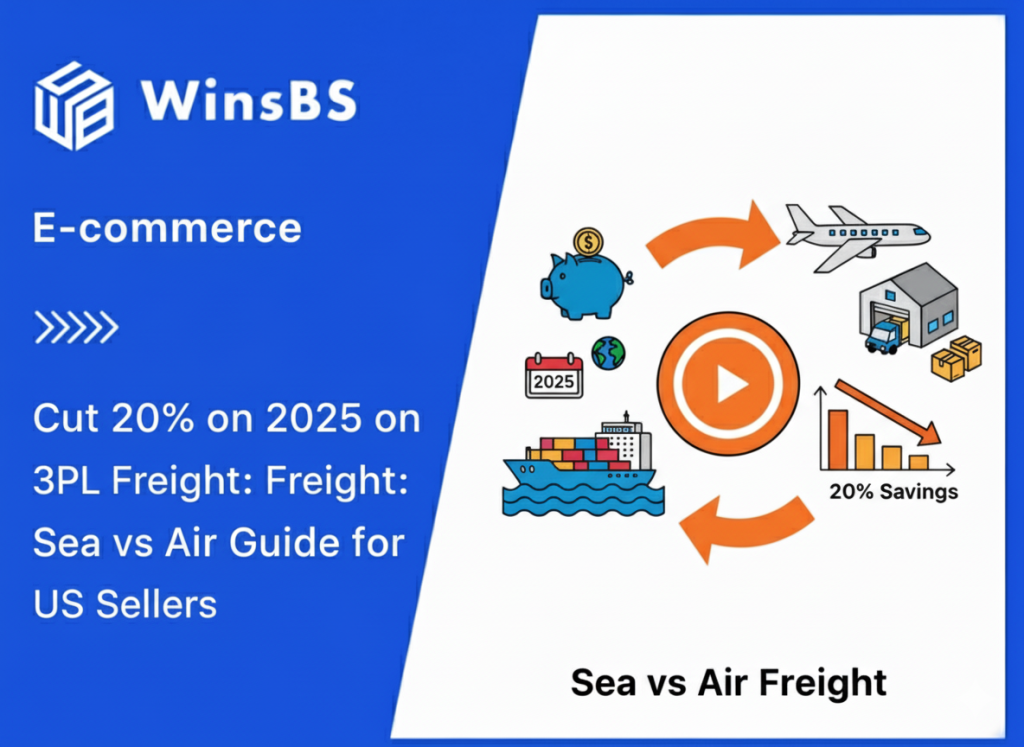
Infographic titled "Cut 20% on 2025 3PL Freight: Sea vs Air Guide for U.S. Sellers" under the E-commerce category, showing a cargo ship, airplane, warehouse, delivery truck, 2025 calendar, and a bar chart with "20% Savings", symbolizing 3PL freight, order fulfillment, and cost-saving comparison between sea and air shipping.
Ecommerce, Order Fulfillment

US E-Commerce Sellers: How to Cut 3PL Freight Costs 20% in 2025 Using Sea & Air

2025 3PL First-Mile Freight Costs Guide: Breaking Down Sea vs Air Shipping Fees for US Cross-Border E-Commerce Quick 3-Step Guide to Your 2025 3PL First-Mile Freight Costs Quickly spot risks and savings. Tap cards to expand. ? Step 1 – Identify Your Risks Tap to expand for your risks↓ Small <500kg/month: THC fees, de minimis duties apply. Mid 800–1500kg: LCL surcharges, FCL volume limits. Large >1500kg: Detention, inventory imbalance. ? Step 2 – Calculate Landed Cost Tap to expand formula & example ↓ = (Weight_KG * Rate_per_KG) + (Value * (Tariff_Base + 10%)/100) + (CBM * THC_35) + … Example: 400kg / 10 CBM electronics, $2,000 → Sea: ~$1,373, Air: ~$2,050 → Save $677 (25%) Paste formula into Excel or Google Sheets Enter weight, CBM, value, HS code (usitc.gov/hts → electronics → HS85xx) Add buffer days for potential delays ? Step 3 – Choose the Right Strategy Tap to expand strategies ↓ Small: Air + small-package; maintain 15-day buffer stock. Avoid LCL minimum thresholds. Mid: Shared FCL 10–15% savings, lock quarterly space, use LCL + dedicated line for misc fee reduction. Large: 80% sea + 20% air, pre-plan stock, contract free detention days. Case: Mid-tier seller Mike saved $8K and reduced turnover from 42 → 28 days by switching strategy. For US e-commerce sellers, 2025 freight is a balancing act: You need to ship fast enough to keep Amazon customers happy… but air freight at $6/kg can crush your ROI. You want to save with sea… but LCL’s “1CBM minimum” can trap you into overstocking. De minimis is gone, HS codes are trickier, and demurrage fees hit $120/day—one mistake and your quarter’s profit could vanish. I wrote this articlefor sellers who’ve had enough of “guesswork freight”: Skip the 45-minute Google searches—our 10-second self-check tells you if duties, fees, or delays are your biggest risk. No more “close enough” math—our Landed Cost formula includes every hidden fee (THC, LCL ops, even Q4 detention). See exactly how Mike saved $8k in Q3 (he ships 400kg/month—just like you) with a simple air/sea mix. This isn’t theory. It’s the same solution we’ve used with 1,000+ US sellers to cut freight costs by 15–25%. Take control of your freight costs—use Winbs check to see exactly what needs attention. 2025 First-Mile Freight Trends: Up 4-7% Overall, But It’s All About the Splits 2025 US cross-border shipping fees are splitting wide: LCL sea runs $1.1–2.1/kg on transpacific routes (up 20–25% YoY), FCL 20ft containers cost $3,500–4,800/unit. Economy air holds $3.2–6/kg, spiking to $6–7/kg during Q4 peaks. Policy alert: De minimis suspension begins Aug 29 for parcels under $800 (duties 3–6% + 10% baseline). B2C commercial shipments remain HS-based (e.g., electronics 3.5–5.6%). Transit update: Red Sea detours add 2–5 days in Q4; port congestion may worsen delays. IATA forecasts +5% air demand but rates remain flat. Seller impact: Small-batch shippers face misc fee jumps of 20% (THC costs rise), bulk shippers risk inventory mismatches. Quick action: Run the 10-second check below to identify if duties, fees, or delays are your top risk. 10-Second Self-Check: Freight Costs & Risks Seller Type / Monthly Volume Core Costs & Challenges Risk Level Recommended Action Small-Batch Sellers (<500kg/month) De minimis duties apply on <$800 parcels (3–6%) THC fees may represent 15–25% of shipping Fast turnover increases handling risk High Check Landed Cost; prioritize fast/air shipments; maintain small buffer stock Mid-Volume Sellers (800–1500kg/month) LCL surcharges 10–20% on some routes FCL minimums may impact flexibility Seasonal peaks require careful space planning Medium Balance LCL/FCL shipments; plan quarterly bookings; monitor demurrage fees High-Volume Sellers (>1500kg/month) Detention fees $50–80/day Inventory imbalances possible if demand fluctuates Sea freight preferable for cost efficiency Low Leverage sea freight; pre-plan stock levels; optimize warehouse rotation Identify your scale → Review costs & risks → Apply recommended actions to reduce shipping expenses. Full Landed Cost Calc Formula: Freight Cost Calculator = (Weight_KG × Rate_per_KG) + (Value × (Tariff_Base + 10%) / 100) + (CBM × THC_35) + (Delay_Days × Demurrage_120) + (Value × 0.5% Insurance) + (LCL_Fee_65 / Ticket) LCL Fee ($/Ticket): LCL operation fee per ticket FCL Fee ($/Ticket): FCL operation fee per ticket LCL FCL Weight (KG): Enter shipment weight in kilograms Rate per KG ($): Enter rate per kilogram Value ($): Enter shipment value for duties and insurance Tariff Base (%): Enter HS-based tariff percentage CBM: Enter cubic meters for THC calculation Delay Days: Enter estimated delay days for demurrage Tickets: Enter number of tickets for fee split Calculate Total Cost: — Contact WINSBS for Detailed Quote Var Breakdown: Tariff_Base = HS rate (electronics 3.5-5.6%); THC = Port handling $35/CBM; Demurrage = $120/day; Insurance = 0.5% of value. Example: 400kg / 10CBM electronics, $2000 value, HS 3.5% +10%: Sea $1.6/kg → $1,373 (~$3.43/kg); Air $4.5/kg → $2,050 (~$5.13/kg) — Save $677 (25%). Seller-Tier Strategies: Now that you’ve crunched the numbers, let’s match you to a strategy that actually fits your workflow—no jargon, just solutions to your biggest headaches. Quick summary: <500kg/month: LCL minimums (1 CBM / ~353 lb) force overstock. Use air freight + small parcels to avoid minimums. 800–1500kg/month: Too large for costly LCL but too small for a full container — consolidated (shared) FCL splits the cost. >1500kg/month: Mix sea and air to avoid stockouts and overstock caused by one-size-fits-all shipping. Small-Batch (<500kg/month) — Fast-moving goods Recommended: Air + small parcels (typically $4–$6/kg, 7–10 day delivery). How to implement Pick a carrier: Use services like ShipBob or WINSBS. Sign up, enter weight and HS code, and get a quote. Many providers have no minimum under ~50kg (110 lb). Mix transport: ~70% air for urgent restocks and ~30% sea for backup inventory. Reorder trigger: Restock when stock drops below 15 days of average sales; automate with Excel or an inventory tool. Avoid LCL minimums: LCL providers often bill a full 1 CBM even for smaller shipments—air + small parcels avoids that “empty-space tax.” Mid-Volume (800–1500kg/month) — Large items Recommended: Shared FCL (consolidated shipping) or LCL plus a dedicated freight line. How to implement Consolidated FCL: Search
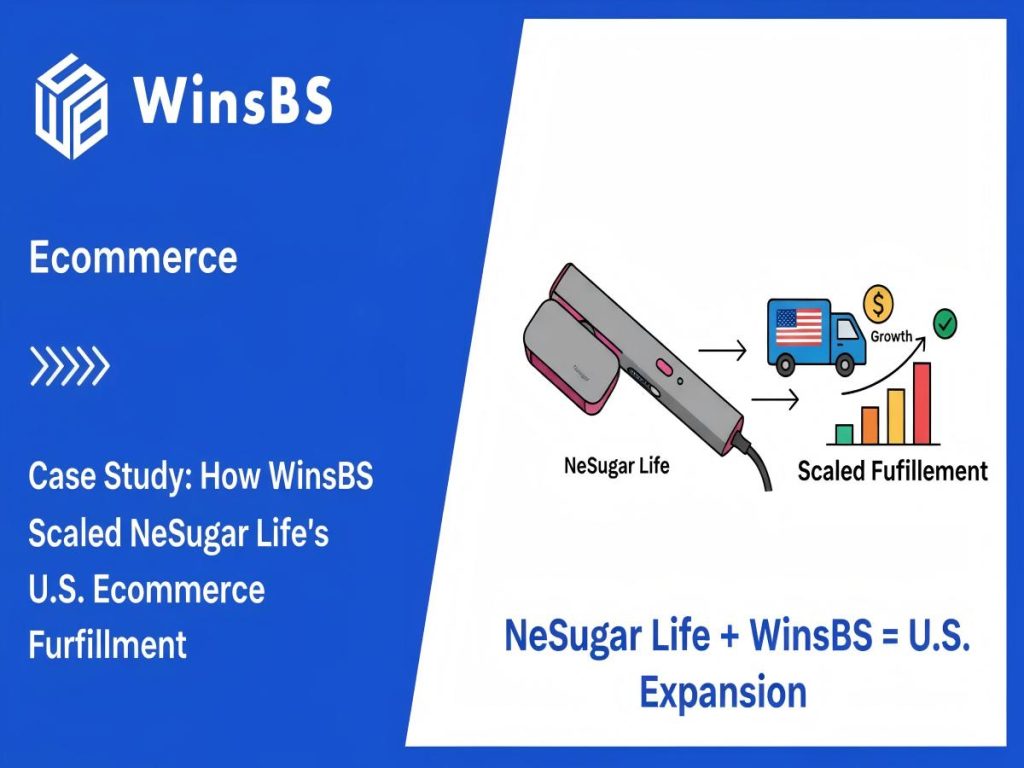
WinsBS logo with eCommerce category and case study title on the left, and NeSugar Life product with an arrow pointing to a truck featuring the U.S. flag, growth chart, and “Scaled Fulfillment” text on the right, symbolizing 3PL fulfillment and U.S. order fulfillment expansion.
Ecommerce, Winsbs

Case Study: How WinsBS Scaled NeSugar Life’s U.S. Ecommerce Fulfillment

Case Study: NeSugar Life × WinsBS From 150%–200% YoY Growth to ~8X in 4 Years — How WinsBS U.S. Warehouses powered NeSugar Life’s order fulfillment with speed, accuracy, and lower costs. Get a Free Fulfillment Quote A Fast-Growing DTC Brand with Supply Chain Headaches NeSugar Life is a DTC brand focused on portable personal care electronics, including handheld garment steamers and travel-friendly irons, priced between $29.9 and $109. Products are sold through its Amazon U.S. Store, Shopify website, and social platforms like Facebook and YouTube. NeSugar Life’s Channels: Shopify Website Facebook YouTube Amazon Store NeSugar’s Core Challenges: Unstable delivery times – A single West Coast warehouse meant East Coast customers waited 5–7 business days, with complaint rates exceeding 15%. Inventory mismatches – Their former 3PL often mis-shipped SKUs (e.g., the wrong steamer nozzle attachment). Unsold inventory piled up (10%), while stockouts reached 8%. High logistics costs – Shipping consumed 18%–20% of revenue, compared with an industry benchmark of 12%–15% for DTC consumer electronics (Deloitte 2024 Ecommerce Logistics Report). Inability to handle peak seasons – On Black Friday, delayed orders hit 20%, and returns surged to 8%. “We needed visibility and accountability. The old 3PL left us blind to inventory accuracy, and customers noticed every mistake.” WinsBS’s Fulfillment Solution: From Chaos to Control A U.S. Warehouse Network with Smart Inventory Allocation Direct control on the West Coast — WinsBS operates its own facility in Beaverton, Oregon, ensuring safe storage and professional, consistent order processing for small electronics. Strategic three-warehouse distribution — Leveraging data that showed East (40%), Midwest (35%), and West (25%) order shares, WinsBS activated New Jersey, Dallas, and Oregon warehouses. This allowed 85% of orders to arrive within 3 days and cut average shipping distance by 45%. Efficiency Gains & Cost Transparency Batch picking & automation — With WinsBS’s WMS, pick efficiency jumped from 120 units/hour to 300 units/hour. Custom SKU rules — NeSugar Life set pairing rules in the system, eliminating nozzle mix-ups. Cost savings — Logistics spend dropped from 18.5% to 12.2% of revenue, thanks to flat-rate packing, per-unit storage fees, and carrier-negotiated discounts. Clear invoices — A monthly breakdown of costs reassured finance teams. When NeSugar requested eco-packaging, WinsBS provided an immediate cost comparison, proving there were no hidden charges. Professional Returns Processing & Happier Customers Reverse logistics overhaul — Returned steamers were inspected (functional testing), verified for condition, and restocked within 3 days. Return rates dropped from 8% to 3.5%. Handheld garment steamer in pink, held by a model, showcasing NeSugar Life’s portable electronics. Customer Testimonial: Real Voices from Retail Partners “ WinsBS’s in-house West Coast warehouse is the real difference. Before, West Coast orders took 4+ days; now they arrive in 1–2 days. During back-to-school season, they processed 200+ orders in one day and even warned us 72 hours before stockouts. Their WMS let us set SKU pairing rules, so no more wrong nozzles shipped. And when products were returned, WinsBS inspected, cleaned, and restocked them in 3 days — with photos of any damaged units. For small retailers like us, efficiency and transparency matter. WinsBS delivers both. ” NeSugar Life Visit Website Results: Data That Proves Fulfillment Is the Growth Engine Metric Before WinsBS After WinsBS Improvement Customer Feedback Order Accuracy 90% 99.7%+ +9.7% “Nozzle mismatches finally solved.” Avg. Delivery Time 5.8 days 2.9 days -50% “West Coast deliveries cut from 4 days to 1–2.” Logistics Cost % 18.5% 12.2% -6.3% “Invoices are clear and predictable.” Return Rate 8% 3.5% -56% “Returns inspected, cleaned, restocked fast.” Peak-Day Capacity 500 orders 2,000 orders +300% “Handled Black Friday with no delays.” Additional Outcomes: Repeat purchase rate up 22%. 150%–200% YoY growth, compounding into 8X expansion in 4 years. NeSugar Life earned a place on the Inc. 5000 Fastest-Growing Companies list. Why WinsBS Stands Out in U.S. Ecommerce Fulfillment Transparent Supply Chains Build Trust: Owning and operating U.S. warehouses eliminates outsourcing risks and provides direct visibility for brands. Technology Powers Elastic Scaling: Dynamic routing and real-time dashboards let brands handle 300% order spikes while cutting inventory carrying costs by 28%. Reverse Logistics as a Growth Lever: Returns, once a cost center, became a competitive edge—reducing loss while improving collaboration with suppliers through evidence-based reporting. Don’t just take our word for it See what our clients say about us “ As a small retailer selling Nesugar’s popular compact steamer heads (a go-to for travel and small-space users), we needed a fulfillment partner that matched the brand’s reputation for reliability—WinsBS has delivered that and more, thanks to their U.S. Western Warehouse. NeSugar Life Operations Manager ” “ Efficiency is another win. Before WinsBS, Western U.S. orders took 4+ days to ship; now, 1–2 days max. During a recent back-to-school rush, they processed 200+ orders in 24 hours—no delays, no backorders. NeSugar Life Founder & CEO ” “ Costs are totally transparent—no hidden fees. When we asked about reducing packaging waste, they shared an upfront cost comparison. Returns are inspected, cleaned, and restocked in 3 days with photo proof. NeSugar Life Supply Chain Director ” “ WinsBS’s in-house West Coast warehouse stood out immediately— not just faster delivery, but full visibility into inventory, SKU-level accuracy, and zero middleman delays. ” WinsBS × NeSugar Life: Just the Right Fit When NeSugar Life began scaling sales of its compact garment steamers, fulfillment became a breaking point. Previous providers outsourced their operations, creating blind spots in inventory control and inconsistent handling of fragile electronic parts. With WinsBS, the onboarding process was radically different. The team gave us a walkthrough of their self-operated Beaverton facility, showing clear workflows for receiving shipments from our factory, storing, and shipping small appliances. From day one, we had confidence that stock would be managed safely, without the chaos we experienced before. Efficiency was the next breakthrough. With WinsBS’s WMS-driven processes, our pick-and-pack speed tripled, allowing the team to handle seasonal surges like back-to-school without delays. Orders that once took 4–5 days to reach the West Coast now arrive in just 1–2 days. During one rush period,

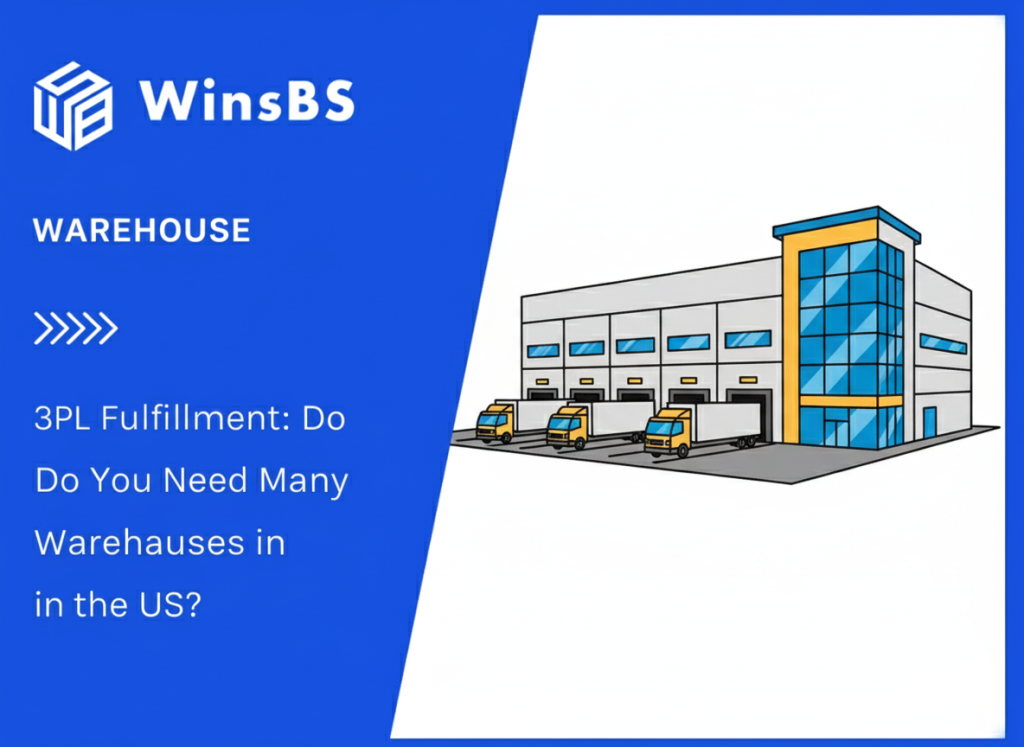
Warehouse exterior with multiple trucks beside WinsBS logo and blog title, symbolizing 3PL fulfillment, US warehouse network, and order fulfillment services.
Ecommerce, Order Fulfillment, Warehousing

3PL Fulfillment: Do You Need Many Warehouses in the US?

Does a 3PL Really Need Many Warehouses Across the US in 2025? Why More Warehouses Often Slow Ecommerce Fulfillment Instead of Improving It Updated December 2025 · US Ecommerce Fulfillment TL;DR In 2025, the performance of a 3PL fulfillment provider is no longer determined by how many warehouse order fulfillment centers appear on a map. For most ecommerce fulfillment services and crowdfunding brands, excessive warehouse count introduces inventory fragmentation, routing errors, higher storage fees, and slower exception handling. High-performing order fulfillment companies focus instead on inventory truth, execution speed, and system coordination. WinsBS operates a deliberately lean U.S. warehouse network because fewer, well-engineered fulfillment centers consistently outperform sprawling networks. Contents Why “More Warehouses” Became a Marketing Myth What Merchants Actually Pay for in 3PL Fulfillment Inventory Fragmentation: The Hidden Cost of Multi-Warehouse Models Speed vs. Distance: What Really Determines Delivery Time Why WinsBS Uses Fewer US Fulfillment Centers When More Warehouses Do Make Sense WHY “MORE WAREHOUSES” BECAME A MARKETING MYTH In the last decade, many 3PL fulfillment providers promoted warehouse count as a proxy for capability. Sales pages proudly advertise “40+ US warehouses” or “nationwide order fulfillment centers,” implying that geographic saturation alone delivers faster ecommerce fulfillment services. This narrative emerged by borrowing consumer expectations from Amazon’s internal logistics model, but it ignores a fundamental difference: most merchants do not operate with Amazon-level inventory depth, forecasting accuracy, or system maturity. For independent ecommerce sellers and crowdfunding brands, inventory is finite, volatile, and often replenished cross-border. In that environment, spreading inventory across too many warehouse order fulfillment centers creates more operational risk than benefit. WHAT MERCHANTS ACTUALLY PAY FOR IN 3PL FULFILLMENT According to the 2025 Third-Party Logistics Study (Langley et al.), shipper satisfaction correlates most strongly with three variables: order accuracy, fulfillment speed, and total landed fulfillment cost. Warehouse count ranks far below these execution metrics. When brands evaluate ecommerce fulfillment services, they are rarely asking: “How many warehouses do you have?” They are asking: How quickly does inventory become available to sell after inbound arrival? How often are orders shipped incorrectly? How predictable are delivery promises during peak demand? How expensive does fulfillment become as volume scales? A 3PL with dozens of underutilized warehouse order fulfillment centers cannot answer these questions better than a focused operator. In many cases, it answers them worse. INVENTORY FRAGMENTATION: THE HIDDEN COST OF MULTI-WAREHOUSE MODELS Inventory fragmentation is the most common failure pattern in large warehouse networks. When stock is split across too many US fulfillment centers, no single location holds enough units to fulfill demand cleanly. The result is a cascade of operational problems: Orders are split across multiple warehouses, increasing pick, pack, and shipping costs. One location stocks out while another holds excess inventory. Forecasting errors multiply because demand signals are diluted. Returns are processed far from original outbound locations. For ecommerce fulfillment services, these issues directly degrade customer experience. Customers see partial shipments, inconsistent delivery times, and higher shipping charges, even though the merchant technically operates “closer” warehouses. SPEED VS. DISTANCE: WHAT REALLY DETERMINES DELIVERY TIME A common misconception is that warehouse proximity alone determines delivery speed. In reality, ecommerce order fulfillment time is driven by a chain of execution events: Inbound receiving speed and accuracy Inventory system availability Pick and pack throughput Carrier cutoff alignment Exception handling discipline A well-run warehouse order fulfillment center shipping via ground services often outperforms a closer but congested facility relying on air upgrades. In 2025, carrier networks favor predictable volume and clean handoffs far more than marginal distance reductions. WHY WINSBS USES FEWER US FULFILLMENT CENTERS WinsBS is an order fulfillment company, not a warehouse landlord. Our U.S. ecommerce fulfillment services are designed around execution reliability, not warehouse proliferation. We operate a limited number of strategically placed US fulfillment centers covering the West Coast, Midwest, and East Coast. This structure allows us to: Maintain high inventory accuracy across all SKUs Prevent unnecessary order splitting Optimize ground shipping coverage to most US customers Control storage and labor costs for our clients By concentrating volume instead of diluting it, WinsBS achieves faster order fulfillment and lower total ecommerce fulfillment costs than many larger 3PL fulfillment providers with sprawling networks. WHEN MORE WAREHOUSES DO MAKE SENSE It would be misleading to claim that a multi-warehouse strategy is never appropriate. There are scenarios where expanding warehouse order fulfillment centers is justified — but these scenarios are far narrower than most 3PL marketing suggests. More US fulfillment centers tend to work when: The brand operates at very high and stable order volumes nationwide. SKU counts are limited and demand is evenly distributed. Inventory forecasting accuracy is consistently high. Systems are capable of real-time inventory synchronization across nodes. The cost of inventory imbalance is lower than the cost of slower delivery. This profile fits large, mature retail operations with deep capital reserves. It does not fit most ecommerce fulfillment services clients, and it rarely fits crowdfunding brands where demand spikes are unpredictable and inventory replenishment is time-sensitive. WHY LARGE WAREHOUSE NETWORKS STRUGGLE OPERATIONALLY As warehouse count increases, operational complexity grows non-linearly. Each additional fulfillment center adds: Another inventory reconciliation process Another inbound receiving schedule Another set of labor constraints Another failure point for routing and exceptions For many 3PL fulfillment providers, technology maturity lags behind network expansion. Inventory may appear “available” at a system level, but execution-level realities — delays in receiving, mis-slotted pallets, or carrier cutoff mismatches — undermine promised delivery times. This is why merchants often experience slower ecommerce order fulfillment after migrating to a provider with more warehouse order fulfillment centers, despite higher advertised coverage. TOTAL COST OF FULFILLMENT VS. PERCEIVED SPEED Warehouse expansion is expensive. Facilities near major population centers command higher rent, higher labor costs, and higher local compliance burdens. Those costs do not disappear. They are passed directly to ecommerce fulfillment services clients through storage fees, handling charges, and peak surcharges. In many cases, brands pay more to ship from a closer warehouse than they would to ship ground from a

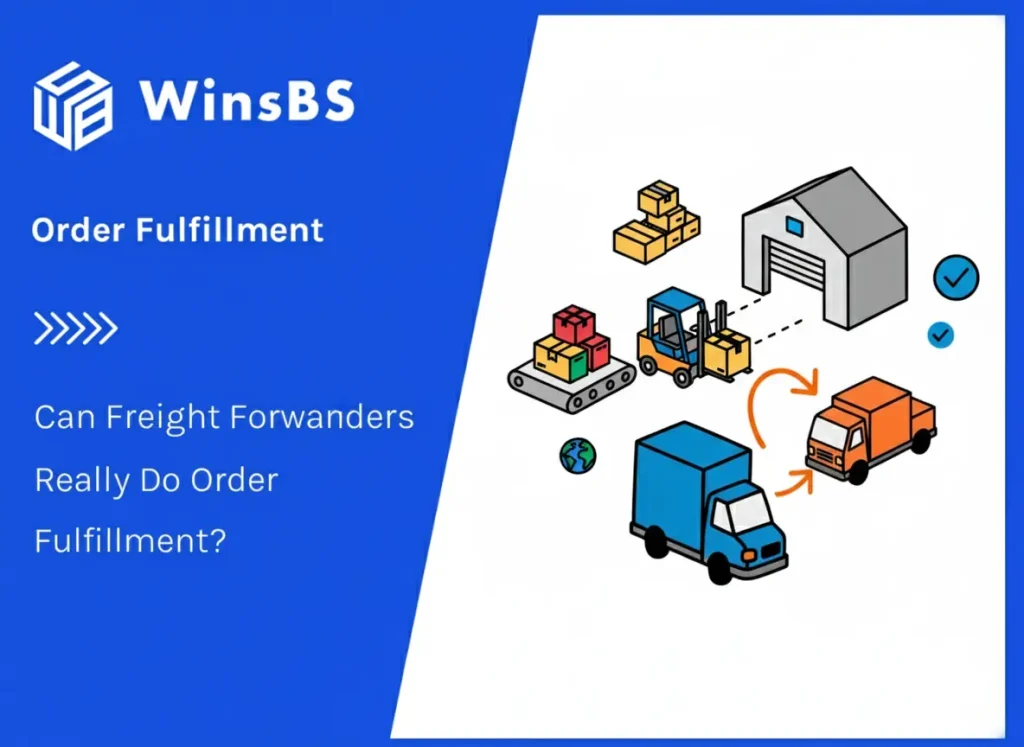
Conveyor belt moving packages beside WinsBS logo and blog title, symbolizing global eCommerce fulfillment and 3PL order fulfillment services.
Ecommerce, Newsletter, Winsbs

WinsBS: No Hidden Fees, Just Efficient U.S. Order Fulfillment

WinsBS Global E-Commerce Fulfillment Services for US & Cross-Border Brands How a Decade of Winsway Operations Built a Self-Operated 3PL Network By Michael · Updated 2025 TL;DR: WinsBS is a self-operated fulfillment network built from a decade of Winsway cross-border operations. The focus is operational controllability (team + SOP + systems), fast U.S. coverage (Dallas / Beaverton / Carteret), and cross-border readiness (DDP / VAT / IOSS workflows) so brands can scale without inventory chaos, rating drops, or support overload. TABLE OF CONTENTS WinsBS at a Glance: Global Fulfillment Capabilities US Fulfillment Centers: Dallas, Beaverton, Carteret Global Network & DDP / VAT-Ready Shipping Self-Operated vs Outsourced 3PL: Why It Matters Pricing Transparency, SLAs & Operational Reliability A Decade of Polishing: Winsway’s Accumulation A New Journey: Building WinsBS as a Global Brand WinsBS Core Business: Better Order Fulfillment Why Choose WinsBS: Self-Operation Means Accountability FAQ Methodology & Sources For e-commerce and crowdfunding businesses, fulfillment is not just a backend process—it is the engine that drives conversion, store ratings, and customer lifetime value. In a search-driven world, fulfillment performance can influence the signals that marketplaces and consumers react to: stockouts, delays, damage rates, and poor reviews create downstream effects that reduce conversion and repeat purchase. Amazon sellers see rankings and momentum drop when stockouts cascade across key SKUs. Shopify brands watch return rates and churn spike when delivery windows are missed. Crowdfunding campaigns face negative comments, refund waves, and broken trust when bulk shipping bottlenecks slow down rewards. Efficient, predictable, global fulfillment is a growth lever—not just a cost center. Over the past decade, Winsway has operated deep inside the global e-commerce supply chain—first as an enabler behind other brands, and now as the operator of its own self-operated 3PL network under the WinsBS brand. That decade of refinement is the foundation of WinsBS global e-commerce fulfillment services: built to keep inventory accurate, orders flowing, and store ratings stable across the US, Europe, and beyond. WINSBS AT A GLANCE: GLOBAL E-COMMERCE FULFILLMENT CAPABILITIES WinsBS is the self-operated fulfillment brand built on Winsway’s decade of cross-border operations. It combines US fulfillment centers, a global warehousing network, and an in-house tech stack to support e-commerce and crowdfunding sellers who need consistent service levels, transparent cost structures, and an operator-led model built for execution. Designed for Shopify brands, Amazon sellers, and Kickstarter/Indiegogo teams, WinsBS focuses on three pillars: cost control, delivery speed, and rating stability. US fulfillment centers: Dallas, Beaverton, Carteret for nationwide coverage. Global fulfillment network: UK, EU, CA hubs for regional delivery. Inventory accuracy: strict QC processes designed to reduce pick/pack errors and shrink risk. Speed SLAs: same-day inbound targets and next-day outbound targets where operationally applicable. Compliance-ready logistics: DDP, VAT, IOSS workflows. End-to-end tech stack: ERP, WMS, OMS, FMS integration. This structure allows WinsBS to act as a global e-commerce fulfillment provider for brands that expect more than basic pick and pack. Get started for free with a WinsBS fulfillment assessment. US FULFILLMENT CENTERS: DALLAS, BEAVERTON, CARTERET WinsBS operates three self-operated US warehouses—Dallas, Beaverton, Carteret—positioned to balance speed, zone coverage, and cost. Dallas: Central US hub for balanced nationwide ground coverage. Beaverton: Western US hub supporting West Coast demand and Asia inbound routing. Carteret: Eastern US hub supporting dense metros and transatlantic flows. Each warehouse follows unified SOPs intended to keep performance consistent across the US fulfillment network. Same-day inbound receiving targets for scheduled deliveries. Next-day outbound processing targets for eligible orders. Predictable ground delivery windows based on inventory placement and carrier service levels. GLOBAL FULFILLMENT NETWORK & DDP / VAT-READY SHIPPING WinsBS supports cross-border brands through a global network including Manchester, Dresden, and Toronto hubs. To support EU/UK/CA/AU consumers, WinsBS provides: DDP workflows to reduce “duty at door” outcomes and improve delivery predictability. VAT/IOSS documentation workflows aligned with customs rules and platform expectations. Localized carriers to match final-mile standards in each region. Bulk freight consolidation into regional hubs to reduce landed cost volatility. Combined with its US infrastructure, WinsBS enables brands to execute global e-commerce fulfillment strategies with fewer handoffs and clearer accountability. SELF-OPERATED VS OUTSOURCED 3PL: WHY THE MODEL MATTERS Many 3PLs rely on partner networks or franchise models, which can introduce variability across sites. WinsBS follows a self-operated approach, maintaining direct control over teams, warehouse standards, and system-level workflows. The difference affects how consistently SLAs can be executed and how quickly exceptions are resolved: Dimension Outsourced 3PL WinsBS (Self-Operated) Warehouse control Multiple partners Unified WinsBS operations Team training Varies by site Centralized Winsway standards Data stack Fragmented systems In-house ERP + WMS + OMS + FMS Issue resolution Multi-party escalation Direct internal escalation Pricing Scope ambiguity possible Transparent single-source scope definition PRICING TRANSPARENCY, SERVICE LEVELS & OPERATIONAL RELIABILITY WinsBS structures pricing and SLAs around transparency and repeatability—especially for brands scaling in the US and expanding internationally. Transparent pricing with clear scope definitions. Documented SLAs for inbound, outbound, and delivery expectations. Real-time dashboards for inventory and order visibility. Exception workflows for discrepancies, damages, address issues, and reshipments. Request a free fulfillment benchmark and pricing review. A DECADE OF POLISHING: WINSWAY’S ACCUMULATION IS WINSBS’S FOUNDATION Ten years of refining our craft—this is how Winsway grew. Since 2014, we’ve leaned into e-commerce’s potential: starting with overseas warehouse services for SMBs, then expanding to supply chain integration, digital marketing, and more. In 2023, when the live-streaming e-commerce trend accelerated, Winsway quickly moved into the category. Leveraging consumer insight and supply chain integration capabilities, it expanded services across North American and European markets, supporting brands across multiple categories including beauty, home goods, and 3C products. However, during collaborations with merchants, we identified a common pain point: the inefficiency and lack of controllability in fulfillment execution were directly limiting merchants’ growth. Some merchants suffered heavy losses from overstocking during peak seasons due to chaotic inventory management in third-party warehouses; some brands received numerous consumer complaints because of unstable cross-border logistics timelines; others faced frequent issues of wrong or missing shipments due to unprofessional outsourced teams. These pain points reinforced a clear conclusion: the e-commerce

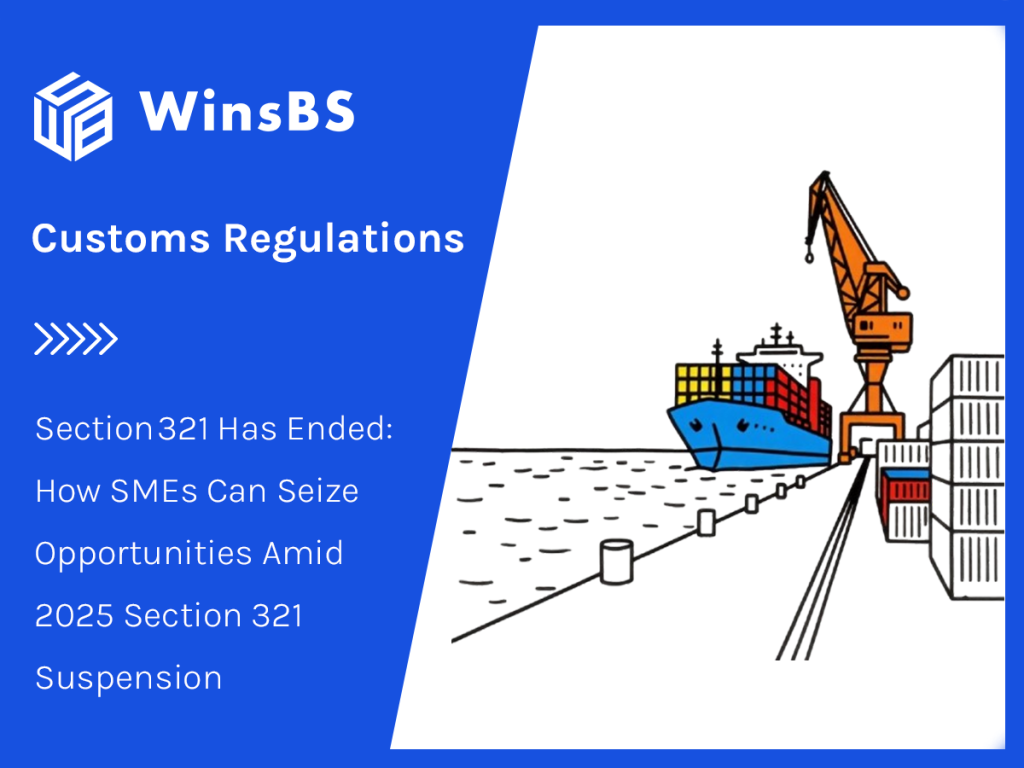
Dock with cargo ship, containers, and cranes beside WinsBS logo and blog title, symbolizing cross-border fulfillment and 3PL order fulfillment services.
Ecommerce, Order Fulfillment, Shipping & Logistics, Winsbs

How SMEs Can Seize Opportunities Amid 2025 Section 321 Suspension

Section 321 Has Ended How SMEs Can Seize Opportunities Amid 2025 Section 321 Suspension Imagine running a Shopify store or a Kickstarter campaign. For years, low-value imports (≤$800) entered the U.S. duty-free, keeping your costs low and customers happy. But in 2025, the Section 321 suspension changes everything—higher tariffs, longer delays, and new compliance hurdles threaten your margins. Don’t worry—WinsBS is here to help you thrive. The End of Section 321: A New Challenge for SMEs What is Section 321? Section 321 enables duty-free imports for goods ≤$800, powering brands like SHEIN. From August 29, 2025, tariffs apply globally. WinsBS offers 92% shipping discounts and free storage. Contact us now! Section 321 of the 1930 Tariff Act allows duty-free imports for goods valued at $800 or less, streamlining customs for e-commerce and crowdfunding SMEs. Brands like SHEIN leveraged this, with 60% of orders tax-exempt in 2024 (Statista), especially in apparel and electronics (50% of SME imports). But 2025 brings a seismic shift: China/Hong Kong goods lost exemption.February , 2025 The President signs an executive order. On February 1st, 2025, the president signed an executive order, suspending the duty-free treatment for low-value goods (≤ $800) imported from China and Hong Kong. It came into effect on February 4th. Apply to all countriesMay , 2025 The suspension measure is expanded to apply to all countries. On May 2, 2025, the suspension measures were extended to all countries, and all low-value goods (≤ $800) no longer enjoyed tax-free treatment. Terminate all countries' tax exemption privileges.July , 2025 The President signs an executive order On July 30, 2025, the president signed an executive order, officially ending the tax exemption for low-value goods in all countries. All countries have officially lost their tax-exempt statusAugust 29, 2025 All countries have officially lost their tax-exempt status. August 29, 2025: Global suspension requires tariffs (7.5%-25%) and full customs documentation (HTS codes, electronic manifests). Why Is Section 321 Being Suspended? The U.S. aims to address its $350B trade deficit with China (U.S. Census Bureau, 2024) and curb Chinese goods, as noted in a CBP announcement emphasizing trade balance. SME Impact Tariffs of 15-20% on apparel and electronics squeeze low-value order margins. Compliance costs soar. For example, a $50 electronic product now faces $5-$12 in tariffs, up from $0 (Shopify, 2025). Tariff Shock: Four Pain Points for SMEs The Section 321 suspension disrupts cross-border e-commerce, hitting SMEs hardest. WinsBS identifies four critical challenges: Pain Point Pre-Suspension Post-Suspension SME Impact Cost Duty-free 7.5%-25% tariffs + $25-$50 fees 15-30% profit loss Delivery 1-2 days 5-10 days 20% customer churn Compliance Simplified Strict HTS codes/manifests 40% higher penalty risk Cash Flow Low inventory cost 20-30% more capital High Q4 disruption risk How does the suspension impact Black Friday? Delays of 5-10 days and tariffs threaten Q4 profits. WinsBS’ West Coast centers ensure next-day delivery. Secure Q4 success. How does the suspension affect low-value orders? Orders under $50 face $5-$12 in tariffs, cutting margins by 20%. WinsBS’ 92% shipping discounts and free storage help. Start saving. Cost Shock Tariffs (7.5%-25%) and fees cut margins on $20 crowdfunding gifts by 15-30%. A $50 earphone now faces $5-$12 in tariffs, risking 20% of price-sensitive customers (Statista, 2025). Clearance Delays Delivery times stretch from 1-2 days to 5-10 days, breaking “2-day delivery” promises. E-commerce conversion drops 10-15% (Shopify, 2025), and crowdfunding refunds hit 30% (Kickstarter, 2024). Compliance Risks Incorrect HTS codes trigger $500-$5,000 fines, with SMEs facing 40% higher penalties (CBP, 2024). Closed Mexico transshipment loopholes increase risks. Cash Flow Strain Inventory requires 20-30% more capital, threatening Q4 for crowdfunding projects (Indiegogo, 2024). Don’t wait for Q4 disruptions. See how WinsBS order fulfillment service keeps your orders moving with 92% shipping discounts and AI compliance.  WinsBS Tariff Calculator WinsBS Tariff & Cost Calculator Order Volume: Average Order Value ($): Product Category: GeneralApparelElectronics Monthly Warehouse Cost ($): WinsBS Discount (%): Calculate Recalculate Contact WinsBS What alternatives do SMEs have after Section 321 ends? Diversify sourcing (Vietnam/Mexico), optimize pricing, or   to become a partner  and up to 92% off shipping rates savings.  WinsBS Solution: Thrive Amid the Shift Why SMEs Face the Biggest Hit SMEs are uniquely vulnerable to tariff changes due to limited resources: Supply Chain Reliance: 70% rely on Chinese supply chains (U.S. ITC, 2024), with 15-20% tariffs threatening survival. Scale Disadvantage: Large players absorb costs, but SMEs, with 8-12% margins, risk losses from a 10% cost increase. Customer Expectations: 60% of consumers expect 2-day delivery (Nielsen, 2025); delays cut repeat purchases by 15%. Crowdfunding Challenges: Short 30-60 day cycles mean delays cancel 25% of projects (Indiegogo, 2024). One brand lost $15,000 due to a 7-day delay. Why are crowdfunding businesses hit harder? Crowdfunding’s tight timelines and budgets amplify tariff and delay impacts. WinsBS offers bulk pre-packaging, 92% shipping discounts, and 30 days of free storage, saving 18% on costs and ensuring 97% on-time delivery. Contact us now. Choosing the Right 3PL Partner Many 3PLs fall short for SMEs: Outsourcing Limits: Third-party warehouses have 2-5% pick errors (Logistics Insider 2024) and 5% higher delays during peak seasons due to coordination issues. Lack of Crowdfunding Support: Many prioritize large clients, lacking bulk pre-packaging or `gift-box customization for Kickstarter demands. Tech Gaps: Some 3PLs’ WMS systems lack deep Shopify/Kickstarter integration (2024 user feedback), slowing responses by 1-2 days. High Barriers: Complex onboarding (7-14 days) is SME-unfriendly. Unlike many other 3PL providers, WinsBS delivers reliability through fully independently operated order fulfillment centers, intelligent warehouse systems, and dedicated professional team support—backed by over a decade of experience and capabilities in serving small and medium-sized enterprises (SMEs). Why Choose WinsBS as Your Fulfillment Partner Drawing on over a decade of order fulfillment expertise, WinsBS crafts tailored solutions for every partner—with core strengths rooted in the following advantages: Value Proposition Independent Operations Boasting 3 U.S.-based order fulfillment centers with over a decade of operational expertise—including West Coast facilities capable of same-day order processing and next-day delivery—WinsBS complements this U.S. network with 6 global fulfillment hubs worldwide, enabling seamless reach to customers across the

Kickstarter and rocket with Indiegogo beside WinsBS logo and title, symbolizing creative crowdfunding fulfillment and fast 3PL order fulfillment services.
Crowdfunding Fulfillment, Ecommerce, Shipping & Logistics

Order Surge Crowdfunding Fulfillment – Reliable 3PL for Kickstarter & Indiegogo

Crowdfunding Fulfillment for Order Surges Cost-Effective 3PL Solutions for Kickstarter & Indiegogo Creators WinsBS Fulfillment – Michael Updated December 2025 TL;DR Crowdfunding fulfillment is not just “shipping a big batch of boxes.” A real order surge stress-tests your entire execution chain: production readiness, inbound timing, warehouse throughput, inventory accuracy, carrier capacity, and backer communication. The safest way to survive viral spikes, multi-wave shipping, and global DDP decisions is to pre-build a campaign-specific fulfillment architecture before you print labels. For creators preparing a Kickstarter, Indiegogo, or Gamefound launch, the most expensive mistakes usually come from fulfillment, not ad spend. Get Your Free Crowdfunding Fulfillment Plan. Contents Why Crowdfunding Order Surges Are a Stress Test Order Surge Solutions for Kickstarter & Indiegogo Fulfillment Crowdfunding Fulfillment Pricing & Cost Structure Technology & System Upgrades for Crowdfunding Surges Real-Time Data, Forecasting & Stress Testing Contingency Plans for Disasters, Weather & Policy Shocks When Your Campaign Goes Viral Overnight How to Prepare Your Next Kickstarter or Indiegogo Launch People Also Ask: Crowdfunding Fulfillment & 3PL FAQs Outlook: What “Good” Will Look Like in 2026 Final Recommendation WHY CROWDFUNDING ORDER SURGES ARE A STRESS TEST Hitting an order surge is the dream headline for any crowdfunding campaign on Kickstarter, Indiegogo, or Gamefound. But for anyone who has run e-commerce at scale, a spike from a few hundred orders to thousands (or tens of thousands) in days is less a victory lap and more a live stress test of your entire supply chain. Without a plan, order surges quickly turn into refund waves, angry backer comments, chargebacks, and long-term damage to your brand. The problem is rarely just “warehouse speed.” A surge exposes weak links across the whole stack. An order spike stress-tests your: Production readiness — whether factories can ramp without sacrificing consistency. Inbound logistics — how fast freight can clear, deconsolidate, and become pick-ready inventory. Warehouse operations — whether your fulfillment partner can switch from steady-state to wave-based picking. Inventory accuracy — especially for multi-component sets, bundles, and add-ons. Carrier performance — during peak periods when capacity and scan reliability degrade. Customer support — how you handle delays, address changes, and damaged shipments in public. In crowdfunding, surges rarely appear in isolation. They overlap with other demand spikes and external constraints, stacking operational risk. Order surges typically hit during: Campaign launches and early-bird windows when urgency-based tiers drive front-loaded backing. Major peak weeks (holiday congestion, marketplace sales events) when parcel networks run hot. Viral exposure from creator content, press coverage, or community-driven sharing. Seasonal demand shifts tied to gifting windows, back-to-school, or category cycles. There is nothing worse than watching a dream campaign devolve into a fulfillment failure in full view of thousands of backers. A surge-safe playbook is built before the wave arrives, not during the wave. ORDER SURGE SOLUTIONS FOR KICKSTARTER & INDIEGOGO FULFILLMENT The key to managing crowdfunding order surges is not heroics in the warehouse. It is preparation: building a fulfillment architecture that can flex from a few hundred units to multi-wave global shipping without collapsing under pressure. The most reliable campaigns treat fulfillment as a project with gates and rules: data lock windows, wave segmentation, packaging standards, exception handling, and routing decisions (DDP vs DAP) defined before labels start printing. The objective is simple: when a surge hits, the system should already know what to do. That means: Defining shipping waves by pledge tier, region, or SKU complexity instead of dumping everything into one mega batch. Pre-building sorting and routing logic inside the WMS for early birds, main wave, late pledges, and replacements. Reserving warehouse and carrier capacity around your specific shipping windows instead of “finding space later.” Locking in DDP/VAT workflows for EU/UK/CA/AU before you generate international labels. WinsBS Fulfillment supports campaign execution with wave planning, multi-region routing, and cross-border DDP decisioning. Unlike traditional 3PLs that are tuned for steady, daily Shopify volume, campaign shipping is bursty and constraint-heavy: it needs wave logic, exceptions queues, and backer-facing clarity. CROWDFUNDING FULFILLMENT PRICING & COST STRUCTURE Most creators underestimate how complex crowdfunding fulfillment costs become once order surges, multi-wave shipping, and global backers enter the picture. A clean per-parcel number is attractive in a pitch, but it rarely survives contact with real campaign behavior. At a minimum, any crowdfunding fulfillment cost model needs to account for: Inbound receiving and prep — pallet receiving, carton checks, labeling, and QC for factory defects. Storage — especially if manufacturing finishes before surveys close or shipping begins. Pick and pack — including bundle logic, add-ons, and multi-component sets. Packaging and materials — mailers, cartons, inserts, foam, and fragile handling for collector editions. Carrier labels — domestic vs international, tracked vs untracked, DDP vs DAP execution. Exceptions and special projects — address corrections, repacks, reworks, and replacements. For campaigns, the problem is not only cost. It is volatility. Small “invisible” line items (relabels, reworks, address corrections, partial reships) can erase margin if they are not predictable up front. Pricing that matches how crowdfunding actually behaves typically includes: Project-based models that align with waves (early bird, main wave, late pledges) instead of only monthly minimums. Transparent pick/pack tiers for single-SKU rewards, multi-item bundles, and expansion-heavy pledge levels. Defined landed-cost rules for common reward value bands so EU/UK/CA/AU outcomes stay predictable. Explicit exception rules for address corrections, partial shipments, and repacks so exposure is understood before launch. Instead of forcing you into a pure DTC-style rate card, campaign pricing maps to the lifecycle of a campaign: Inbound and prep while production is ramping. Peak shipping over a fixed wave window when most revenue is realized. Long-tail late pledges, replacements, and small retail allocations. For lean teams without full-time operations staff, predictability matters more than chasing a theoretical lowest per-parcel number. Predictable campaign fulfillment costs make it possible to set realistic shipping charges, protect margin, and keep backer communication honest. For Kickstarter and Indiegogo projects with tight budgets, a clear fulfillment model is as important as your creative. Get a costed crowdfunding fulfillment scenario for your campaign. TECHNOLOGY

Warehouse with truck loading goods beside WinsBS logo and blog title, symbolizing 3PL fulfillment and order fulfillment services.
Crowdfunding Fulfillment, Order Fulfillment, Shipping & Logistics

How 3PL Drives Business Growth (2025) — Benefits, Limits & Outlook

How 3PL Drives Business Growth (2025) — Benefits, Limits & Outlook Data-Backed Benefits, Real-World Examples, and the 2025 3PL Market Outlook By Michael · Updated 2025 DEC TL;DR 3PL (third-party logistics) helps brands grow by converting fixed logistics capacity into scalable execution across warehousing, transportation, and fulfillment. The upside is speed, cost control, and faster market entry; the downside is integration risk, visibility gaps, and dependency on provider maturity. In 2025, the strongest outcomes come from digital-first execution: clean data, API connectivity, measurable SLAs, and disciplined exception handling that protects customer experience at scale. Contents Understanding 3PL and Its Strategic Role Why 3PL Matters for Business Growth Limitations of Traditional 3PL Models Core Benefits of 3PL for Shippers 3PL’s Impact on Order Fulfillment Emerging Trends Shaping 3PL The Future of 3PL: A Strategic Partner for Growth People Also Ask: Short Answers References UNDERSTANDING 3PL AND ITS STRATEGIC ROLE Judgment context: This section clarifies what third-party logistics was originally designed to optimize, and why that original design still shapes how 3PL influences business growth today. Third-party logistics (3PL) has moved from a basic transportation service into a strategic growth lever for businesses operating in global supply chains. Instead of owning every warehouse and truck, companies increasingly partner with specialized providers that focus solely on logistics execution and optimization. This shift reflects a broader change in how organizations view logistics: not merely as a back-office cost center, but as an operational system that directly affects speed, cost control, and market responsiveness. Third-party logistics (3PL) refers to outsourcing logistics activities—such as transportation, warehousing, and order fulfillment—to external providers that specialize in these operations. Manufacturers, retailers, and ecommerce brands rely on 3PLs to handle the physical movement and storage of goods while they focus on product, brand, and customer experience. This definition matters because it establishes where operational responsibility is transferred and where it remains internal once logistics functions are outsourced. This model allows businesses to streamline operations and free internal teams to concentrate on product development, marketing, and long-term market expansion. As early as the 1990s, research already showed that large manufacturers were using 3PL to sharpen focus and support growth, rather than treating logistics as an internal cost center (Lieb & Randall, 1992). However, the pressures that drove 3PL adoption in the 1990s are not identical to the forces shaping logistics decisions today. 3PL first took off in the 1980s as a way to convert fixed assets such as warehouses, trucks, and in-house labor into flexible, variable-cost capacity. Since then, it has evolved into an integrated model powered by advanced technologies including artificial intelligence, the Internet of Things (IoT), and, in some cases, blockchain-based visibility platforms. This evolution expanded what 3PLs could offer, but it did not automatically redefine how execution accountability is enforced as volume, data complexity, and customer-facing requirements increase. Modern 3PLs sit at the intersection of data, infrastructure, and operations—making them a strategic part of how brands scale. Understanding this structural background is necessary before evaluating whether a specific 3PL relationship supports sustainable growth or merely scales logistical capacity. WHY 3PL MATTERS FOR BUSINESS GROWTH Judgment context: This section examines why companies adopt 3PL during growth phases, and what those adoption patterns reveal—and do not reveal—about actual growth outcomes. The 3PL sector has become a measurable growth driver for both individual businesses and the global economy. Industry data shows that logistics outsourcing now shapes how companies structure costs, enter new markets, and manage risk across their supply chains. Adoption rates alone, however, do not explain whether growth objectives are actually achieved after outsourcing decisions are made. Armstrong & Associates (2023) reports that U.S. 3PL net revenue reached $131.5 billion in 2024, with projections suggesting sustained expansion through 2025. Globally, Statista (2024) projects North American 3PL revenue at $356.7 billion by 2025, with a compound annual growth rate (CAGR) of 2.71% through 2030. At the shipper level, Langley et al. (2025) note that 89% of shippers view their 3PL relationships as successful, and roughly one in four is expanding outsourcing to handle more complex supply chains. These figures explain why 3PL adoption continues to rise, but they do not explain how execution performance changes once logistics responsibilities are externalized. Case Study: Hewlett-Packard’s Supply Chain Transformation Hewlett-Packard’s experience illustrates how 3PL can reshape cost structure, service quality, and innovation capacity. In 1999, HP partnered with TNT Logistics to overhaul its European supply chain. Rather than building out its own logistics footprint, HP leveraged TNT’s expertise in inventory management, warehousing, and transportation coordination. By shifting to a 3PL-led model, HP reduced logistics costs by approximately 15%, improved inventory turnover by about 20%, and shortened European delivery times by around 30% (Rushton & Walker, 2007). These gains mattered not only because of cost savings, but because they released management attention and capital for research, product development, and competitive positioning in fast-moving technology markets. HP’s case demonstrates how logistics structure can either constrain or enable broader strategic priorities during periods of business growth. LIMITATIONS OF TRADITIONAL 3PL MODELS Judgment context: This section explains why traditional 3PL operating models often fail when fulfillment becomes data-driven, customer-facing, and exposed to demand volatility. Traditional 3PL models were designed primarily to reduce cost and manage physical flows of goods. Their core assumptions were built around stable volumes, predictable replenishment cycles, and limited customer visibility. Under these conditions, cost efficiency was the dominant success metric, and execution variability was relatively contained. Many traditional providers still rely on legacy warehouse management systems, manual exception handling, and fragmented data pipelines that predate modern ecommerce requirements. Problems begin to surface when fulfillment becomes real-time, omnichannel, and directly visible to customers. In these environments, inventory accuracy, data latency, and exception response speed become first-order performance drivers. Gartner (2022) found that many businesses view traditional 3PL systems as insufficient for digital-era needs, particularly in areas such as real-time planning, cross-channel synchronization, and rapid response to disruption. These limitations are not abstract technology gaps. They translate directly into delayed shipments, incorrect inventory availability, and

Light bulb with one person celebrating crowdfunding success beside WinsBS logo and title, highlighting 3PL order fulfillment and crowdfunding fulfillment services.
Crowdfunding Fulfillment, Shipping & Logistics

Why 3PL is the Best Fulfillment Solution for Crowdfunding Campaigns

Why 3PL Is the Best Fulfillment Solution for Crowdfunding Campaigns How Kickstarter & Indiegogo Creators Ship Rewards Faster, Cheaper, and With Fewer Errors By Michael · Updated 2025 Dec TL;DR Crowdfunding fulfillment breaks when creators rely on improvised shipping workflows. A capable fulfillment operator (including many 3PL-style providers) turns pledge data into a structured execution plan — tier mapping, wave planning, pick & pack, carrier optimization, and DDP routing — so backers receive rewards without delays, missing items, or VAT-at-door surprises. Contents Introduction: Why Fulfillment Becomes the Biggest Risk What Is 3PL, and Why It Fits Crowdfunding Crowdfunding Fulfillment Challenges Why 3PL Excels for Crowdfunding Campaigns Why 4PL and Freight Forwarders Fall Short How to Choose the Right 3PL for Your Campaign Fulfillment Costs and Taxes Special Product Handling Why WinsBS Stands Out People Also Ask: Short Answers INTRODUCTION: WHY FULFILLMENT BECOMES THE BIGGEST RISK Crowdfunding on Kickstarter, Indiegogo, or Gamefound turns a prototype into thousands of paid orders almost overnight. That momentum is exciting—but it also creates a logistics problem many creators underestimate. Once the campaign closes, backers expect a professional, e-commerce-grade delivery experience, not an experiment. Most teams start small: spreadsheets, manual label creation, and bulk drops at the post office. This works for a few hundred local backers. It does not scale to 2,000–20,000 global shipments with different reward tiers, fragile products, and multiple waves. At that point, fulfillment becomes a full-time job and often the single biggest risk to backer satisfaction. Third-Party Logistics (3PL) providers solve this by turning your campaign into a structured fulfillment project. They handle warehousing, inventory, pick and pack, packaging, carrier optimization, and returns—freeing creators to focus on product quality, community updates, and future launches. WinsBS Fulfillment, for example, specializes in complex crowdfunding workflows with BackerKit data imports, multi-wave shipping, and global DDP delivery. Other 3PLs focus primarily on ongoing Shopify brands. In both cases, the underlying model—outsourcing logistics to a specialist—is what makes 3PL so effective for campaigns that need to scale quickly without building an in-house warehouse team. This guide explains why 3PL has become the default fulfillment solution for serious crowdfunding projects, where 4PLs and freight forwarders fit into the picture, and how to evaluate different providers before you lock your BackerKit survey. For campaigns preparing to ship in 2025, you can request a tailored logistics plan and cost model. Get Started for Free. WHAT IS 3PL, AND WHY IT FITS CROWDFUNDING A Third-Party Logistics provider is a specialist that runs the physical side of your business: receiving inventory from factories, storing it safely, turning orders into ready-to-ship parcels, and handing them to carriers with the correct documentation and labels. In crowdfunding, that means taking your pallets of finished rewards and translating pledge data into accurate shipments to backers around the world. Instead of renting a warehouse, hiring and training a team, buying equipment, and signing carrier contracts, you plug into an existing network that already has those pieces in place. The 3PL’s warehouse management system (WMS) connects to your campaign data, and its team performs all tasks from inbound checks to final-mile handoff. Amazon FBA is the most familiar example: sellers send inventory to Amazon, and Amazon stores, picks, packs, and ships. For crowdfunding creators, dedicated 3PLs like WinsBS apply a similar model but with more flexibility around custom packaging, multi-wave timing, and the realities of pledge managers like BackerKit or Gamefound. In practice, a good 3PL will: receive finished goods from one or multiple factories count and verify SKUs, including bundles and limited editions store inventory safely while production finishes or waves are planned import pledge data from BackerKit or similar tools map tiers and add-ons to concrete picking instructions create wave plans (early birds, main wave, late pledges, replacements) pack rewards according to campaign-specific packaging rules ship via cost-optimized routes (U.S. domestic, EU/UK DDP, etc.) This model fits crowdfunding because it respects how campaigns actually behave: big, irregular bursts of activity instead of steady daily volume. CROWDFUNDING FULFILLMENT CHALLENGES Before deciding on a logistics model, it helps to name the problems you are trying to solve. Crowdfunding campaigns face a distinct cluster of operational risks that are very different from a Shopify store running year-round. 1. Order Surges and Fixed Deadlines A successful campaign can move from 200 to 8,000+ backers in a few weeks. When production finishes, those orders land in a narrow time window. Backers are watching updates closely and have little patience for “we are still figuring out shipping.” 2. Complex Reward Structures Many campaigns ship more than “one box per backer.” Common patterns include: base product + expansion or add-on packs collector editions with extra components language or region-specific versions stretch goals that add small items to early tiers These variations require precise SKU mapping. If they are handled loosely, errors multiply and replacements eat into already-tight margins. 3. Data Volatility From Pledge Managers Tools like BackerKit are powerful but volatile. Between survey launch and lock, creators see: address changes from 10–20% of backers late pledges weeks or months after the main campaign upgrades and add-on changes altering box contents and declared values Any fulfillment model must accommodate multiple data imports and last-minute adjustments without breaking the warehouse workflow. 4. Global Shipping and Tax Complexity It is now normal for 30–60% of backers to be outside the U.S. That introduces VAT, IOSS, duties, and DDP vs DAP decisions across EU, UK, Canada, and Australia. Missteps here result in customs holds, unexpected fees, and angry comments from international backers. 5. Limited Headcount and Time Most campaigns are run by teams of one to four people. They are already stretched across production, updates, accounting, and community management. Few have the capacity to design and run a full warehouse operation for six intense weeks. WHY 3PL EXCELS FOR CROWDFUNDING CAMPAIGNS A good 3PL is built around repeatable processes, surge capacity, and error control. Those characteristics line up directly with crowdfunding’s main risk areas. Scalable Capacity for Waves 3PLs can add temporary staff, lanes, and