China to U.S. Board Game Freight: Book or Finalize Routing
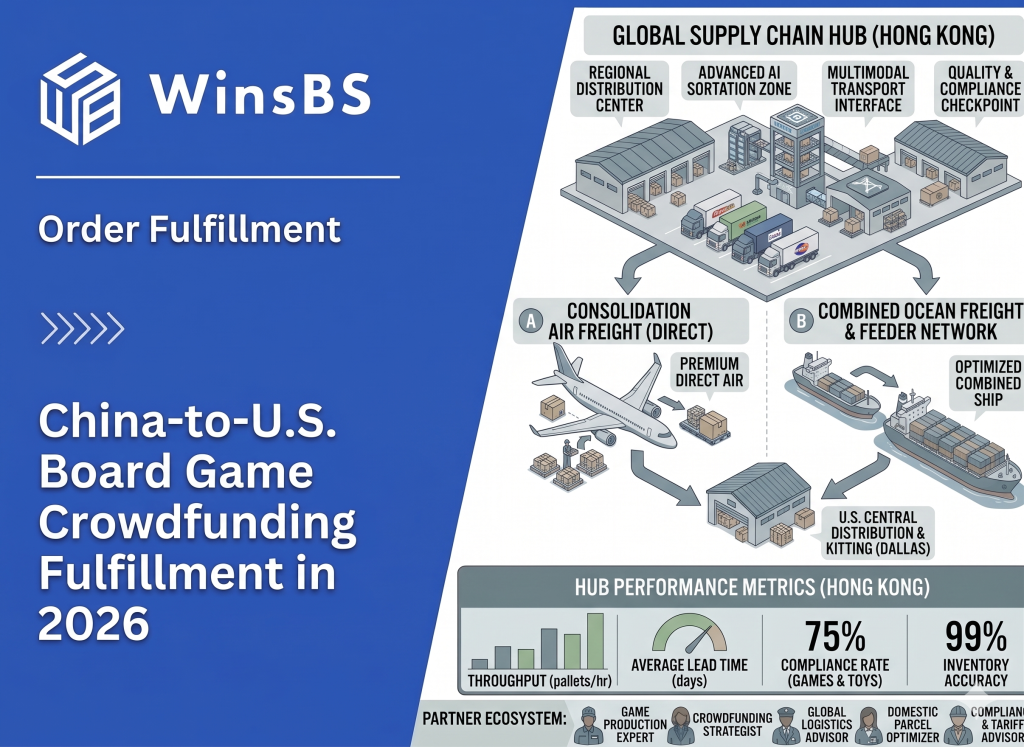
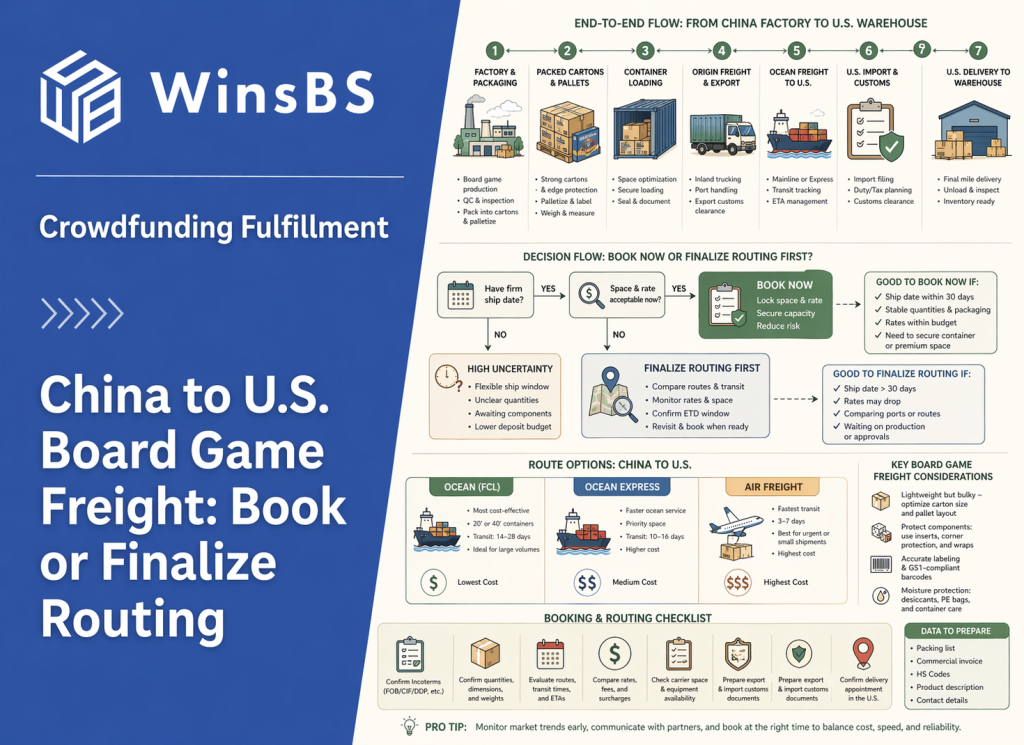
China-to-U.S. tabletop crowdfunding fulfillment / Kickstarter shipping costs / BackerKit vs DDP China to U.S. Board Game Freight: When to Lock Routing for Kickstarter A booked lane is not a locked route. If your campaign is still changing, do not finalize the route until the cartons, import timing, receiving warehouse, and backer shipping message all match the same shipment plan. Maxwell Anderson Quick Answer A booked lane is not a locked route. Here, locking routing simply means treating the route as final. Do not lock routing if final carton counts, import timing, the receiving warehouse, or what you are telling backers about shipping can still change. If inventory is already imported and stable inside the U.S., the routing problem is mostly over. Across similar projects: WinsBS keeps seeing the same pattern. A team books freight because production feels done, then discovers the port choice, inland path, receipt window, or fee timing still belonged to an older version of the shipment. Contents Quick Answer Why the Route Changes the Fulfillment Decision What the Route Actually Looks Like Why China-U.S. Execution Makes It Harder What Actually Locks the Route What Teams Often Misread Where to Lock the Route, and Where WinsBS Fits FAQ Methodology What To Review Before You Finalize the Route Do not lock routing yet if two or more of these are true Final cartons are still moving: counts, dimensions, or pallet logic still can change the load. The receiving warehouse changed: the warehouse plan or shipment plan is no longer stable. Import timing is unresolved: DDP, tariff, customs, or surcharge timing still can shift. Backer communication got ahead of the shipment: shipping timing or fee logic was built from provisional assumptions. The handoff still depends on different files: the factory, freight contact, and warehouse would not describe the same shipment plan today. Why the Route Changes the Fulfillment Decision The pressure usually shows up right after production feels finished: the factory wants pickup, the freight quote has a window, the warehouse wants shipment details, and the campaign owner wants to update backers. That is exactly when teams confuse booking speed with whether the route is really ready. If your campaign still has moving add-ons, shifting final carton counts, or a receiving-warehouse decision that keeps changing, you are not choosing between two clean routes yet. You are deciding whether the shipment plan is stable enough to deserve a fixed route. Routing lock decides more than transit speed. It decides where cost and timing risk will surface next. Once a Kickstarter team finalizes the route, it is also finalizing which warehouse receives the shipment, which inland leg carries the load, when import timing becomes real, and how honestly the campaign can talk about final shipping. Should you book freight before final carton counts are confirmed? Usually no, not if booking is about to freeze a route around final carton data, which warehouse is actually receiving the shipment, or import timing that still can move. Reserve movement if needed, but do not treat that booking as proof the route is ready. Booking vs Routing Lock What freight booking secures Space, a sailing window, and a movement plan for cargo that is supposed to be ready. What routing lock secures Port choice, inland path, the receiving warehouse, import timing, and what you are telling backers about shipping still match the same shipment plan. What breaks when teams confuse them Receipt timing, final landed cost, shipping tables, and warehouse readiness drift away from the booked lane. A booked lane proves freight can move. It does not prove the route still fits the campaign you actually have. Which situation are you in right now? Campaign still moving Add-ons, carton counts, or packaging assumptions are still moving. The receiving warehouse is still a discussion, not a named location. What you are telling backers about shipping still depends on a provisional route. What to do: do not lock routing yet. Freight booked, assumptions changed The lane is booked, but final carton data, the receiving warehouse, or import timing moved afterward. The freight plan no longer matches the shipment plan at the receiving warehouse. What to do: recheck the lane against final cartons, the receiving warehouse, import timing, and the backer shipping message before you treat the booking as final. Shipment stable The physical shipment still matches the lane you want to finalize. The port choice, inland leg, and receiving warehouse still fit one shipment plan. Import timing and final shipping communication still match that shipment plan. What to do: lock the route now. Inventory already in the U.S. The goods are already imported, labeled, and operationally stable. The cross-border route no longer is the main thing that can break the project. What to do: move to the domestic execution decision. What the Route Actually Looks Like For a China-made board game, the route is not just “China to the U.S.” It is a chain of handoffs: supplier pickup, China port, ocean lane, U.S. port, inland move, receiving warehouse, and then the shipping promise you give backers. That is why a booked sailing does not always mean the full route is ready. South China to Los Angeles / Long Beach A game made near Shenzhen, Dongguan, Guangzhou, or Yantian-area suppliers may move through South China and land at Los Angeles or Long Beach. That can look fast on the water, but it still has to match the receiving warehouse and backer geography. Ningbo or Shanghai to the West Coast, then inland A shipment may arrive on the West Coast and then move by rail or truck to a central U.S. warehouse. If the receiving warehouse changes after booking, the vessel may still be booked while the full shipment plan is no longer right. China to an East Coast port A route through Savannah, New York-New Jersey, Norfolk, or another East Coast port may take longer on the water, but it can still make sense if the receiving warehouse or backer map is weighted toward the eastern U.S.