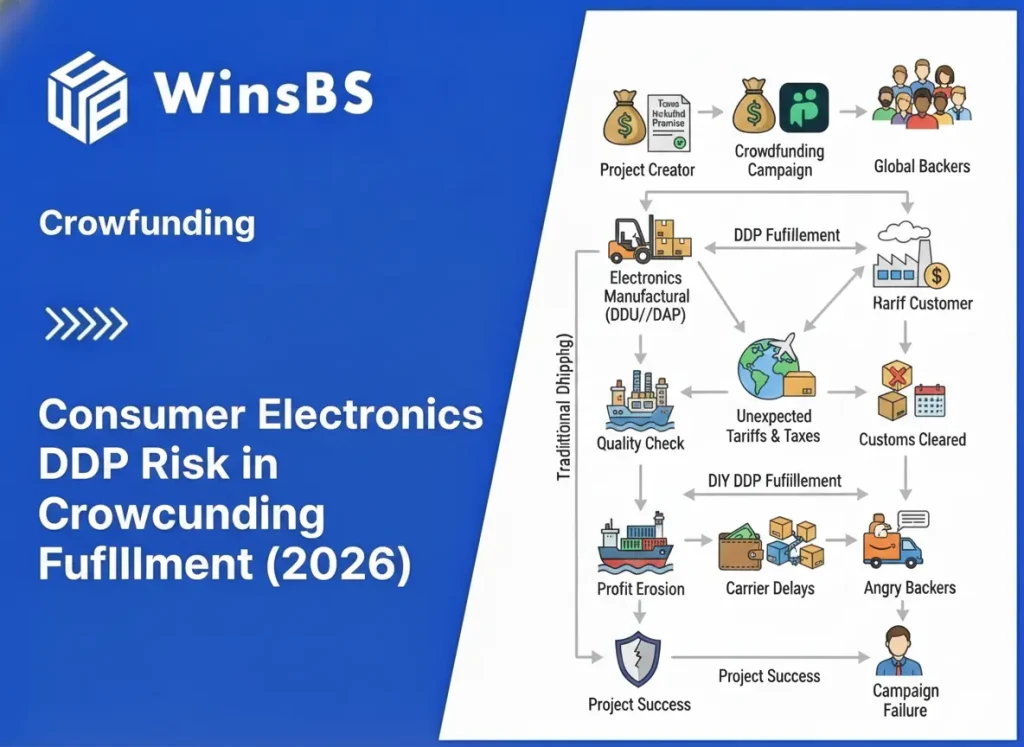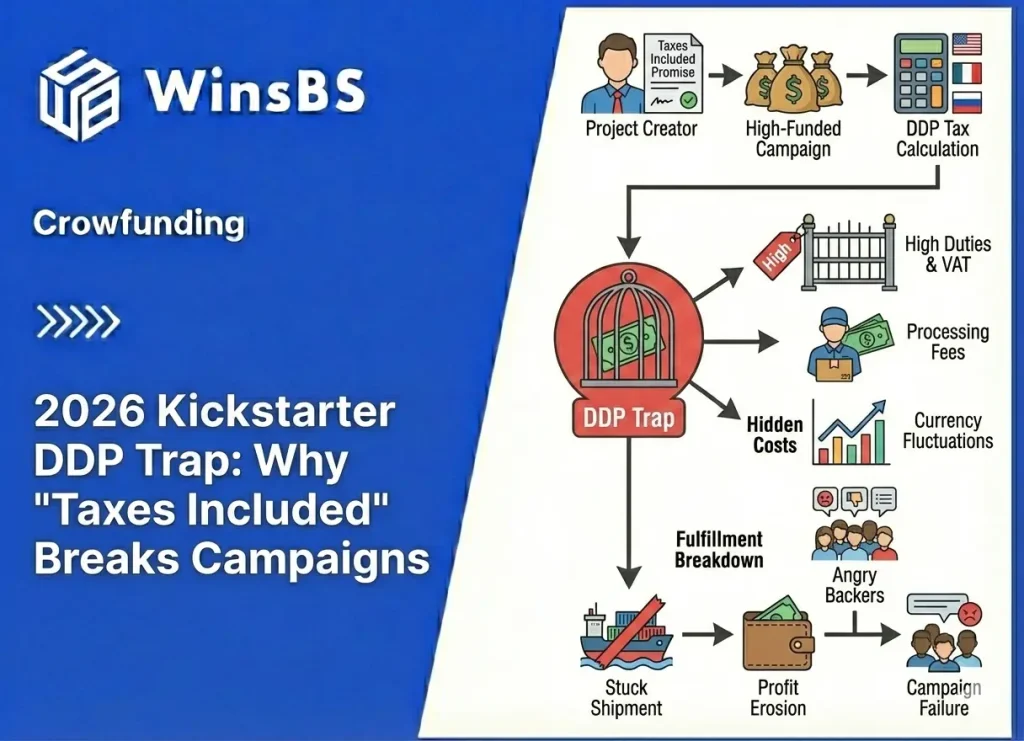










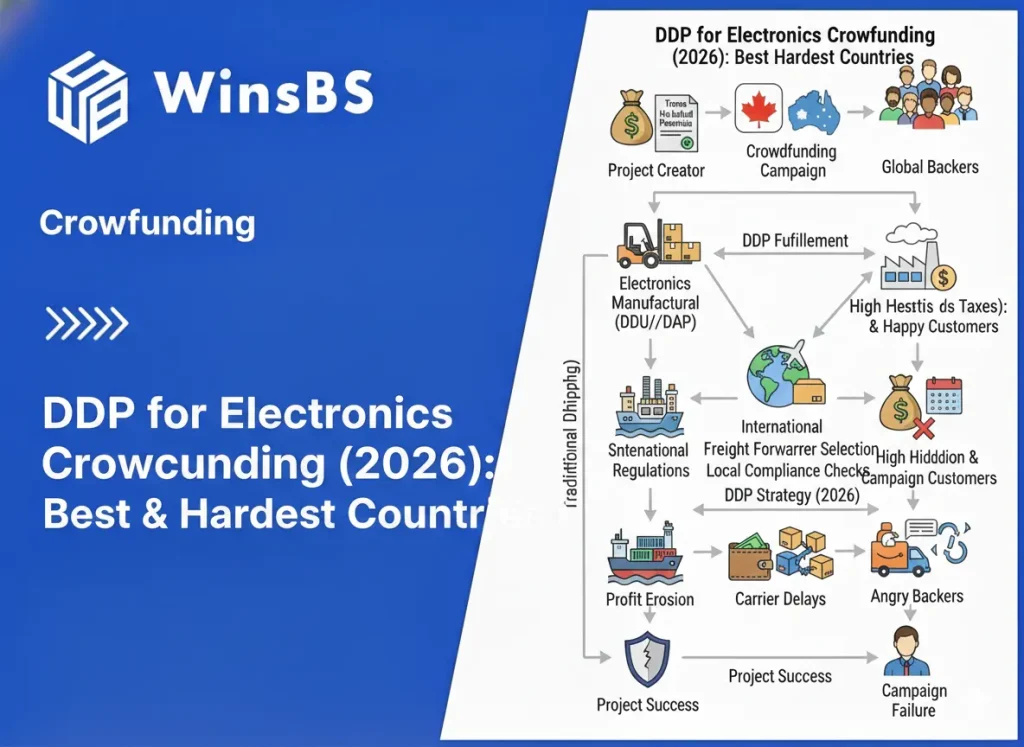
DDP for Electronics Crowdfunding (2026): Best & Hardest Countries
DDP for Kickstarter & Indiegogo Electronics 2026: Best & Hardest Countries Guide Tariffs After De Minimis Removal, Battery/Wireless Compliance, Costs & Execution Tips WinsBS Fulfillment – Maxwell Anderson Updated January 20, 2026 Table of Contents TL;DR Why DDP Remains the Default Choice 2025–2026 Changes: De Minimis Gone & Tariff Reality DDP by Country: Easiest vs Hardest in 2026 Why DDP Is Predictable in Some Countries — and Structurally Hard in Others Why Regulatory Responsibility Does Not Transfer Under DDP What Actually Breaks When DDP Fails in Crowdfunding How to Execute DDP Successfully for Electronics Battery, Wireless & Extension Risks When to Avoid DDP (Red Flags & Alternatives) Self-Check: Is DDP Right for Your Campaign? FAQ: Common DDP Questions 2026 TL;DR For most $50–200 consumer electronics campaigns on Kickstarter or Indiegogo in 2026, DDP (Delivered Duty Paid) is still the smartest play to keep backers happy—no surprise fees, fewer chargebacks, better reviews. The big shift? US de minimis ended August 29, 2025—every commercial shipment now hits formal entry + duties (typically 15–30% for electronics). EU kicks in a €3 flat customs fee per item from July 1, 2026 on low-value parcels. Easiest markets: Canada, Singapore, Australia, UK, US (with solid prep). Hardest: India, Brazil, much of LATAM and select Middle East (high tariffs, delays—often better to skip DDP here). The key is locking in battery/wireless specs early and budgeting realistically. Partner with a 3PL that handles IOR, CE/RED, UN38.3—makes all the difference. Why DDP Remains the Default Choice for Electronics Crowdfunding in 2026 Let’s be real: backers on Kickstarter and Indiegogo don’t want to deal with unexpected duty or tax bills when their gadget finally arrives. Those surprise charges often lead to refunds, chargebacks, public complaints in the comments, and lasting damage to your campaign’s rating. That’s exactly why DDP—where you pre-pay duties, taxes, and clearance—continues to be the go-to recommendation from fulfillment partners like LaunchBoom, Fulfillrite, and eFulfillment Service. It delivers the cleanest backer experience, especially for products in the $50–200 range. Yes, costs have gone up significantly since late 2025. But for most campaigns, the math still works: absorbing 15–30% extra in landed costs upfront is usually cheaper than the fallout from unhappy backers. 2025–2026 Changes: De Minimis Gone & Tariff Reality The landscape shifted hard in 2025. The US fully suspended the de minimis exemption ($800 duty-free threshold) on August 29, 2025, via Executive Order. Now every commercial shipment—regardless of value—requires formal entry, broker involvement, and full duties/taxes. For consumer electronics (HS codes in the 85xx chapter), you’re typically looking at 0–5% base duties plus Section 301 add-ons, pushing effective rates to 15–30% in many cases. Broker fees alone can add $20–50 per parcel. Over in the EU, a new €3 flat customs duty per item kicks in July 1, 2026 for parcels valued under €150, on top of VAT (19–27%) and any product-specific duties. The UK remains relatively stable post-Brexit, but VAT enforcement is tight. Campaigns that pretend it’s still 2024 pricing get burned on margins. The ones that model these realities into their pledge tiers and shipping costs? They fulfill smoothly and keep backers smiling. DDP by Country: Easiest vs Hardest in 2026 (Consumer Electronics) Not all markets are created equal when it comes to DDP execution. Here’s a quick-reference table based on current enforcement patterns and real-world data from 3PLs handling electronics campaigns. Country/Region DDP Ease Level 2026 Key Changes Typical Added Cost Tips for Success Biggest Risks United States Medium-Hard De minimis gone Aug 2025; formal entry always 15–30% duty + $20–50 broker/parcel Bulk to US warehouse; accurate HTS code; pre-pay via 3PL Margin erosion from high tariffs Canada Easy-Medium Low threshold; predictable valuation Low duties (often 0–5%) Clear valuation and documentation Minimal European Union (Core Markets) Medium €3 flat fee Jul 2026 + CE/RED/Batteries Reg strict VAT 19–27% + €3 + 0–5% duty IOSS for VAT; early conformity (CE/RED); UN38.3 for batteries Conformity review reopening if wireless changes United Kingdom Easy-Medium Post-Brexit VAT enforcement Similar to EU Use UK VAT scheme for high volume Declarant vs consignee mismatch Australia Medium GST on low value; scope validation 10% GST + duties Pre-pay GST; early product scope check Reassessment delays Japan Medium-Hard Registered importer required Low-moderate duties Use 3PL as IOR; pre-register Importer mismatch blocks release Singapore Easy Efficient customs, low barriers Minimal duties Standard docs; fast clearance Minimal India / Brazil / LATAM / Select Middle East Hard High tariffs + strict inspections + local rules 20–50%+ + delays Avoid DDP; consider local partner or DAP Long holds, rejections, extra fees Pro tip: If your backers are concentrated in the top easy-medium markets (US, Canada, EU core, UK, Australia), DDP scales well. Spreading thin across hard regions? That’s when risk compounds quickly. Why DDP Is Predictable in Some Countries — and Structurally Hard in Others Here’s the thing that trips up a lot of teams: DDP difficulty isn’t about carrier reliability or warehouse speed—it’s about how each country’s customs and regulatory systems sequence their checks. In the US, since the de minimis suspension in August 2025, everything goes formal entry. But the focus stays on classification accuracy, valuation, and entry docs first. Get those right, and prepaid duties under DDP usually clear without drama—even if the bill is higher than before. That’s why so many campaigns describe US DDP as “expensive but predictable.” The rules are clear: importers must exercise reasonable care under 19 U.S.C. §1484. That said, flip to the European Union and the sequence changes. For wireless products, conformity under the Radio Equipment Directive (2014/53/EU) comes before duties are even considered valid. Battery-powered gear falls under the Batteries Regulation (EU) 2023/1542, with similar upfront checks. Prepaying duties doesn’t override those requirements—so if scope or docs get questioned, the shipment sits. This isn’t inconsistency; it’s different enforcement logic. The same gadget might sail through US customs under DDP but stall in the EU until conformity is confirmed. Understanding this upfront lets you plan smarter—early pre-checks in conformity-heavy markets, tighter valuation in tariff-first