
Kickstarter Board Game Replacement Parts After Fulfillment: What Breaks When Backers Start Reporting Issues?
Missing miniatures, crushed boxes, wrong add-ons, non-delivery claims, returns, and refund pressure after China-to-U.S. crowdfunding fulfillment.
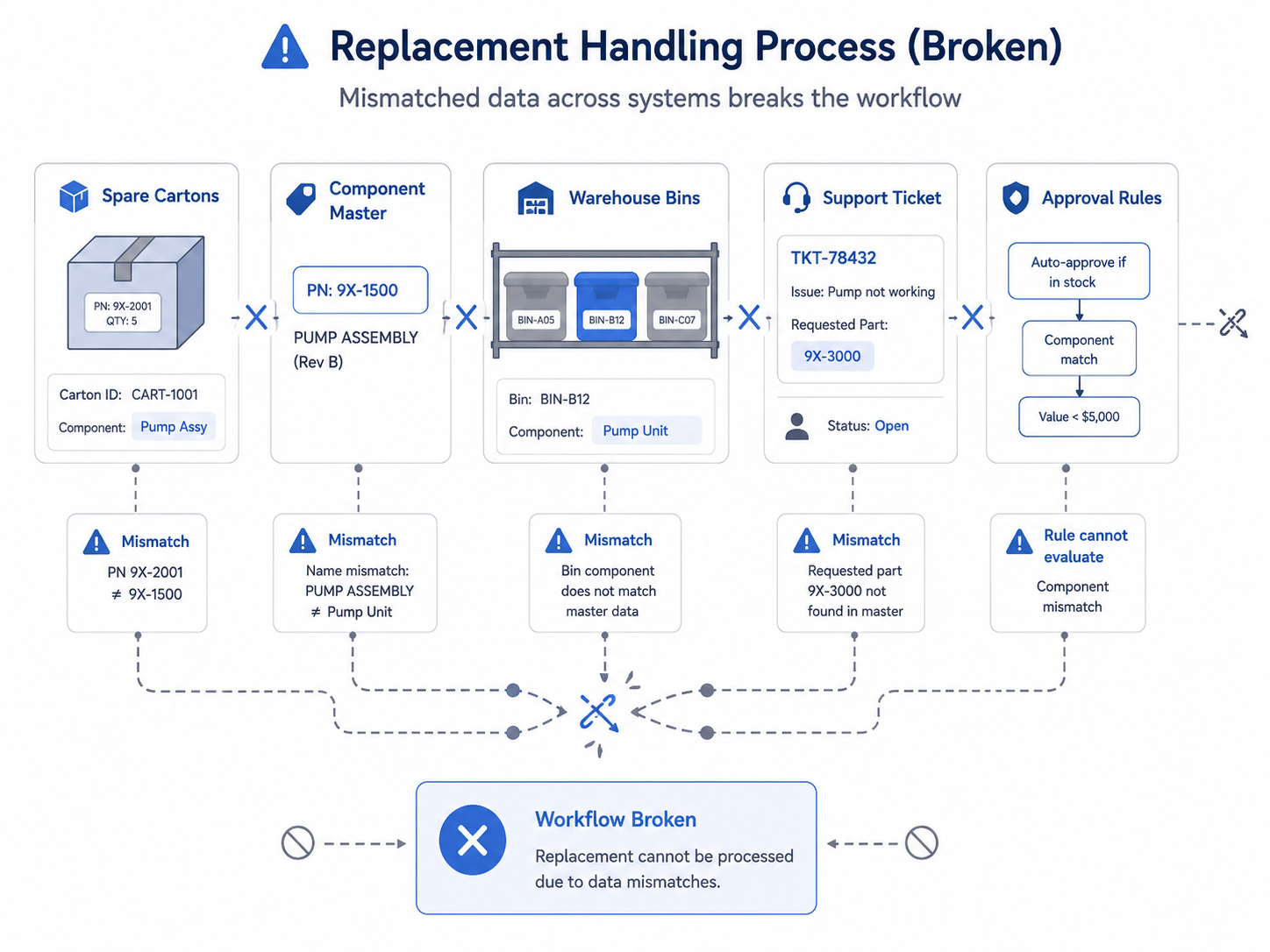
Most Kickstarter board game replacement problems are not solved at the support inbox. They are solved by knowing where the spare parts are, whether the U.S. warehouse can identify and pick them, whether the issue is worth a part resend or full-game resend, and whether the backer should receive a replacement, refund, or no-return resolution.
The hard question is not only "how do we reply?" It is: are the parts in China or the U.S., are they named and binned, what proof is required, and what can support promise without draining the spare pool?
WinsBS is most useful when the issue crosses China-origin preparation and U.S. warehouse execution, not when it is only a support-script problem.
The Real Pressure After Backers Start Receiving Games
The first batch of backers receives games. Fifty support emails come in. One backer says a miniature is missing. Another says the retail box corner is crushed. Another received the base game but not the neoprene mat. Someone says tracking shows delivered but nothing arrived. Public comments start asking whether the campaign will replace everything.
At the same time, the factory says the extras already shipped with the main cargo. The U.S. warehouse says the cartons are marked "extras" but not set up as pickable SKUs. Support asks whether it can resend parts immediately. The campaign owner wants to protect backer trust without turning every $3 component problem into a $60 full-game replacement plus domestic shipping.
This is the moment replacement handling becomes a China-to-U.S. execution problem. Support cannot answer consistently if the spare parts location, component name, warehouse bin, proof rule, and resend authority are all unclear.
The Replacement Chain Has To Survive Real Exceptions
- China factory
- Component list
- Spare parts count
- Spare carton label
- Packing list
- Freight lane
- U.S. receiving scan
- Replacement bin
- Warehouse rule
- Support ticket
- Proof review
- Resend or refund decision
- Backer resolution
This chain breaks when a spare part exists physically but is not named, counted, labeled, received, binned, or authorized for resend. A warehouse can only ship what it can identify.
Why China-to-U.S. Fulfillment Makes Replacement Parts Harder
1. Spare parts may not be in the U.S.
If miniatures, cards, token sheets, or component packs are still at the China factory, one-off replacement parcels to U.S. backers are slow, hard to track, and usually expensive compared with domestic part resends. The creator needs to decide whether to wait for a spare shipment, use a U.S. parts pool, send a full game, or offer another resolution.
2. Factory extras may not be warehouse-ready inventory.
An "extras" carton is not the same as a replacement bin. Someone has to open it, identify parts, photograph them if needed, create pickable names or SKUs, count quantities, assign bin locations, and decide who pays the warehouse labor.
3. A small missing part can force a full-game resend.
The painful cost is not the missing miniature. It is what happens when the warehouse cannot pick that miniature and support approves a full-game resend instead. That burns sellable stock, replacement stock, parcel cost, and support time.
4. Return-to-China is usually not a practical default.
For board game backers, returning a damaged or disputed game to China is usually too slow and too costly to be the default answer. Even a return to a U.S. warehouse may not be worth restocking if the game is opened, incomplete, damaged, or expensive to inspect.
5. Pledge-manager data still matters after fulfillment.
Wrong add-ons and missing stretch goals often start with order data, not warehouse labor. Check the pledge-manager export, add-on list, pick rule, and shipment log before calling the issue a warehouse mistake.
Common Surprise Points After Fulfillment Starts
These are recurring failure patterns WinsBS sees when spare parts, receiving files, and support promises were not aligned before delivery.
Most campaigns do not get one clean replacement problem. They get several small surprises at the same time, and each one changes what support can honestly promise.
- The factory has moved on. It may be busy with the next project and unwilling or slow to sort loose parts, repack extras, or confirm old component names.
- Spare parts in China need their own handling. A small parts shipment still needs packing, labels, export paperwork, tracking, and a clear U.S. receiving plan.
- Parts may not match perfectly. Color batches, old-version components, revised cards, or promo variations can make a "simple" part resend more sensitive than it looks.
- Extras cartons create warehouse labor. The U.S. warehouse may charge to open cartons, count parts, photograph components, create bin locations, and make them pickable.
- Replacement addresses may be stale. A backer may have changed address after the original shipment, but support may still approve a replacement from old data.
- Replacement stock can disappear into other channels. Shopify sales, late pledges, or leftover sales can consume units that should have been protected for damaged contents or missing parts.
- Backers compare outcomes publicly. If two support agents answer the same issue differently, screenshots can force the campaign to upgrade the policy for everyone.
- Returned games may not be recoverable. A returned opened game can arrive missing parts, damaged, or not worth inspection, which means it cannot safely become sellable stock or a complete replacement unit.
Ticket Triage Table For Board Game Replacement Requests
Read this like a campaign triage sheet. Find what the backer says, check the first operational fact, avoid the expensive reflex, then choose the likely resolution path.
On smaller screens, each ticket type appears as a card so you can scan one issue at a time.
| Backer says | First check | Do not do this yet | Likely resolution path |
|---|---|---|---|
| "My miniature is missing." | Ask for a photo and map the described part to the component list, spare count, and bin. | Do not send a full game before confirming whether a part resend or parts pack is possible. | Part resend, parts pack, delayed part shipment, or escalation if the spare is not in the U.S. |
| "The box is crushed." | Separate outer carton damage, retail box damage, and damaged contents with photos. | Do not assume every crushed box requires a full-game replacement. | Box-only support if available, component replacement, full-game resend, carrier evidence, or partial resolution. |
| "I got the wrong add-on." | Compare pledge export, add-on list, pick rule, and shipment log. | Do not blame the warehouse before checking whether the order file matched the pick rule. | Correct add-on resend, data correction, support clarification, or warehouse pick review. |
| "Tracking says delivered but I got nothing." | Check carrier status, address, delivery proof, shipment log, and any local delivery exception. | Do not immediately resend a full game without confirming whether this is carrier, address, or fulfillment error. | Wait period, carrier trace, address correction, resend approval, refund escalation, or manual exception. |
| "I want to return it." | Check policy boundary, game condition, return shipping cost, and whether the warehouse can inspect it. | Do not approve a return label automatically if inspection, restock, dispose, or refund authority is undefined. | No-return resolution, photo-based decision, inspection, restock, dispose, refund escalation, or legal/policy review. |
Exception Log Template
Use this when repeated tickets start showing up. The goal is to turn support messages into a rule the warehouse and support team can both follow.
Issue code
Use a short repeatable label: missing miniature, damaged retail box, wrong add-on, delivered-not-received, return request.
Backer wording
Copy the phrase support is seeing, such as "my blue wizard is missing" or "tracking says delivered but I got nothing."
Proof needed
Name the required photo, order number, shipment photo, delivery evidence, or damaged-box evidence before support approves action.
Warehouse action
Write what the warehouse can actually do: pick named part, check add-on stock, hold for review, inspect return, or wait for authorization.
Approval owner
Assign who can approve the exception: support lead, campaign owner, fulfillment owner, legal / policy reviewer, or warehouse contact.
Stock impact
Record whether the action burns one spare part, one add-on, one box, one full game, or no replacement stock.
Support reply
Write the approved reply pattern: what support can promise, what is still under review, expected timing, and what should not be promised yet.
One line per repeated issue is enough at the start. The point is to stop the same missing part, wrong add-on, or damaged-box report from becoming a new custom decision every time it appears.
How Experienced Board Game Campaigns Handle Replacement Parts
Experienced teams do not wait for the inbox to define the replacement policy. They set up the parts pool and support language before the first public complaint creates pressure.
They usually protect three things first: named spare inventory, consistent proof rules, and a public update boundary that does not overpromise before warehouse confirmation.
- Reserve spares by component type, not only by total game units.
- Ask the factory to label spare cartons separately from sellable inventory.
- Have the U.S. warehouse receive spare cartons separately before opening leftover inventory for sale.
- Use issue codes such as missing card, missing miniature, damaged retail box, wrong add-on, non-delivery, and return request.
- Require photos for damaged boxes, missing components, and ambiguous claims.
- Batch repeated issues so support does not create a different rule for every backer.
- Track spare burn rate before approving full-game resends.
- Prepare public update language before support volume grows.
New Creator Mistakes That Make Replacement Costs Explode
Promising replacement before checking spare location.
If the spare is still in China, the promise may be slower, more expensive, or impossible to fulfill the way support described it.
Treating every damaged box as full-game damage.
Outer carton damage, retail box damage, and damaged contents need different proof and different resolution paths.
Selling remaining inventory before reserving replacement stock.
Leftover sales can quietly consume the stock needed to protect backer trust during the support wave.
Assuming factory extras are usable replacements.
Extras still need part names, photos, counts, bin locations, and resend authority before the warehouse can pick them.
Letting support answer without proof rules.
Backers compare screenshots. Inconsistent support answers can turn a parts issue into a trust issue.
Returns Reality: Do Not Treat Every Return Like Ecommerce
Board game crowdfunding returns are not the same as routine ecommerce returns. A return label, warehouse inspection, restock decision, and refund path may cost more than the value recovered from the returned game.
For many board game campaigns, the practical choice is not "return or no return." It is photo proof, part resend, partial resolution, full-game resend, or no-return refund, depending on cost and trust risk.
Before approving a return, decide whether the project should use a no-return resolution, photo proof, partial refund, parts resend, full-game resend, warehouse inspection, or legal / policy escalation. If the game is opened, incomplete, damaged, or missing components, restocking may not be realistic.
This is an operational readiness guide, not legal, warranty, consumer-rights, tax, customs, or refund-policy advice. Confirm obligations and policy language with qualified counsel or advisors.
Where WinsBS Fits
WinsBS fits when the replacement problem crosses China-origin parts data, U.S. receiving, spare carton visibility, warehouse resend authority, and backer-facing support promises.
WinsBS Replacement Readiness Model
spare location -> component identity -> receiving status -> bin / SKU setup -> warehouse rule -> support answer -> backer resolution
In plain terms: know where the spare is, what it is called, whether the warehouse can pick it, and what support is allowed to promise.
Helpdesk: can route tickets, but cannot validate spare count, bin location, or resend authority.
Domestic-only 3PL: can ship what is already named, binned, and authorized, but is lower fit when the failure started in China-origin parts data or unlabeled spare cartons.
Freight forwarder: can move cartons through the freight lane, but does not own backer-facing resend, refund, return, or support-script decisions after delivery.
Global convenience model: can make international fulfillment feel simpler, but may still leave the creator to reconcile factory part names, spare carton visibility, warehouse resend rules, and backer-facing exception promises.
WinsBS is lower fit when the creator only needs legal refund policy, warranty or consumer-rights advice, a helpdesk macro, domestic parcel label generation, or routine execution after inventory and replacement rules are already stable.
FAQ
What is the first thing to do when replacement tickets start?
Identify the part or issue before approving resends. Match the backer's words to the component list, spare count, bin location, proof rule, and warehouse action.
What if spare parts are still in China?
Do not promise fast U.S. replacement until the shipping path is clear. The campaign may need a spare shipment to the U.S., a delayed part resend, a full-game resend from U.S. stock, a partial resolution, or another support path.
What if factory extras are not pickable by the U.S. warehouse?
Treat the extras carton as unprepared inventory. Someone must open it, identify parts, count quantities, create names or SKUs, assign bin locations, and authorize what the warehouse may resend.
Should I sell leftover inventory before replacement issues are resolved?
Not until replacement exposure is understood. Leftover sales, late pledges, or Shopify orders can consume the same stock needed for missing parts, damaged contents, or full-game replacement decisions.
Should damaged board game boxes always be replaced?
No universal rule should be assumed. Separate outer carton damage, retail box damage, and damaged contents before choosing box-only support, component replacement, full-game resend, carrier evidence, refund, or escalation.
Does this also apply to BackerKit or pledge-manager board game fulfillment?
Yes. The same readiness test applies when final order data, add-ons, spare stock, warehouse receiving, and support rules must match before backers report missing parts, damaged boxes, wrong add-ons, or return requests.
What is the difference between a return request and a replacement request?
A replacement request needs a named component, spare stock, proof rule, and resend path. A return request needs return cost review, label ownership, warehouse inspection, restock or dispose rules, inventory update, and refund escalation.
Is this legal, warranty, consumer-rights, tax, or customs advice?
No. This is an operational readiness review. Confirm refund obligations, warranty terms, replacement import requirements, consumer-law issues, tax treatment, and customs questions with qualified counsel or advisors.
Source note: platform guidance explains pledge-manager and shipping setup; WinsBS judgment here applies that setup to warehouse receiving, spare stock separation, and post-delivery exception handling.
Methodology
How this judgment was built: this page uses the local WinsBS tabletop crowdfunding source-library notes, sibling WinsBS pages, and recurring China-to-U.S. board game fulfillment failure patterns. It is designed to answer what breaks when replacement and return requests start after fulfillment.
What the sources prove: Stonemaier fulfillment sources support treating tabletop fulfillment as a workflow from production and freight to fulfillment centers and backer delivery, with quality, communication, customer service, and problem solving as fulfillment criteria. Kickstarter and BackerKit pledge-manager guidance supports the role of final order data, add-ons, weights, and fulfillment setup in post-delivery questions. Local packaging, checklist, warehouse-speed, and parent pages support the pattern that weak origin prep later appears as damage, replacement pressure, receiving exceptions, and support burden.
Operational boundary: this page is an operational readiness review, not legal, warranty, consumer-rights, tax, customs, or refund-policy advice. Confirm refund obligations, warranty terms, replacement import requirements, consumer-law issues, tax treatment, and customs questions with qualified counsel or advisors.
Send Your Replacement Situation For Review
Send WinsBS the current state of the replacement problem. If you do not have every file, send the files you have and mark what is missing. The first review is to find the gap, not to prove the plan is finished.
If Tickets Already Started
- Ticket examples
- Current support replies
- Known spare inventory status
- Warehouse receiving report or receiving scan
- Shipment log or pick log if available
- Current replacement, refund, or escalation rule
If Cargo Just Arrived In The U.S.
- Receiving scan
- Spare carton photos
- Packing list
- Carton labels or carton file
- Current replacement inventory count
- Warehouse pick / pack rules
If Cargo Has Not Left China
- Factory parts list
- Component map or SKU list
- Spare parts plan
- Final carton count
- Packing plan
- Pledge-manager export or add-on list
WinsBS will review whether the campaign can identify the issue, locate the spare, separate replacement stock from sellable stock, give the warehouse a resend rule, and keep support from turning every repeated ticket into a custom decision.
WinsBS will also tell you which cases can be handled as part resends, which should wait for warehouse review, which may require full-game replacement, and which should not be promised until spare location, warehouse authority, or policy ownership is clear.
Download The Two-Page Replacement Readiness Check
Your replacement files, support examples, and pre-launch or post-fulfillment materials are reviewed only for the requested fulfillment-readiness check. If your team requires an NDA before sharing sensitive files, request that before sending documents.