Order Fulfillment in 2026: What It Includes (and What It Doesn’t)
Order fulfillment remains operationally mature in 2026.
Its limits appear not in warehousing or shipping,
but in cross-border and DDP scenarios where customs clearance becomes the first hard boundary.
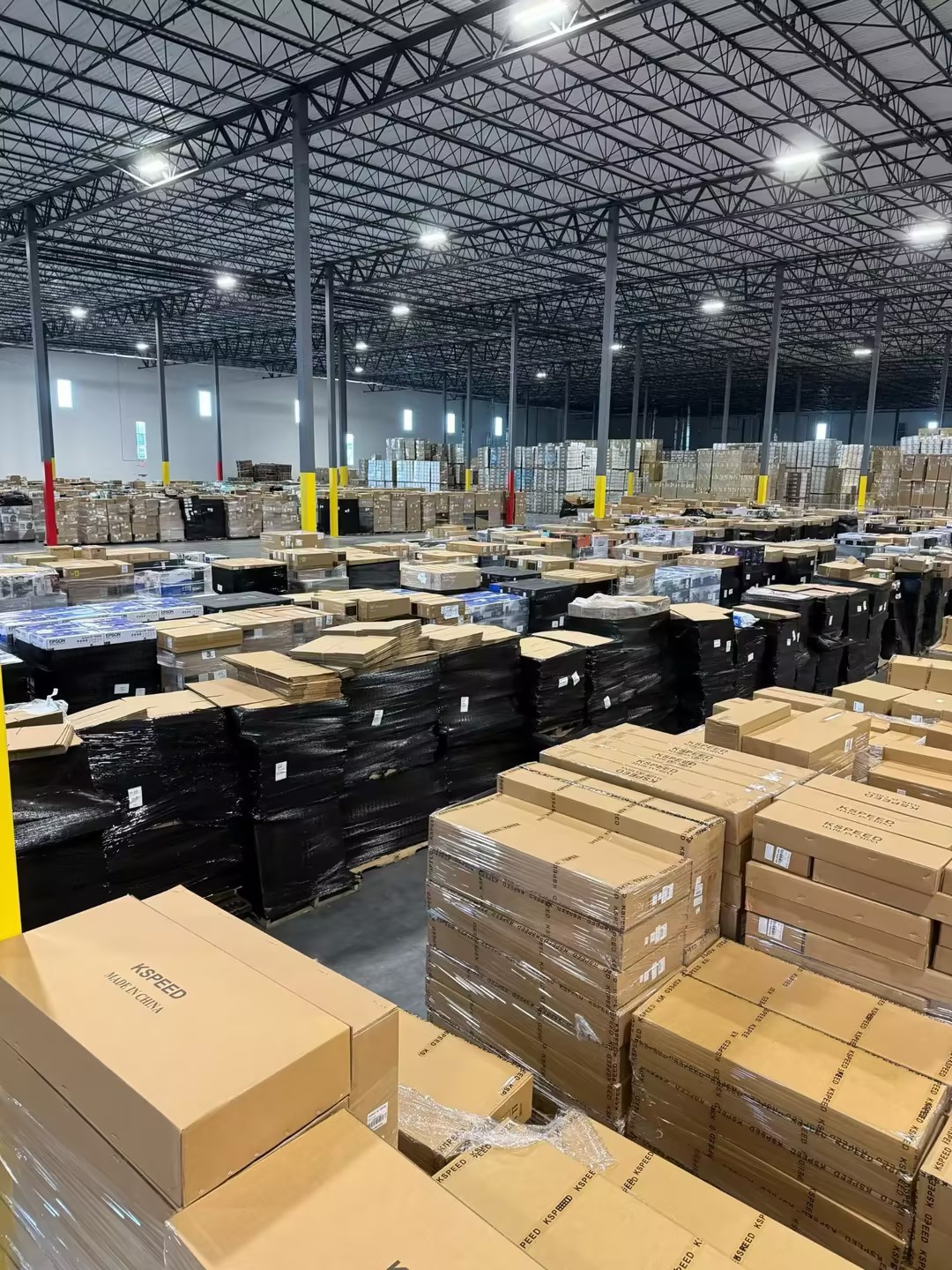
0. When Everything Looked Finished — and Nothing Moved
By the time most creators reach this point, the work already feels complete.
The campaign closed.
Funds settled.
Inventory arrived.
Orders were packed.
Labels printed.
Tracking sent.
None of that is assumed. Those steps really happened.
In most shipping contexts, this is where uncertainty fades. Not because delivery is instant, but because what remains is procedural. Movement continues. Problems, if they appear, surface later — at the door, on an invoice, or in customer support.
That expectation is learned.
In domestic shipping, and in many cross-border flows for years, this was the moment when things stopped going backward. Delays were possible. Reversals were not.
So when progress slows here, it feels wrong.
Tracking still updates.
Nothing shows as “exception.”
The warehouse confirms completion.
The carrier confirms pickup.
Yet nothing advances.
Days pass without a status change that explains anything. Replies arrive, but answers don’t. Backers don’t accuse — they ask whether this is normal.
You refresh the dashboard, expecting to find a switch you missed. There isn’t one.
At this point, most creators assume something failed earlier.
A packing error.
A missed scan.
A warehouse mistake.
A carrier issue.
Those assumptions are reasonable. Until now, outcomes followed execution.
What’s actually happening is quieter.
The shipment hasn’t failed.
Nothing has “broken.”
It has entered a part of the journey where progress is no longer decided by how well fulfillment was done — and no one tells you when that transition occurs.
From your perspective, this still looks like shipping.
From the system’s perspective, it isn’t.
1. What “Fulfilled” Actually Meant — in the System, Not in Your Head

In practice, order fulfillment refers to warehouse execution — receiving inventory, picking and packing orders, and handing shipments into the carrier network.
When creators say an order was “fulfilled,” they’re usually referring to something concrete.
Inventory arrived.
It was checked in.
Orders were picked and packed.
Labels printed.
Boxes left the building.
That work was real. And it was completed.
Where confusion starts is assuming that “fulfilled” is a global milestone. It isn’t.
It’s a local one.
It means the warehouse finished its responsibility. It means the fulfillment system closed its checklist. It does not mean the shipment finished being evaluated.
From your side, the process still feels continuous.
You don’t experience stages. You experience momentum: money in, product out, boxes moving.
The system doesn’t see it that way.
Fulfillment exists to answer one question well:
Was this order executed correctly?
Once the answer is yes, the system moves on.
What follows is not an extension of fulfillment. It’s a handoff.
And handoffs are where assumptions matter.
Up to this point, outcomes track effort. If something slows, you fix it. If something goes wrong, you correct it.
After fulfillment closes its part, that relationship weakens.
Not because anything failed.
But because the question being asked has changed.
The system is no longer checking execution. It’s evaluating the shipment as an entry.
That shift comes without an alert. Nothing in your dashboard says you’re now in a different decision framework.
So creators keep pulling the same levers — re-checking packing, asking the 3PL to confirm details, hunting for a missed scan.
Those actions make sense. Until they don’t work.
At this stage, effort no longer restarts movement. Because effort is no longer what’s being measured.
This is the first point where the intuition — if fulfillment was done right, delivery will follow — stops matching reality.
Not because fulfillment failed.
But because fulfillment already finished.
2. Where the Outcome Stops Following Fulfillment
There is a point in every cross-border shipment where effort stops producing movement.
Up to that point, progress responds to execution. If something slows, you fix it. If something breaks, you correct it.
Then the relationship ends.
Not gradually.
Not with a warning.
From the outside, everything still looks normal. Tracking updates. Statuses stay neutral. The box keeps moving.
Internally, the shipment has crossed into a different decision path.
It is no longer being processed as cargo in transit. It is being evaluated as an entry.
That distinction is the first hard boundary fulfillment cannot cross.
Before this point, mistakes are operational. After it, they are structural.
The question being asked is no longer whether the order was executed correctly. It becomes whether the shipment qualifies to move forward exactly as it arrived.
Speed doesn’t matter here. Efficiency doesn’t help. Past shipments are irrelevant.
Once evaluation begins, progress is no longer linear.
You can’t push it through with tickets. You can’t repack your way out of it. You can’t ship faster next time and fix this one.
This is why the pause feels so disorienting.
From your perspective, the work is already done. From the system’s perspective, the deciding step has only just begun.
And because that step does not belong to fulfillment, it doesn’t appear where creators expect to see it.
This is where good fulfillment guarantees delivery stops working.
Not because fulfillment failed.
But because fulfillment is no longer the system making the decision.
3. Why This Always Comes Back to You — Even After You Paid a 3PL
Most 3PLs support DDP workflows, but do not act as the Importer of Record.
This is where most creators push back.
You didn’t ship these boxes yourself. You didn’t book the carrier. You didn’t interact with customs.
You paid a fulfillment provider to handle it.
So when questions return — about value, descriptions, documents — the reaction is immediate:
Why am I answering this?
That reaction is rational.
In most parts of business, paying a service provider transfers responsibility along with execution.
Cross-border shipping doesn’t work that way.
Execution moves. Responsibility doesn’t.
Fulfillment providers are brought in to do a defined job: receive inventory, process orders, move boxes into the shipping network.
Once that happens, their role is complete. Formally.
Large mainstream providers operate with this boundary clearly in place. They can support international shipping, collect duties, pass information along. They do not become the legally accountable party once a shipment is evaluated as an entry.
That role never transferred.
There is a difference between doing the work and being answerable for the outcome when something is questioned later.
Acting as the importer means accepting what follows after entry: clarification requests, valuation challenges, classification disputes, compliance follow-ups.
That position cannot be assumed implicitly. And it cannot be reassigned mid-stream.
If a service provider is going to hold that role, it must be established before anything ships — with a defined legal entity, explicit authorization, and agreement to respond when questions surface.
Once boxes are moving, none of that can be retrofitted.
So when a shipment pauses and the fulfillment provider says, “We’ve completed our part,” it sounds evasive.
It isn’t.
Their checklist closed where it was designed to close. The open questions belong to the party whose name the shipment still carries.
From the system’s point of view, there is no ambiguity about who needs to respond next. From the creator’s point of view, it feels like the rules changed halfway through.
They didn’t.
The handoff just happened later — and more quietly — than most people expect.
4. Why This Got Harder After 2025 — Seen as a Network, Not Isolated Lanes
This network view reflects how fulfillment outcomes differ across the U.S., EU, UK, Canada, Australia, Japan, Mexico, and Central Asia trade lanes.
After 2025, fulfillment didn’t slow down. What disappeared were the buffers that used to absorb uncertainty across the network.
Seen lane by lane, the changes feel random. Seen by how lanes fail, the pattern is consistent.
Below, lanes are grouped by the same execution reality, not by geography.
Cluster 4.1 — Low-Value Bypass Disappearing (China–U.S., China–Canada, China–Australia, China–UK, U.S.–UK)
For years, low value acted as a shortcut.
Shipments didn’t need to be perfect to move.
Small inconsistencies were tolerated.
Some questions were deferred or never asked.
Once that bypass disappeared, the sequence flipped.
Decisions moved to entry.
Value logic is tested immediately.
Descriptions are read literally.
Ambiguity stops movement instead of being absorbed.
Creators feel this as a sudden loss of momentum. In reality, the system stopped trading volume for clarity.
The U.S. marker for this shift is Executive Order 14324. In the UK, the same loss of tolerance appears under the £135 overseas goods framework. Canada and Australia arrive at the same outcome through different mechanics.
Different names.
Same disappearance of slack.
Cluster 4.2 — Near-Shore ≠ Low-Friction (Canada–U.S., U.S.–Mexico, U.S.–EU)
Proximity feels like safety.
Short distances.
Dense carrier networks.
Trade agreements everyone recognizes.
What changed here isn’t scrutiny. It’s when correction is allowed.
When documents line up, these lanes move fast. When they don’t, shipments no longer advance while questions are resolved.
Near-shore distance does not buy patience.
In U.S.–Mexico flows, many creators lean on USMCA as a cushion. In practice, it reduces friction only when the shipment qualifies cleanly at evaluation. It does not absorb uncertainty.
Canada–U.S. and U.S.–EU behave the same way. Efficiency cannot compensate for entry ambiguity.
Cluster 4.3 — Duty & Classification Becoming Binary (China–EU, U.S.–EU, China–UK)
These lanes expose a different pressure point.
Duty and classification used to be elastic.
Details could be clarified after movement started.
That elasticity is gone.
Once duty is applied explicitly by category, classification becomes a gate.
“Close enough” no longer moves.
The same bundle can clear one week and pause the next, depending on how cleanly it presents at entry.
The EU marker is the July 2026 low-value duty framework. The UK shows the same effect through its low-value responsibility rules.
Creators read this as inconsistency. The system is simply less forgiving.
Cluster 4.4 — Upstream Tax Handling, Earlier Failure (China–Australia, U.S.–Australia, China–UK, China–Japan)
In these lanes, tax responsibility moved upstream.
When structure is correct, this reduces surprises.
When it isn’t, failure appears sooner.
Errors that once surfaced at delivery now surface before release.
Australia’s handling under GST on imported goods shows the pattern clearly. Japan and the UK apply the same logic through different tax frameworks.
Fulfillment still matters. It just no longer delays the moment mistakes are exposed.
Cluster 4.5 — High-Sensitivity Lanes (China–Central Asia, China–Japan, U.S.–Japan, U.S.–Australia)
These lanes have the least tolerance by design.
Political sensitivity, technology controls, origin scrutiny, and bilateral expectations compress the decision window.
Once evaluation begins, there is little room to clarify or adjust.
There is no practical “fix it later.”
Speed doesn’t help.
Volume doesn’t soften it.
Fulfillment cannot compensate.
These lanes don’t create new problems. They reveal what is already happening elsewhere, sooner.
Across all clusters, the same shift is visible:
Fewer shipments advance on assumption.
More shipments are decided at entry.
Less ambiguity is carried forward.
From the creator’s side, shipping feels unpredictable. From the system’s side, the decision point moved earlier and became harder to reverse.
That is why fulfillment execution alone no longer guarantees movement — even when everything up to that point was done right.
5. What Keeps Applying Pressure as 2026 Unfolds
By 2026, most friction creators feel isn’t new. What’s new is how little of it gets absorbed before it reaches you.
For years, global fulfillment worked because multiple layers quietly compensated for one another. When one layer was messy, another smoothed it out. When documents lagged, movement continued. When values were approximate, corrections happened later.
That stack is thinning.
What follows are not forecasts. They are known forces already shaping outcomes, regardless of how well fulfillment is executed.
5.1 Low-Value Treatment No Longer Cushions Mistakes
Low value used to function as a shock absorber. It didn’t make shipments compliant. It made them less likely to be stopped.
Once that cushion closed in the U.S. under Executive Order 14324, decisions didn’t become harsher — they became earlier.
Value logic is tested at entry.
Descriptions are read literally.
Errors surface before release, not after delivery.
The same effect appears elsewhere under different names. In the EU, it becomes explicit with the July 2026 low-value duty framework. In the UK and Australia, upstream handling produces the same result through different mechanics.
Different systems.
Same loss of tolerance.
5.2 Entry Decisions Are Activating Earlier
One quiet shift reshaping outcomes is when shipments are decided.
Evaluation no longer waits for a clear “arrival.” In many lanes, decision logic activates while the shipment is still moving.
That compresses the correction window.
Once a shipment is evaluated as an entry, there is little room to:
- clarify intent
- amend structure
- reframe classification
Those actions require time and authority — both shrink once movement has started.
This is why stalls feel sudden and final even when nothing visibly failed.
5.3 Tax and Duty Are Being Pushed Upstream
Across multiple markets, tax responsibility is moving closer to the point of sale.
The goal is certainty.
The consequence is exposure.
When structure is correct, surprises drop.
When it isn’t, failure appears sooner.
Australia’s handling under GST on imported goods, the UK’s £135 overseas goods framework, and similar structures in Japan and the EU all converge on the same reality:
If responsibility is assigned earlier, failure shows earlier too.
Fulfillment doesn’t break.
The margin for correction disappears.
5.4 Discretion Is Being Engineered Out of Sensitive Lanes
Some corridors entering 2026 simply allow less discretion.
Technology controls, origin scrutiny, and geopolitical sensitivity compress decision space. Ambiguity isn’t deferred. It’s stopped.
This isn’t about tougher enforcement cycles. It’s about process design removing wiggle room.
Once discretion is gone, fulfillment quality stops functioning as a fallback.
5.5 Capacity No Longer Masks Structural Gaps
For years, abundant capacity hid problems.
Loose networks let shipments move while paperwork lagged.
Tighter routing exposes issues earlier.
Entering 2026, capacity decisions are more intentional and less forgiving. This doesn’t create holds. It reveals them.
What used to look like “logistics delays” increasingly turns out to be entry decisions finally being confronted.
None of these forces invalidate fulfillment. They remove the buffers that used to protect shipments from their own ambiguity.
That’s why 2026 doesn’t feel like a year of new rules. It feels like a year where old assumptions stop working.
The system hasn’t become chaotic. It has become less willing to carry uncertainty forward.
And once that happens, fulfillment execution alone no longer guarantees movement.
6. Where This Leaves You
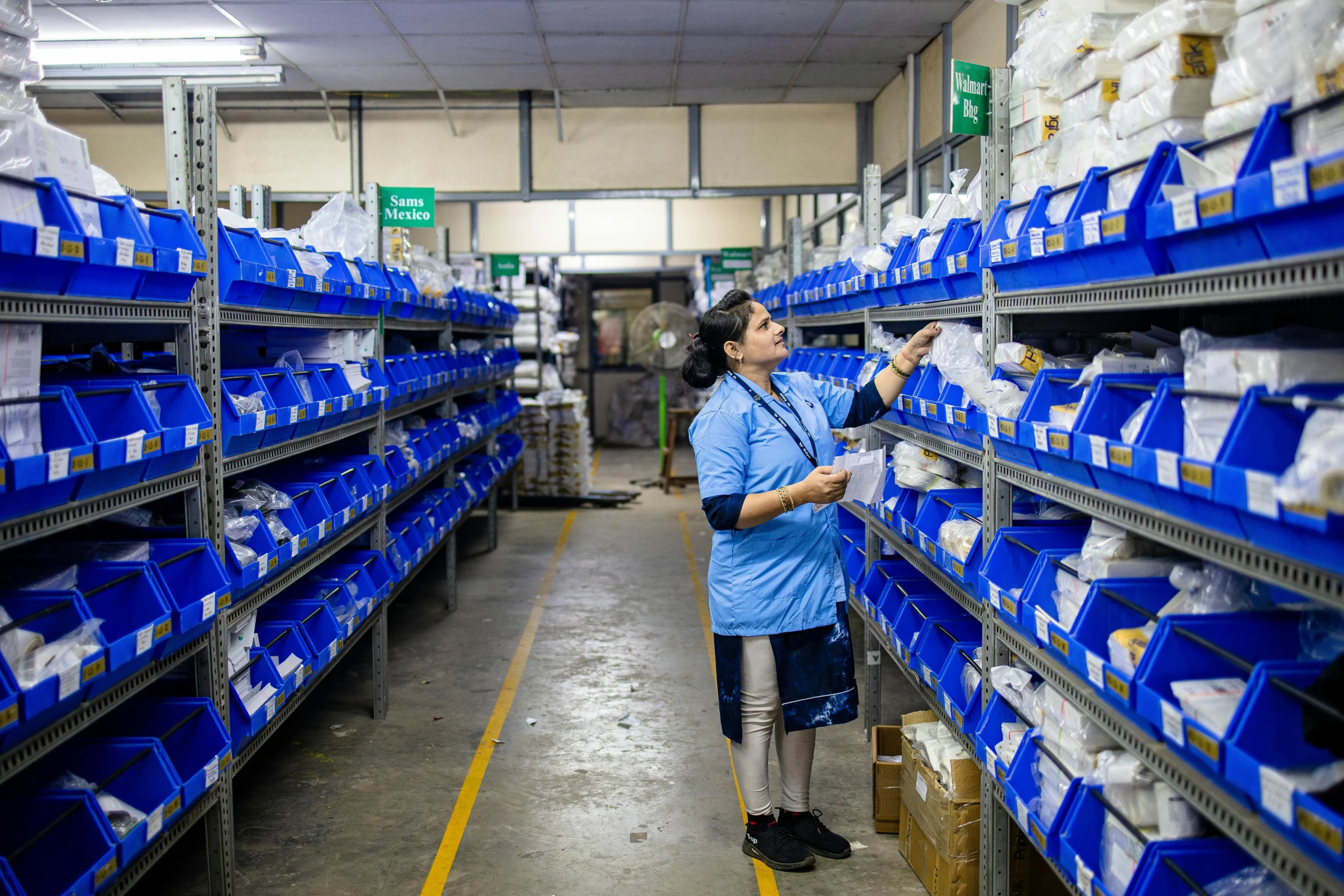 ...
...
By the time you reach this point, nothing feels resolved.
The boxes didn’t vanish. The warehouse didn’t fail. No one admits a mistake.
What changed is how the system responds to the same actions you’ve always taken.
You did what made sense. What no longer works is assuming those choices carry you through the rest of the journey.
The handoff happens later than most people realize. And once it does, the rules stop bending.
Not because execution failed — but because execution is no longer the system deciding the outcome.
This doesn’t make fulfillment unreliable. It makes fulfillment incomplete by itself.
Once that’s clear, confusion lifts. You stop hunting for a missed step. You stop escalating levers that no longer move anything. You stop waiting for effort to restart momentum.
What replaces frustration isn’t certainty — it’s orientation.
You know where optimization helps, and where only structure set before movement matters.
That awareness doesn’t solve every problem. But it prevents the same one from repeating quietly, campaign after campaign.
And for most creators, that’s the difference between feeling stuck and knowing exactly where the system expects you to act next.
Methodology & Sources — WinsBS Research
Compiled by: WinsBS Research team (cross-border fulfillment operators, routing planners, and exception-handling leads).
1) Sample & Scope: Cross-border ecommerce and crowdfunding shipments fulfilled under DDP or DDP-like structures into the United States, European Union, United Kingdom, Canada, Australia, Japan, and Mexico. Product scope includes general consumer goods (apparel, home goods, accessories, mixed-SKU kits, and electronics-adjacent items), excluding fraud, prohibited goods, or non-shipment cases. The unit of analysis is the shipped order configuration at the moment of customs evaluation, not the storefront SKU or campaign promise.
2) Time Range: Observations from 2019–2026, with emphasis on post-2023 behavior shifts. This synthesis was last updated February 2026.
3) Observation Points (Where Friction Was Observed): Post-warehouse execution handoff, entry evaluation timing, value and description scrutiny, duty and tax assignment checkpoints, routing re-classification events, and pause-or-release decisions occurring after shipment departure but before final delivery.
4) Variables Tracked (Trigger Identification): Declared value logic versus actual pledge structure, description stability across waves, DDP responsibility allocation (who acts vs. who remains legally accountable), importer-of-record designation clarity, routing lane sensitivity, and the ability (or inability) to correct structure once evaluation had begun.
5) Evidence Types Used: Aggregated fulfillment execution logs (handoff timing, pause duration, routing outcomes), anonymized crowdfunding campaign update patterns, carrier and customs interaction records, and institutional naming anchors used strictly to identify responsibility boundaries and entry decision frameworks — not as compliance explanations.
Markets Covered: United States, European Union, United Kingdom, Canada, Australia, Japan, Mexico.
Last Reviewed: February 2026.
Campaign- or business-specific fulfillment execution review: https://winsbs.com/start_free.html